
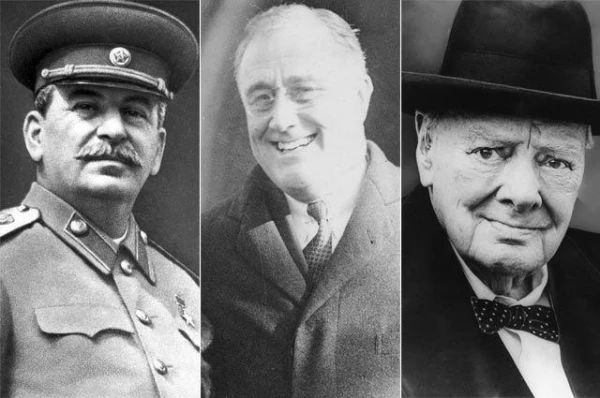
In the first half of the 20th century, as well as in its middle, food did not receive as much attention as it does today. Nevertheless, gastronomic preferences and habits could tell a lot about a person, especially when it comes to figures who played a key role in world politics. What dishes adorned the tables of the victorious allies: Soviet Generalissimo Joseph Stalin, American President Franklin Roosevelt, and British Prime Minister Winston Churchill?
Joseph Stalin
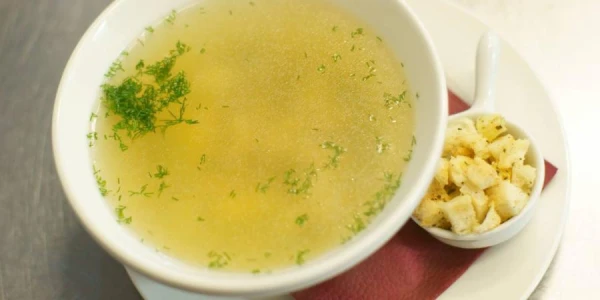
Among Stalin's favorite dishes, Georgian cuisine, Khvanchkara wine, and caviar stand out. Despite his many gastronomic preferences, he is often described as an ascetic. The leader was not a gourmet and did not indulge in excesses — this is a well-known fact. Stalin preferred simple food and for many years ate dishes that were delivered to him from the cafeteria. The menu was quite modest: buckwheat porridge with butter, boiled meat, poultry, fresh vegetables and herbs, potatoes, as well as traditional Russian soups like borscht and cabbage soup. By the way, cabbage soup, especially its winter, frozen, daily variant, was his true passion.
Stalin also loved fresh fish, which was even bred specifically for him, and he was supplied with nelma from Siberia. He valued salmon caviar, Danube and Kerch herring, as well as smoked fish and shimai.
Feasts at the "near dacha," located in the former Tsekhovsky rest house in Volyn, near Moscow, became famous. Stalin would come here after work in the Kremlin, and the journey took only 15-20 minutes. He usually gathered in a large company. The table was always set with snacks, soups in porcelain soup tureens, and main dishes. After that, the serving staff would leave the dining room, and the guests would serve themselves. A mandatory element was a variety of wines, predominantly Georgian, such as Khvanchkara, Kindzmarauli, Mukuzani, Saperavi, and Tsinandali, as well as Armenian wines. Stalin drank very moderately, always from his separate bottle, which he could stretch over several days. At the same time, he encouraged his guests' libations.
In the early 1940s, when Stalin was resting at his dacha in Sochi, where chefs from Abkhazia worked, he began to take an interest in Transcaucasian cuisine. It was a kind of return to his roots. Biographers of the Generalissimo note that after the meeting of the Allies in Tehran in 1943, he became particularly fascinated by Eastern cuisine. At official meetings, special dishes were prepared for him, for example, in Yalta in 1945, it was pilaf.
Georgian and Eastern dishes often became the basis for festive feasts or weekend lunches.
Franklin Roosevelt
The American president was known for his simplicity in food. His wife was not a big fan of cooking, and the Great Depression did not contribute to the formation of gourmet habits. Moreover, Roosevelt adhered to a diet based on doctors' recommendations. Given the consequences of polio, he suffered from hypertension, chronic heart failure, and bronchitis, which also affected his diet. Therefore, all official lunches, including meetings with allies, took into account dietary recommendations for the president.
Franklin Roosevelt loved soups, fish, cheese, roasted meat, and puddings. He went down in culinary history as the one who elevated the hot dog to the level of presidential and royal cuisine, offering it to King George VI of Britain at a meeting in the White House in 1939.
Additionally, he loved fried cheese, omelets, and fruit cakes.
Winston Churchill
Unlike Stalin and Roosevelt, Winston Churchill truly loved to eat and paid a lot of attention to the process. He also appreciated good alcohol. Interestingly, in matters of gastronomy, Churchill was the complete opposite of Stalin: the latter was indifferent to food and ate little, but loved company at the table. Churchill, on the other hand, preferred delicious and hearty meals but often ate alone.
For breakfast, the prime minister usually started with melon, followed by an omelet or fried eggs, and then a meat dish. He finished the meal with a cup of coffee and toast with jam.
The prime minister preferred French cuisine and loved oysters, foie gras, soups, and sauces. British cuisine also did not go unnoticed: his table often featured Yorkshire pudding, roast beef, game, and the famous English Stilton cheese.
However, he did not like German dishes: he did not eat either salted pork or sauerkraut with fatty sausages, nor marmalade.
Alcohol occupied a significant place in Winston Churchill's life. His fondness for cognac was known worldwide. Lovers of the Dry Martini cocktail (gin + dry vermouth) recount the prime minister's version of this drink: one should pour gin into the glass and cast a glance at the bottle of vermouth standing in the far corner of the office. Churchill also loved Pol Roger champagne and Scotch whisky. Contemporaries claim that the prime minister often drank water with a few drops of whisky.
Moreover, he was a big fan of coffee, which he consumed in large mugs several times a day. Another of his passions was thick cream, which he ate plain, as a dessert or at the end of a meal.
It is remarkable how, with such a diet, he managed to live to 90 years old while maintaining good productivity.







Leave a comment