The name of couscous seems to invite us to the table: sit down, try it, you will like it! In fact, couscous, which has relatively recently appeared in Russian kitchens, quickly gained popularity due to its taste, health benefits, and ease of preparation.
A Journey Through Continents and Traditions
Couscous, like a true traveler, has conquered the world, starting from the northern part of Africa (from the Maghreb countries). It was there, between the 12th and 14th centuries, that it first appeared, and it began to be added to almost all dishes: both savory and sweet, both cold and hot. This is because, being a complex carbohydrate, it quickly creates a feeling of satiety, and its neutral and pleasant taste allows for a multitude of diverse combinations.
At first glance, couscous may seem like a grain, but this is not entirely true. From a technological point of view, it is closer to pasta. Couscous is usually made from durum wheat. The grains are ground, formed into small balls, and then subjected to heat treatment. Nowadays, this process is automated, but in the past, it was done by hand and became a real event for Berber women. They would gather together, lay out special wooden boards, and begin a process called kaskasa, which translates from Arabic as "to rub." This took a lot of time, and to avoid boredom, the women would discuss local tales and gossip. In the end, the balls were dried in the sun and stored in clay pots.
A Friend for Everyone
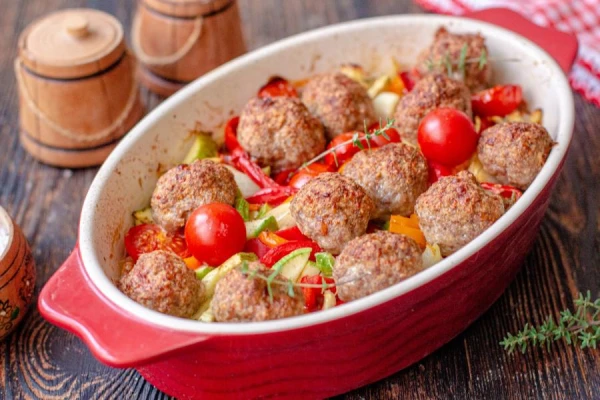
Couscous has become beloved by hosts for its versatility: it pairs wonderfully with any ingredients! Couscous harmonizes with lamb, veal, chicken, and pork, without overshadowing the meat's aroma; on the contrary, it absorbs and enhances it. That is why, in Eastern cuisine, herbs and spices are often added to this grain: they reveal their full variety. Cardamom, cumin, turmeric, rosemary, celery—all of these are appropriate!
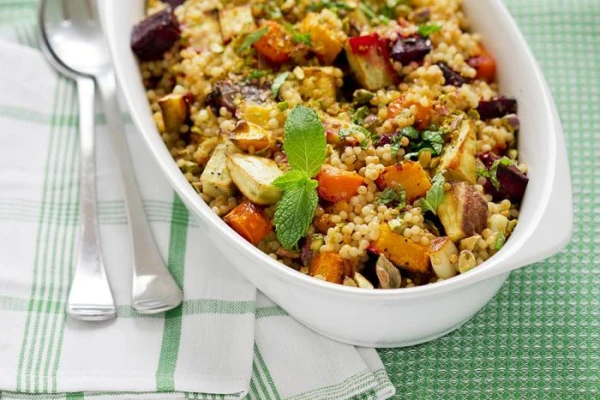
Couscous is also indispensable in salads: it adds richness to vegetables and greens and quickly satisfies hunger (100 g of couscous usually contains 370 kcal). Couscous is also essential in tabbouleh (an Arab appetizer made from finely chopped greens, tomatoes, herbs, black pepper, and lemon juice). The grain unites vibrant ingredients into a whole and balances them with its mild flavor. Plus, it provides a full dose of fiber. So, if you are tired of traditional salads made from tomatoes and cucumbers, be sure to try tabbouleh with couscous!
Quick and Easy
Another important advantage of couscous from the Maghreb is its ease and speed of preparation. Nowadays, everyone lacks time, and spending several hours at the stove is an unreasonable luxury. With couscous, we are not talking about hours: a side dish can be prepared in just 5 minutes by pouring boiling water or milk over it to your taste (usually a 1:1 ratio is used).
In its homeland, Africa, it is usually steamed—just 7–8 minutes is enough. Moreover, in Berber cuisine, there is a two-tier steamer called a couscoussier, or couscous pot. This consists of two connected rounded pots made of ceramic or metal. In the lower part, broth, fish, meat, or chicken is cooked with spices, while on top, couscous absorbs all the splendor. However, regular pots can also handle this task.
For many of us, couscous will be a more appealing option compared to the familiar semolina: it lacks its specific aroma, and its airy texture is nothing like porridge. It is more crumbly, textured, and light. Additionally, the side dish has a sunny yellow color, and it looks great both on its own and as one of the colorful components of a salad or hot dish. Couscous can be an excellent alternative to rice, buckwheat, or mashed potatoes in your home menu, adding variety, interest, and health benefits to your daily diet.
Adding Benefits
Couscous is rich in B vitamins, which contribute to the normal functioning of the nervous system. This product also contains iron, zinc, potassium, and selenium—an antioxidant that positively affects the thyroid gland. Furthermore, the glycemic index of couscous is lower than that of white bread or polished rice. This means that the feeling of fullness from it will last longer.