Sophia Loren is attributed with the famous phrase: “Everything I am, I owe to spaghetti.” It is not so important whether she actually said it. However, the fact remains: pasta can provide energy, improve mood, and inspire new ideas. Don’t believe it? It’s simple. Pasta is a carbohydrate product, and carbohydrates provide energy and promote the production of happiness hormones.
But how much pasta can one consume in a day without harming their figure? How should it be chosen and prepared correctly? These questions were answered by nutritionist Tatyana Solntseva.
First of all, it is worth finding out whether pasta is healthy or harmful. “Pasta is a product rich in carbohydrates,” says nutritionist Tatyana Solntseva. “Even if you love pasta and eat it often, you shouldn’t suffer from pangs of conscience. Under certain conditions, this dish can be a good addition to your balanced diet. The main rule: choose high-carbohydrate products with high fiber content and minimal processing.”
The Choice of Flour is Important
The first condition is the correct choice of product. It is best to prefer pasta made from durum wheat flour. They contain 14% protein, which is quite a lot. “Pasta made from durum wheat is part of the most popular and officially recognized healthy Mediterranean diet. Even more beneficial are whole grain pasta — they contain more fiber and B vitamins,” notes the expert.
It is also worth paying attention to pasta with additives — spinach, tomatoes. They have green and red hues. You can also find pasta made from buckwheat flour or legume flour, which contain more protein. Rice and corn pasta are comparable in health benefits to pasta made from white flour.
Sometimes, spirulina algae extract is added to pasta to give it a green color, making it more beneficial.
Undercooked is Better
The second condition is proper cooking. It is better to slightly undercook the pasta — as chefs say, bring it to the state of “al dente.” Carbohydrates from such pasta are absorbed more slowly than from overcooked ones, which prevents a sharp spike in blood glucose levels. This positively affects metabolism.
After boiling pasta made from legumes or buckwheat flour, do not pour out the water — it retains proteins and other beneficial substances. Based on this broth, you can prepare a healthy sauce for the same pasta.
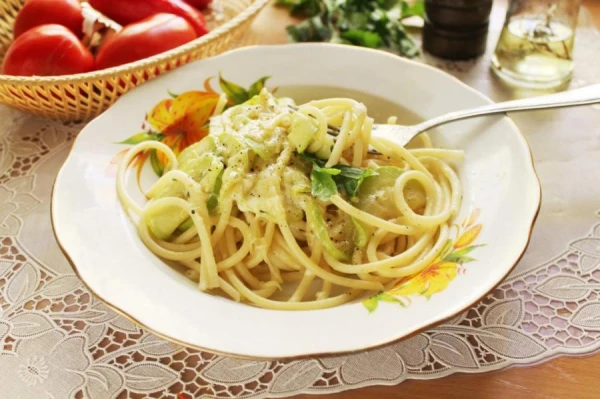
What to serve with pasta? A great option is pasta with vegetables. First, such a dish will not be too high in calories. Second, we add fiber, which is beneficial for digestion, as well as vitamins and minerals. It is known that cooked carrots and tomatoes have even greater nutritional properties than raw ones. Therefore, vegetable stews are an excellent addition to pasta.
Pasta with mushrooms is another healthy option. Mushrooms are a source of fiber and protein, and they also contain beta-glucans. These insoluble polysaccharides play an important role in regulating the diversity and activity of gut microbiota, which positively affects immunity, blood formation, and also lowers cholesterol and blood sugar levels.
Bolognese pasta, made with tomato sauce, spices, and minced meat, can also be considered a healthy pasta dish. Tomato sauce contains lycopene — an antioxidant. If you are cooking at home, it is better to choose lean minced meat to slightly reduce the dish's calorie content.
If you love pasta with cheese, choose lower-fat varieties. Cheese itself is a good source of protein and calcium.
It is not recommended to frequently consume fatty sauces with pasta (for example, those based on high-fat cream) and to fry pasta in a large amount of oil until crispy.
A Quarter of the Plate Should Be Pasta
The third condition is a sense of proportion.
“Don’t forget that half of your daily plate should consist of non-starchy vegetables (cabbage, tomatoes, cucumbers, spinach, etc.), about a quarter of the plate should be protein foods, and the remaining quarter should be high-carbohydrate foods, which includes pasta. So, a few times a week, you can definitely allow yourself your favorite pasta,” advises the nutritionist.
Why do Italians eat pasta almost every day and not gain weight? “Italians are evolutionarily and genetically adapted to such food,” explains the expert. “They typically consume pasta made from durum wheat and do not add very fatty sauces. That’s the whole secret.”