
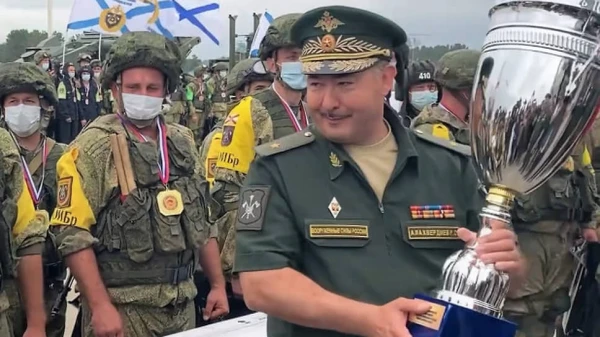
By directing cash flows, he did not shy away from televisions.
Former Deputy Chief of the Engineering Troops of the Russian Armed Forces for Armament and Military Science, Major General Ruslan Alakhverdiev, who was accused of corruption, went to war in Ukraine, and the investigation into the criminal case against him has been terminated.
In 2022, Alakhverdiev filed a petition for release from criminal liability and to be sent to the zone of military operations, stating his desire to atone for his guilt "including with blood," as reported by Kommersant. However, the investigator rejected his request. "I am a combat general and would be useful there," Alakhverdiev said.
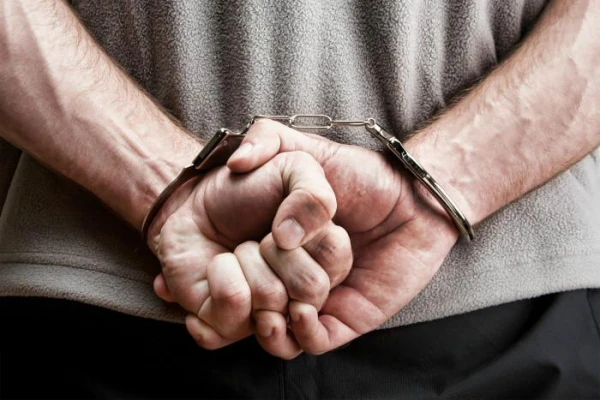
Ruslan Alakhverdiev was detained in the summer of 2021. His case involved five episodes of bribery (Article 290 of the Criminal Code) and abuse of office (Article 285 of the Criminal Code). The general faced up to 15 years in prison.
After his arrest, Alakhverdiev submitted a resignation report from the armed forces, which was signed by the higher command. The order to remove the general from the position of Deputy Chief of the Engineering Troops and to dismiss him from the Russian Armed Forces was issued in August 2021.
Alakhverdiev was accused of receiving bribes totaling more than 8 million rubles in the form of property and services from the heads of various organizations — contractors for government contracts, including from companies supplying equipment to the engineering troops. The case materials stated that monetary rewards were given "for the unobstructed resolution of issues."
The most substantial bribe, totaling 6.7 million rubles, was allegedly received by Alakhverdiev between 2017 and 2021 from Nikolai Semeikin, the CEO of the Moscow LLC "Logis," which is engaged in scientific research and development in the field of technical sciences. A TASS source clarified that this episode was related to the supply of mine detectors, radars, and other equipment to the armed forces under government contracts. The case also involved bribes totaling over 1 million rubles from the heads of the Joint Stock Companies "Klintsy Crane Plant" and "Galich Crane Plant."
At least 3.4 million rubles of the bribe money, according to the investigation, the general attempted to legalize through payments to sculptors who erected monuments to sappers who served in Syria, Afghanistan, and fought during the Great Patriotic War.
During the interrogation, Alakhverdiev acknowledged receiving funds under government contracts but indicated that they were spent in the interests of the Armed Forces of the Russian Federation. According to him, the money was directed, among other things, to the installation of a monument to Afghan warriors in Victory Park, the repair of military units, and the construction of a gym for servicemen.
Among other things, Alakhverdiev was suspected of receiving a bribe in the form of a television, which he stored in the warehouse of the military unit and then removed from there "to conceal the traces of the crime." The general himself stated that he did not understand which television was being referred to.
In addition, Alakhverdiev was accused of abusing his official powers. According to the investigation, from 2019 to 2021, he repeatedly gave illegal instructions to commanders of military units and institutions located in Moscow and the Moscow region to send servicemen to perform various tasks at summer cottages in the "Lipki" gardening association in the Krasnogorsk urban district of the Moscow region. The work was carried out at dachas owned by the general himself and his close acquaintances.
At trial, Alakhverdiev admitted guilt in abusing his powers but denied involvement in receiving bribes. Initially, the court chose a preventive measure for the general in the form of a written undertaking not to leave. After that, Alakhverdiev, according to the military counterintelligence of the FSB, began to meet and communicate with witnesses, trying to persuade them to change their testimonies, as reported by Kommersant. The investigation claimed that the accused wanted to create an alibi for himself and, through intermediaries, persuaded the heads of the Federal State Institution "International Mine Action Center of the Armed Forces" (located in Nakhabino) to testify that he had given them money from industrialists, which was then spent on receptions for foreign delegations.
At that time, the court granted the investigation's request and placed Alakhverdiev in custody, sending him to a pre-trial detention center. The lawyers appealed this decision, requesting to replace the preventive measure with house arrest. They pointed out that Alakhverdiev had not violated the written undertaking not to leave, had seriously ill parents for whom he was caring, and had also participated in combat operations.







Leave a comment