
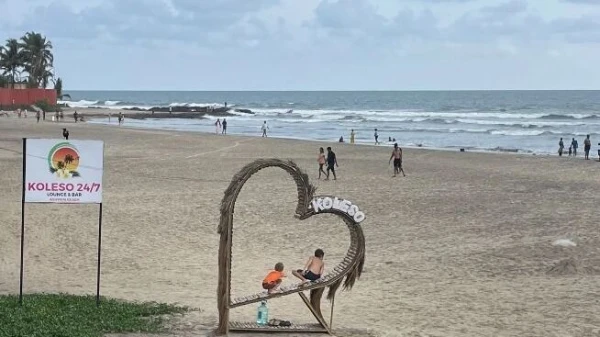
It was a place of absolute, almost childlike freedom.
While Russia attracts Indian workers with high salaries and diplomatic protection, a systematic campaign to expel Russians is unfolding in Goa. Relocators and entrepreneurs find themselves trapped in "blacklists," losing their assets, housing, and rights under the pressure of corrupt police.
If people travel from India to Russia for a piece of bread and a salary of one hundred thousand rubles, then those coming from Russia to India do so for peace of mind, sunshine, and an attempt to build a business in "paradisiacal" surroundings. India gladly accepts Russian money but is in no hurry to protect those who bring it. Our compatriots arrive there with "open hearts," often forgetting that for local legislation and mentality, a foreigner is a temporary resource that can and should be expropriated.
"It was a place of absolute, almost childlike freedom, where one could live in 'shanti' mode for years," said Olga T., a Russian who has lived in Goa for about five years. But this carefree attitude became the perfect bait for the trap that closed in 2020 and ultimately crushed destinies by 2026.
The main core of the current "involuntary illegal immigrants" consists of those who arrived in India before the pandemic. When the quarantine ended, the loophole turned into a noose. To obtain the coveted exit permit, people have to go through the circles of bureaucratic hell.
"At first, it cost 500 rupees, and then the amounts began to grow exponentially," said Mikhail V., a Russian living in Goa for six years, to Novye Izvestia.
Those who wanted to leave legally faced a choice: either give away their last money or go underground. This led to the emergence of entire "invisible" colonies of Russians. The most vivid example is the village of Kerim. This place is called the "police village" because the police themselves own the real estate here. They have created a perfect corrupt ecosystem: they rent housing to Russian "non-returnees" and cover them as well.
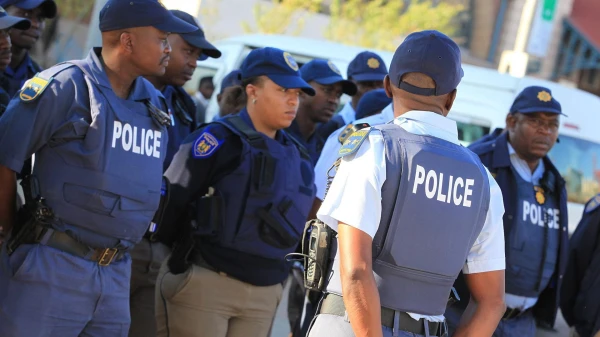
Starting in 2024, strict purges began by order from Delhi. Police powers were expanded to the limit. There are checkpoints on the roads where they can stop and search. Police look for any excuse to extort money from tourists. They are particularly angered by those whose documents are in order.
"When they see a legal business visa or ID, their faces change — it means it's harder to catch them," shares Mikhail V.
One of our compatriots was lured into a meeting by police who staged a cynical play in a messenger. A girl named Polina contacted the guy, and under the pretext of signing up for an esoteric consultation, arranged a date at a café. But operatives showed up at the meeting. After arresting the Russian, the Indian cops couldn't resist mocking him, laughing in his face: "Did you really not realize that Polina is Police?".
After the disconnection of SWIFT, Russians switched to P2P transactions with cryptocurrency. The police (sometimes in collusion with scammers) use a scheme with UPI addresses: they block Russians' accounts under the pretext of "fraud," demanding kickbacks for unblocking.
Why do the smiling "brothers" so easily resort to betrayal? Experts explain this with a caste mentality. Larisa Mikallef points to the priority of "dharma" (duty to the caste) over European "contract ethics." This idea is further developed by Dmitry Nizamov, export director of the METIZ Group.
"The border is where facts end and automatic generalization begins. The stereotype 'Indians are cunning and want to deceive' sometimes arises from their tougher bargaining and negotiation tactics: what looks like deception may be a test or an attempt to improve conditions. At the same time, we should not romanticize: any risks need to be covered by business tools — transparent correspondence, protocols of agreements, clear KPIs, and legal mechanisms. Culture helps understand motives but does not replace risk management," said the expert.
It is precisely due to the lack of such strict control mechanisms that Indian "nominals" easily seize businesses, as happened with the Koleso café in Mandrem. When opening a business with an Indian partner, a Russian (or another foreigner) effectively has no rights. And if suddenly the local co-owner decides that the business is thriving on its own and does not need any outsider as a partner, he can simply "squeeze" the café (restaurant, hotel...) and will be right. By law.
A Brief Guide to Powerlessness: What (Not) an Investor Can Do in India
Land is only for locals. Foreigners are legally prohibited from purchasing agricultural land, plantations, and farms. Even registering a legal entity allows ownership of real estate only for an office or factory, and in Goa, this process is blocked by stringent residency requirements.
The "nominal" trap. Due to prohibitions, 90% of Russian businesses in Goa are registered in the names of local "friends." Legally, the Indian owns everything, while the Russian who invested millions owns nothing, allowing the partner to take the asset for himself at any time with full legal support.
Investment barriers. In IT or manufacturing, one can own 100% of a company through the "automatic route." However, in retail and media, one must go through a "government filter," where only a few receive approval.
Withdrawing money: "white" or none. Repatriation of profits is legal only for officially registered companies (Private Limited) with transparent invoices. Those who funnel money through P2P schemes are immediately subject to account blocking without the right to restore.
Intellectual deadlock. Although laws protect brands, in reality, proving authorship of a café design or menu in a provincial court against a local resident is impossible. A foreigner without a local intermediary always loses to the "principle of social proximity."








Leave a comment