
Opponents of the persecution appeal to human rights.
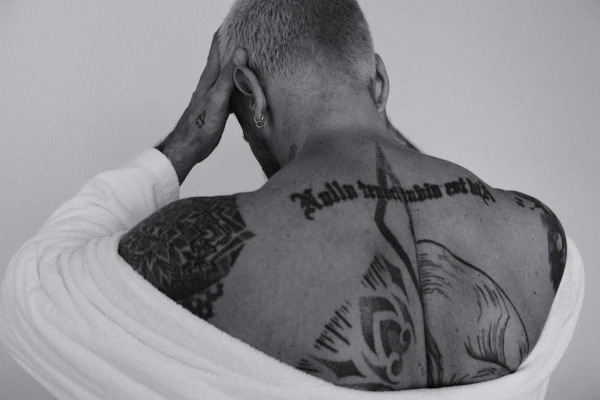
The authorities of the federal state of Lower Saxony have presented a bill that will allow for physical inspections of police officers if there are suspicions of their connections to extremist movements. This concerns a possible reform of disciplinary legislation initiated by a coalition of the SPD and the Greens. According to the developers' plan, the inspection of tattoos should help identify police officers who have symbols banned by German laws, such as swastikas or SS skulls, on their bodies.
These images are considered propaganda for National Socialism and are prohibited by the German Penal Code. A representative of the Greens in the Lower Saxony Landtag, Michael Luhmann, explained that the new measure will only be applied when there are specific grounds. If police leadership has substantial evidence of a possible connection between an officer and extremist organizations, a court will be able to authorize a visual inspection of the police officer's body.
Thus, the decision to conduct an inspection will not be made by a police doctor, but by a judge. This, according to the initiative's authors, will protect officers from arbitrary actions by superiors and ensure the observance of human rights.
Disciplinary Law — Without Clear Rules
SPD representative Alexander Saade noted that current legislation lacks a legal mechanism to check for such symbols. The new law is intended to fill this gap and create a legal basis for disciplinary investigations.
At the same time, the Ministry of the Interior of Lower Saxony emphasized that a body inspection is possible only when there is real evidence of serious misconduct. This means that inspections will not be mass and will only be applied in exceptional cases, as clarified by t-online.de.
Right-Wing Extremists in the Police — Not Isolated Cases
The issue of right-wing extremism in German law enforcement remains a sensitive one. According to an investigation by RTL and Stern magazine, last year there were about 200 disciplinary and criminal cases against police officers suspected of connections to right-wing radical movements or the spread of conspiracy theories in various federal states of Germany.
However, experts believe that the actual number of such cases may be higher, as not all states provide statistics. For example, precise data is lacking in North Rhine-Westphalia, Berlin, and Mecklenburg-Vorpommern.
Different Opinions Within the CDU
Just last year, the Minister of the Interior of North Rhine-Westphalia, Herbert Reul (CDU), harshly condemned cases of extremism among police officers. He stated that officers are obligated to protect democracy and the rule of law, and those who do not should be dismissed.
Nevertheless, the CDU's position in Lower Saxony has been different. Faction representative Andre Bock believes that the planned tattoo inspection is a "humiliation for officials" and a "distrust of the entire government apparatus." According to him, such measures contradict the principles of a modern legal state and undermine morale within the police.
Why the Issue Sparked Controversy
On one hand, the Lower Saxony government believes that combating right-wing extremism in the police requires decisive action. On the other hand, critics warn that such inspections may be perceived as an invasion of privacy and lead to a loss of trust among law enforcement personnel.
Additionally, lawyers point to the need for clear procedural rules and guarantees to prevent abuse and ensure transparency in the process.
Possible Consequences
If the bill is approved, Lower Saxony will become the first federal state in Germany where tattoo inspections will receive official legal status. This could serve as an example for other regions where the issue of right-wing extremism in law enforcement also raises concerns.
Thus, the new initiative reflects the overall trend in German politics — a desire to tighten control over employees of state bodies, especially in the security sector. But for now, the question remains open: where is the line between protecting democracy and violating personal freedoms.








Leave a comment