
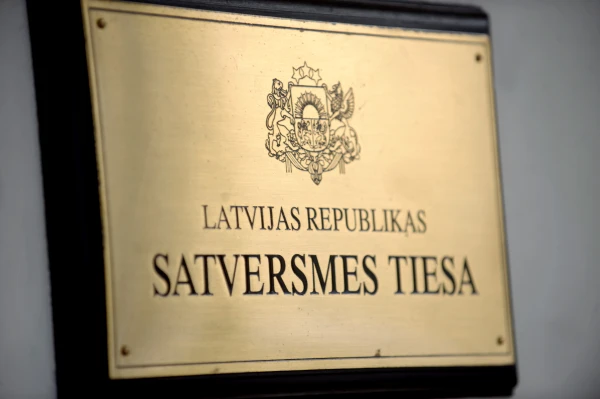
The Constitutional Court (CC) recognized the provision that prohibits spouses, one of whom has been convicted of a violent crime, from adopting or fostering a child living in the family under non-family care without an individual assessment as unconstitutional, the LETA agency reported from the court.
The Constitutional Court has already examined the contested provision in a similar case and ruled that the prohibition on becoming an adoptive parent without an individual assessment does not comply with the principle of proportionality.
As the court indicated, the question of whether a specific individual's criminal conviction in the process of adoption poses a threat to the rights of the child can be established through an individual assessment of potential risks in each specific case.
In adopting this provision, the legislator, while considering ways to protect children from violence, did not take into account whether it best serves the interests of the child in cases where the individual's conviction has been expunged, the individual has successfully undergone resocialization, and is capable of creating a safe and favorable family environment for the child.
The case in the Constitutional Court was initiated at the request of the Riga District Court, which is reviewing a civil case regarding a joint application by spouses for the adoption of a child who has been living in their family for a long time.
One of the parents had previously been convicted of crimes related to violence, thus failing to meet the criteria for adoptive parents. According to the plaintiffs, the refusal to allow adoption restricts not only their rights but also the rights of the adopted child to family protection, is not proportional, and does not comply with the Constitution.
The Constitutional Court acknowledged that the possibility of a child being adopted by an individual convicted of a violent crime is associated with a potential threat to the child's safety, and this is one of the circumstances that may negatively affect the child's right to grow up in an environment free from violence. However, the goals of protecting the child from violence can also be achieved through other means that impose lesser restrictions on the rights of individuals, the court stated.
Regarding the plaintiffs in the case being reviewed by the Riga District Court, the contested provision has lost its force as of July 12, 2024, but in order to protect the fundamental rights of all individuals who find themselves in a similar situation, it is recognized as invalid from the moment of its application. The decision of the Constitutional Court is final and not subject to appeal.














Leave a comment