
President Truman pressured Moscow regarding the Korean War.
“Hybrid warfare” is a phenomenon well studied in military science. All its scenarios and methods are well known in history. There are actually only two models of behavior for the attacking side when conducting a hybrid operation, and both are familiar to us. The first is to deny everything after the attack, saying, “ItWasNotUs” and “WeAreNotThere.” The second is to immediately admit guilt and apologize. This also happens.
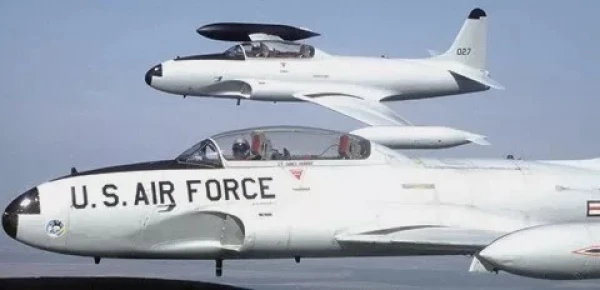
On October 8, 1950, a Soviet military airfield located near the village of Sukhaia Rechka, 150 km from Vladivostok, was subjected to an air attack involving two U.S. Air Force Shooting Star fighters. As a result of the raid, the strike group of Soviet aviation at the airfield was destroyed – 7 aircraft were damaged, and one was completely burned. Interestingly, the Bell P-63 Kingcobra planes, which had recently been received by the USSR from the USA under lend-lease, were based in Sukhaia Rechka. The air defense systems failed to detect the attack, and no aircraft managed to take off. The Korean War was already underway, and the involvement of Soviet aviation on the side of North Korea was no secret to the USA. The air attack, carried out by just two pilots - Olton Kwonbek and Allen Diffendorf, was a warning sign and a political signal – “we see you.” Was this incident a violation of the “red lines”? Of course, yes.
Air Force General Georgy Lobov, who commanded aviation in the Far East, sent a report to Moscow, the contents of which have been classified by agreement with the U.S. government to this day. It is only known that on October 8, 1950, he placed all subordinate aviation units on full combat alert, declaring the strike on the airfield “Sukhaia Rechka” the beginning of World War III. The Kremlin remained silent. There was no response to the attack. World War III did not happen.
Eleven days later, U.S. President Harry Truman made a statement in which he admitted guilt, apologized, offered compensation for “any damage caused to Soviet property,” and reported that Olton Kwonbek and Allen Diffendorf were handed over for trial. The reason for the attack was given: the pilots allegedly mistook the red stars on the sides of Soviet aircraft for military markings of the North Korean Air Force. In Moscow, the signal was understood; the hybrid attack ended with Washington's apology. The world was very lucky that day. But not everyone.
The military pilots of the U.S. Air Force were found not guilty by the tribunal, and both soon received promotions. Moscow stated that no Soviet citizens were harmed in the attack on the airfield. And only near the village of Sukhaia Rechka did burial site No. 106 appear - “the nameless mass grave of Soviet pilots who died while repelling the attack of American bombers in 1950.”
From “hybrid” war to a real one – one wrong act, one shot, one strike. It is important to remember and understand this.






Leave a comment