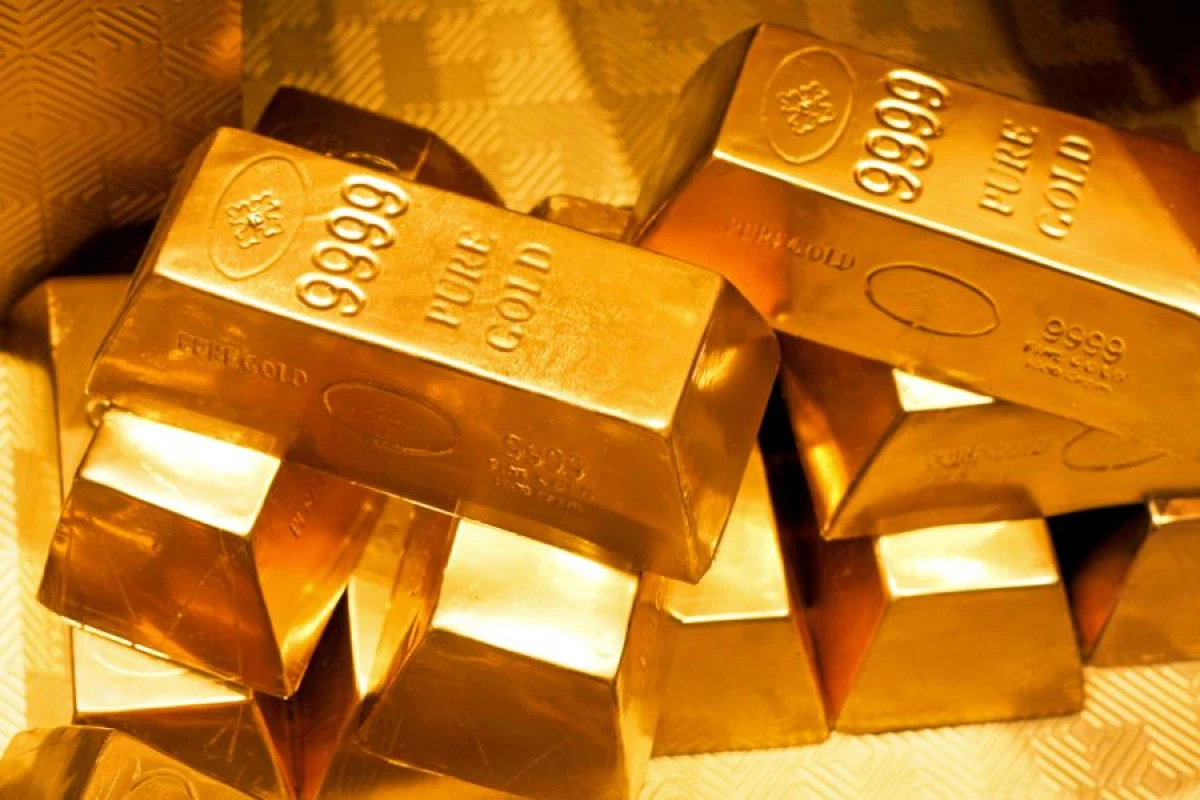
Gold is preparing for its fourth consecutive month of decline, even though inflation in the U.S. has reached a three-year high. Why is the price of gold currently determined not by inflation, but by rising rates?
It is believed that gold is bought precisely when prices are rising rapidly.
However, inflation in the U.S. is currently at a three-year high, and gold has been declining for the fourth consecutive month, trading about a quarter below the record highs set in January 2026.
The metal that is supposed to protect against inflation is behaving quite the opposite for now.
What is the reason? The answer sheds light on an important misconception about gold and explains why this precious metal does not always serve as a reliable hedge against inflation, as it is commonly thought.
Gold Suffers from High Rates and Rising Corporate Profits
First, it is important to understand what gold is not. It does not provide coupon income like bonds, nor does it pay dividends like stocks.
Therefore, gold is extremely sensitive to the yields of alternative investments.
When government bond yields are close to zero, holding a bar of metal costs almost nothing. But as soon as bonds start to provide a noticeable real yield, the opportunity cost of owning gold increases, and buyers take a pause.
The same logic applies to the stock market: when the economy generates profits, companies grow and increase dividends, and once again, the cost of forgoing those earnings in favor of gold rises.
Gold or Oil: Which Better Protects Against Price Increases During the Iran War
This is the scenario that markets are currently pricing in. In the first quarter of 2026, earnings per share for companies in the S&P 500 index rose by 25% compared to the previous year, and analysts expect annual profit growth rates to remain in double digits at least until the last quarter of 2027.
At the same time, inflation is being pushed up by an energy shock related to the conflict with Iran, as well as the lingering effects of imposed tariffs.
Central banks are responding with a tight monetary policy.
The European Central Bank already raised rates in June, and now attention has shifted to the Federal Reserve under the new chair Kevin Warsh.
The Market Suddenly Prices in Rate Hikes, Not Cuts
At his first meeting, Warsh made it clear that he takes a hawkish stance.
He presented rising prices not as a coincidence but as a failure of policy, telling markets that "inflation is a choice" and that "this committee will ensure price stability."
Soft, "dovish" wording that many were hoping for did not materialize. Nine members of the Fed's leadership now expect a rate hike this year.
Investors quickly reassessed the situation. Federal funds rate futures are now pricing in approximately one hike by September and almost two by the end of 2026, which sharply contrasts with the series of cuts that the market was expecting just a few months ago.
Some analysts believe that even this scenario is too cautious.
Gold Bulls Retreat
Just a year ago, almost everyone was bullish on gold: amid uncertainty surrounding tariffs and expectations of rate cuts, the metal attracted money like a magnet. Now, however, the bulls are leaving the market.
Goldman Sachs has lowered its gold price forecast for December 2026 to $4,900 per ounce from $5,400, citing the same "hawkish" surprise from Warsh and the postponement of the easing timeline. In a more stringent scenario, with all rate hikes implemented, the bank expects gold prices to fall to around $4,440.
Commodity analysts at Bank of America now believe that a move towards the $6,000 mark in the near future is unlikely.
"The increased likelihood of rate hikes by December 2026 is closely correlated with the decline in gold prices. Or, to put it another way, the shift from so-called 'inflation easing' to a tighter monetary policy reduces the growth potential of gold by about 50%, all else being equal," stated Bank of America analyst Michael Widmer in a report.
When Buying Gold Is Justified
From all this, it does not follow that gold is finished. It merely means that the conditions under which the metal truly feels secure are changing.
Gold typically performs brilliantly when inflation is falling and central banks are cutting rates: real yields drop, and the opportunity costs of owning the metal decrease rapidly.
Gold also performs well during periods of slowing growth and stock market downturns, when capital flows into safe assets.
History shows: gold performs best not just during high inflation, but when inflation is high and monetary policy remains loose.
The Myth from the 1970s
The notion of gold as an automatic hedge against inflation largely stems from the 1970s when price increases spiraled out of control, and authorities responded too slowly.
Amid rampant inflation and the inability of policymakers to rein it in, real rates went deep into negative territory, and investors flocked to "safe havens" like gold.
Gold skyrocketed because nothing else provided protection.
With persistent inflation and the inability of authorities to contain it, real rates became sharply negative, and investors turned to safe assets, including gold.
The price of the metal soared precisely because there were almost no other ways to secure savings.
Today, the picture is quite different. Gold faces headwinds from rising rates, higher bond yields, and a strengthening dollar. Meanwhile, the economy, especially the U.S. economy, remains resilient: unemployment is close to historical lows, and technology companies are showing explosive profit growth.
The conclusion is unpleasant but clear: buying gold solely on the basis of rising inflation may prove to be a mistake.