Gasoline cannot be replaced by promises, slogans, or explanations.
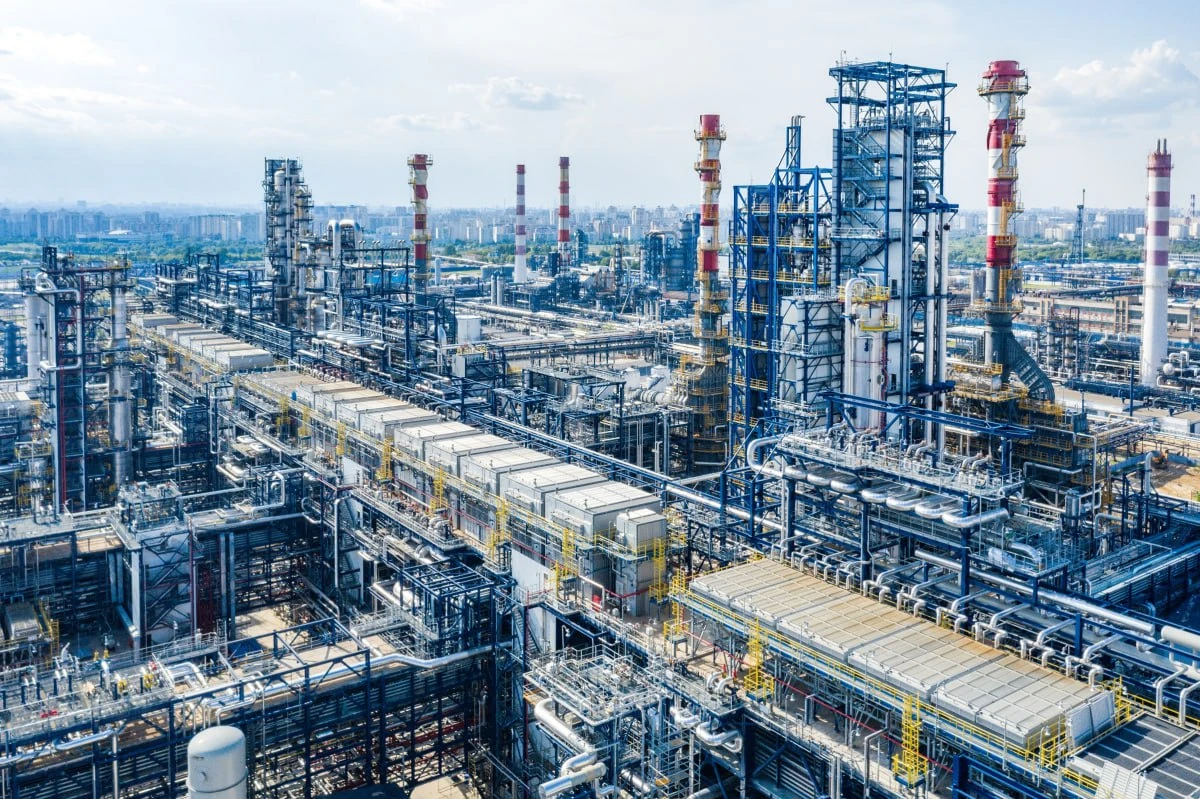
The government has allowed certain refineries to produce gasoline and diesel fuel for the domestic market with deviations from the technical regulations of the EAEU regarding sulfur content and other quality indicators. This is reported by "Kommersant" citing a source. According to him, the corresponding government decree was adopted in the fall of 2025. Initially, the supply of such fuel was permitted until May 1, 2026, and then the measure was extended, although the source did not specify for how long.
According to him, the decree applies to refineries that have a certificate of registration for entities engaged in oil refining operations in accordance with Article 179.7 of the Tax Code of the Russian Federation. This also concerns refineries that have entered into agreements with the Ministry of Energy on the introduction of new deep processing units and are entitled to receive a reverse excise tax.
According to the newspaper's source, under the decree, refineries have been granted the right to release Euro-5 class gasoline with a sulfur content of up to 150 mg per kg into circulation on the domestic market. For diesel fuel, the decree sets a maximum sulfur level of 350 mg per kg. These indicators correspond to the environmental class "Euro-3." The current technical regulations stipulate that Euro-5 class fuel should have a sulfur content of no more than 10 mg per kg. The gasoline is also allowed to contain aromatic hydrocarbons at a level of 42%, monomethylamine, octane-boosting additives — 1%, and ethanol — 5%.
It should be noted that until July 31, the export of gasoline from Russia is prohibited for all market participants, and for traders — the export of diesel fuel. Additionally, the export of aviation kerosene is restricted until November 30. Furthermore, Rosaviatsiya has imposed a limit on refueling aircraft of foreign airlines. These measures are in effect in Mineralnye Vody, Makhachkala, Nizhny Novgorod, and other settlements.
"The permission to produce gasoline and diesel with 'Euro-3' parameters is not only about ecology, but primarily a signal for the average person that the fuel system is starting to operate in emergency mode. And it is important not to dramatize this. The deterioration in fuel quality means that more strain on the auto system will lead to expensive repairs. For older cars, this may go almost unnoticed, but for owners of new cars, the usual standard of living will quietly roll back.
Politically, gasoline has always been a special commodity. It is not just a consumer product. It is the lifeblood of everyday economics. Work commutes, store logistics, agriculture, taxis, deliveries, public transport, aviation, food prices all depend on gasoline. Therefore, fuel shortages are perceived by people as much more painful than many other problems. Gasoline cannot be replaced by promises, slogans, or explanations. It is either available at the gas station, or it is not.
There are many historical examples where a fuel crisis became a blow to political stability. In Sri Lanka in 2022, queues for gasoline and power outages became one of the visible symbols of economic collapse, which ended in mass protests and the fall of the president. In Kazakhstan, the January 2022 crisis began precisely with a sharp rise in liquefied gas prices, which many cars in the western regions relied on. In Iran, the rise in prices and rationing of gasoline in 2019 quickly escalated into anti-government protests. Even in France, the "yellow vests" movement began not with a grand ideology, but with irritation over fuel taxes and a sense that the government did not understand the lives of people outside the big cities.
Gasoline rarely collapses a political system by itself. But it easily becomes a trigger if society is already living in a state of fatigue, inflation, distrust, and constant deterioration of everyday norms. Therefore, the story with 'Euro-3' is also important as a marker that the authorities are trying to maintain fuel availability at any cost — even at the cost of quality.