
Underrated heritage of the Northern Capital.
In St. Petersburg and its surroundings, there are many deteriorating historical buildings. To save them from destruction, the city authorities introduced a preferential program for private investors in the late 2010s with the telling name "Ruble per Square Meter." Similar programs have long been successfully implemented across Europe, but in St. Petersburg, little has come of this initiative so far.
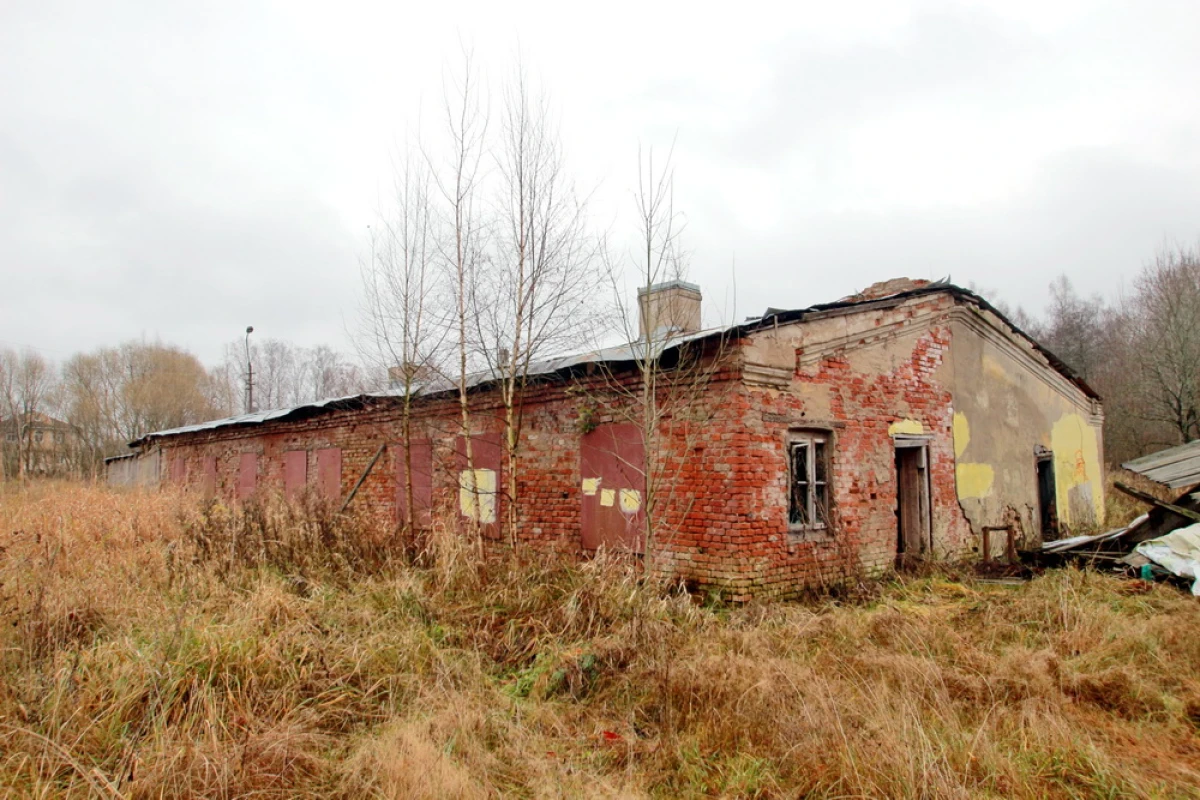
A gray single-story building with lightning-like cracks and boarded-up windows, next to it construction debris. The entrance to the building is open, but inside there is darkness; even the walls cannot be discerned, the plaster has fallen off, and bricks have fallen out in several places. The roof is covered with a thin layer of metal that has begun to break and bend. In the old wooden window frame, a green mesh has been inserted instead of glass. Everything around is overgrown with grass and bushes, and even a thin young tree is sticking out of the chimney. This could be an ordinary "abandoned building" that can be found in most cities in Russia, but this time it concerns a cultural heritage site in Peterhof — the greenhouse of the "Private Dacha."
In the early 18th century, the area near Peterhof, where the palace and park ensemble "Private Dacha" is now located, was divided into six plots owned by Peter I's close associates. In 1727, Prince Dolgorukov began constructing a stone "seaside manor" on one of his lands. The greenhouse complex in the park appeared in 1843 — by the end of the 19th century, it included three originally wooden greenhouses, which were then rebuilt in the early 20th century, with new buildings made of concrete. Today, only one building of the entire greenhouse complex remains, with an area of 271 sq.m. After 1917, the "Private Dacha" became state property and turned into one of the museums of Peterhof. In 1960, the ensemble received the status of a state-protected monument, and since 2001 it has been classified as a federal cultural heritage site.
In 2019, the greenhouse building of the "Private Dacha" was put up for auction under the St. Petersburg city program "Ruble per Square Meter." However, the winning bidder, individual entrepreneur Maxim Pavlov, refused to pay the funds (he did not respond to a request for comment). A year later, the auction was held again, and the greenhouse was awarded to the "Moscow Investment and Construction Company." But they also did not begin restoration work. In September 2025, the building was once again put up for auction. The winner was LLC "Trading House 'Dzhomkhom,'" which, according to the Rusprofile service, is engaged in leasing and managing its own or leased real estate. And by December, the greenhouse of the "Private Dacha" was again supposed to participate in the auction — the organizers did not disclose the reasons for the repeated auctions. This time, no applications were submitted, and the auction was declared unsuccessful.
As a result, over six years, the greenhouse has changed three tenants, and now it is not rented at all. And it continues to deteriorate. According to the Committee for State Control, Use, and Protection of Historical and Architectural Monuments of St. Petersburg (KGIOP), the "Ruble per Square Meter" program is aimed at attracting investors for the restoration and involvement in circulation of unused cultural heritage sites that are in unsatisfactory condition. Within this program, sites are put up for auction and leased to the winners for 49 years. The investor must carry out a complete restoration of the building within seven years (the first two years can be spent on preparing project documentation).
At the same time, tenants start paying one ruble per square meter, as indicated in the program's name, only after the restoration is completed. In case of failure to fulfill the obligations for restoring the site within the established timeframe, the city can terminate the lease agreement.
In St. Petersburg, there are about 150 cultural heritage sites in unsatisfactory condition. Since 2019, the Committee for State Control, Use, and Protection of Historical and Cultural Monuments of St. Petersburg has prepared 20 cultural heritage sites for the "Ruble per Square Meter" program. As a result of the auctions, 13 buildings were transferred to investors, but five of them, in addition to the greenhouse of the Private Dacha, have still not found tenants. Currently, information about the greenhouse in the "Ruble per Square Meter" section on the KGIOP website is completely absent, but it is listed on the city’s real estate inventory and assessment management website, and information about the unsuccessful auctions can also be found on the "gis.torgi" website.
Dmitry Litvinov, coordinator of the St. Petersburg urban protection movement "Living City," notes that to date, complete restoration has only been finished at two addresses under the "Ruble per Square Meter" program — at the Kolobov Library, built in the early 20th century, and at the Alexander Gates of the Ohta Powder Factory, erected in the "Classicism" style in 1806. Moreover, the library was initially in the best condition compared to all other buildings. The repair of the Alexander Gates was carried out by a major St. Petersburg developer, Igor Vodopyanov, as his own patronage project.
"Restoration work is currently underway at the Bryullov House on Cadet Line. A project for adaptation has recently been presented for the Horse Riding Department — the largest of the sites in the 'Ruble per Square Meter' program — developed by 'Studio 44' of Nikita Yavein, but the actual work has not yet begun; the project was approved by KGIOP in April 2026.
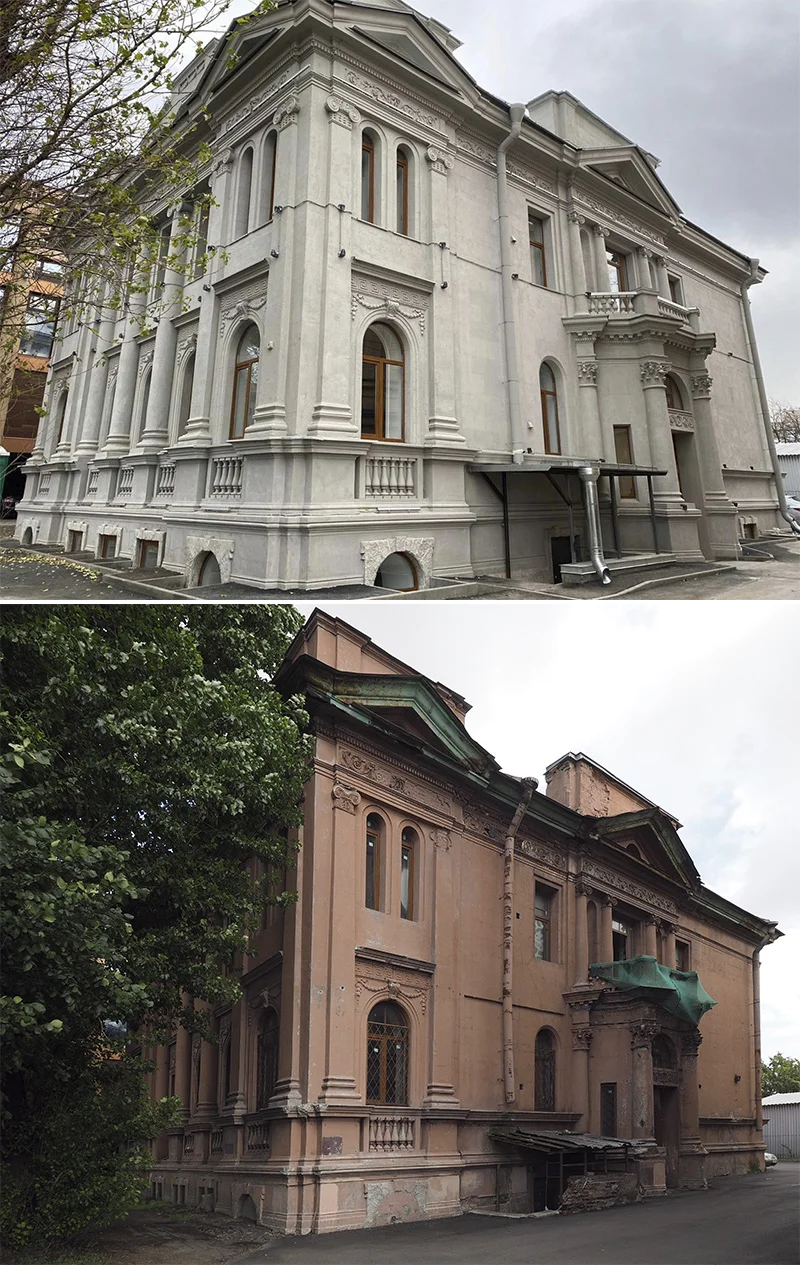
No encouraging information has emerged regarding the other sites so far. The ruined wooden monuments in Sestroretsk — the Koshkin Dacha, built in the early 20th century and partially destroyed in the spring of 2018, and the Zmigrodsky House, built in the neo-Russian style in 1902 and partially damaged by fire in 2010 — have already been taken from the first insolvent tenants and leased again. Given this, the program is hard to call particularly successful," concludes the expert.
The reasons, according to Litvinov, can vary: for example, the financial situation in the company may change, or the costs of restoration may turn out to be significantly higher than the investor initially anticipated. "There are also simply, so to speak, impulsive purchases. When a person sees a deteriorating monument, wants to save it, rents it, but then just doesn’t know what to do and how to proceed," he adds. "Specifically regarding the greenhouse of the 'Private Dacha,' the tenant, as far as I know, was counting on receiving a presidential grant for a horse sports club project. But then they were unable to win the grant, so they ultimately had to abandon the site." According to neva.today, such a project was with the St. Petersburg AO "Moscow Investment and Construction Company" (as of May 26, 2026, it was liquidated by the decision of the Federal Tax Service).
The main feature of the St. Petersburg version of the program that hinders its success is that the initial rent at the auctions is not one ruble at all, but close to the market rate for such real estate, notes Litvinov. The price only drops to "1 ruble per 1 m2" after the restoration is completed. Meanwhile, if the site is complex, several years may be required just for designing and coordinating restoration work with KGIOP, and then additional years will be needed for the restoration itself. "During this time, the total rental amount can accumulate to such an extent that it becomes comparable to the price of purchasing a similarly sized building," says the urban protector. "At the same time, attracting borrowed funds for such a leased object is apparently significantly more difficult than for one that is owned."









Leave a comment