
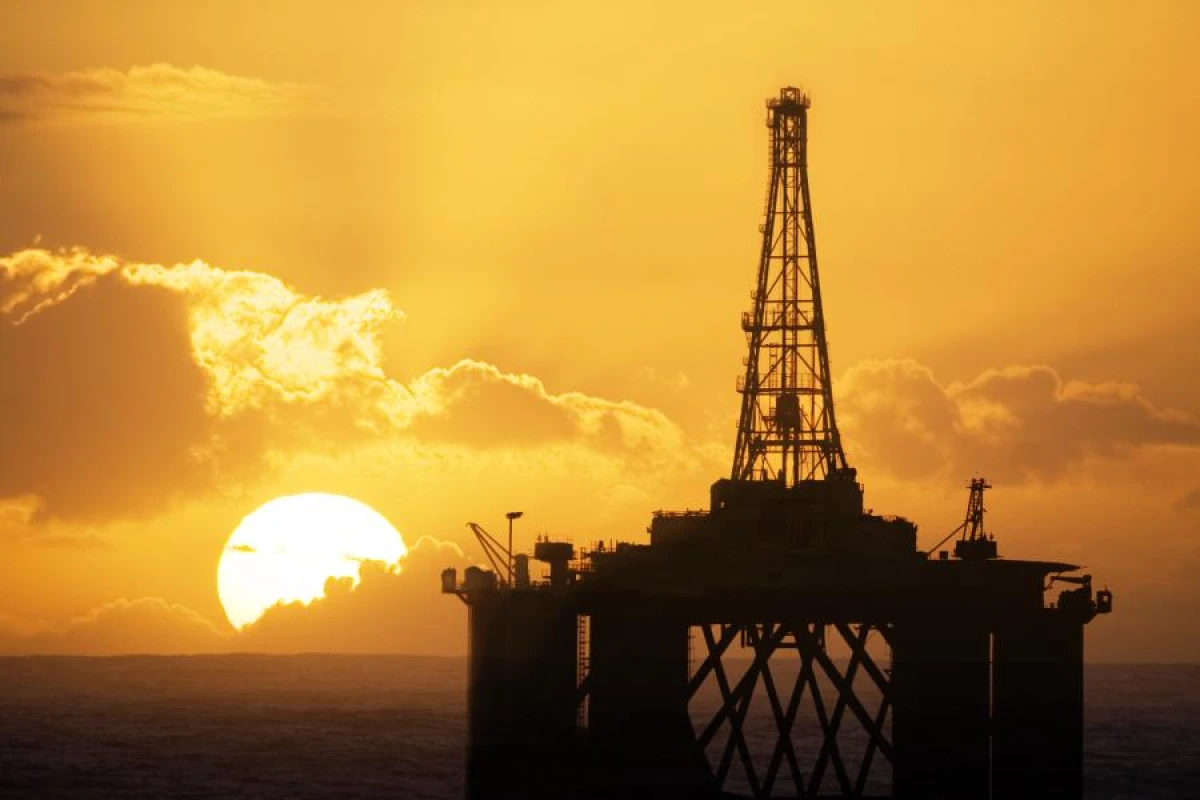
Although there remains considerable uncertainty, oil prices may start to decline as early as summer, predicted Jona Widgren, senior economist at Finland's largest financial group, OP Financial Group, in an interview with the LETA agency.
“There are several factors supporting the forecast that a peace agreement will be reached by the end of summer, as the U.S. is likely eager to resolve this conflict at least by the midterm elections in November. However, if the conflict continues, of course, the economic impact will be more significant,” noted Widgren.
He reported that the current forecast from “OP Financial Group” suggests a global gross domestic product (GDP) growth of about 2.8% this year, which is 0.3–0.4 percentage points lower than the January forecast, but still close to the long-term average growth rate of around 3%.
“Therefore, at least for now, we expect the impact of the war in the Middle East to be quite short-term,” said Widgren, emphasizing that the situation remains quite uncertain and it is unknown what the agreement or resolution of the conflict in the Middle East will be.
In response to a question about what would happen if peace is not achieved for a longer time, Widgren noted that if oil prices remain high until autumn, many European economies may face a certain recession — oil prices will likely remain high, interest rates will probably be higher, and for these reasons, overall economic activity will decrease.
“Our baseline forecast is that the greatest impact will be felt this year. But if the situation continues longer, the likelihood increases that the main impact will manifest next year, when we will start to see higher inflation on other goods, not just in the oil and its products market, and the secondary effect of rising energy prices will mean higher prices for other goods as well as wages. Then the impact on the economy will be more significant. In that case, the European Central Bank (ECB) will likely have to raise interest rates,” acknowledged Widgren.
He also noted that it remains difficult to assess what impact the damaged oil and gas infrastructure in the Gulf countries will have on oil supplies due to the conflict.
“If the infrastructure is damaged, then even if the war ends, but supplies remain insufficient, the impact will certainly be higher energy prices for a longer time and higher inflation. However, in that case, in my opinion, another influencing factor on the economy is the overall sentiment. If peace is achieved, this sentiment may improve, and therefore the overall impact on the economy will likely be less even if supplies remain insufficient,” said Widgren.
He also pointed out that for European countries, oil imports from Iran are significantly less important than the energy resource supplies from Russia in 2022, especially for Germany, which was and to some extent still is quite dependent on Russian energy resources. Therefore, the direct impact on Europe this time is less. Moreover, many countries have somewhat prepared for such shocks in energy supply and have had time to consider other solutions, other ways of obtaining energy, and energy import sources have become more diverse than before Russia's attack on Ukraine.
“Therefore, in this sense, in my opinion, it may be a lesser shock for Europe. But on a global scale, it is quite a serious shock, as the Strait of Hormuz is very important for global oil supplies, so oil prices worldwide are changing quite significantly,” said the expert.












Leave a comment