
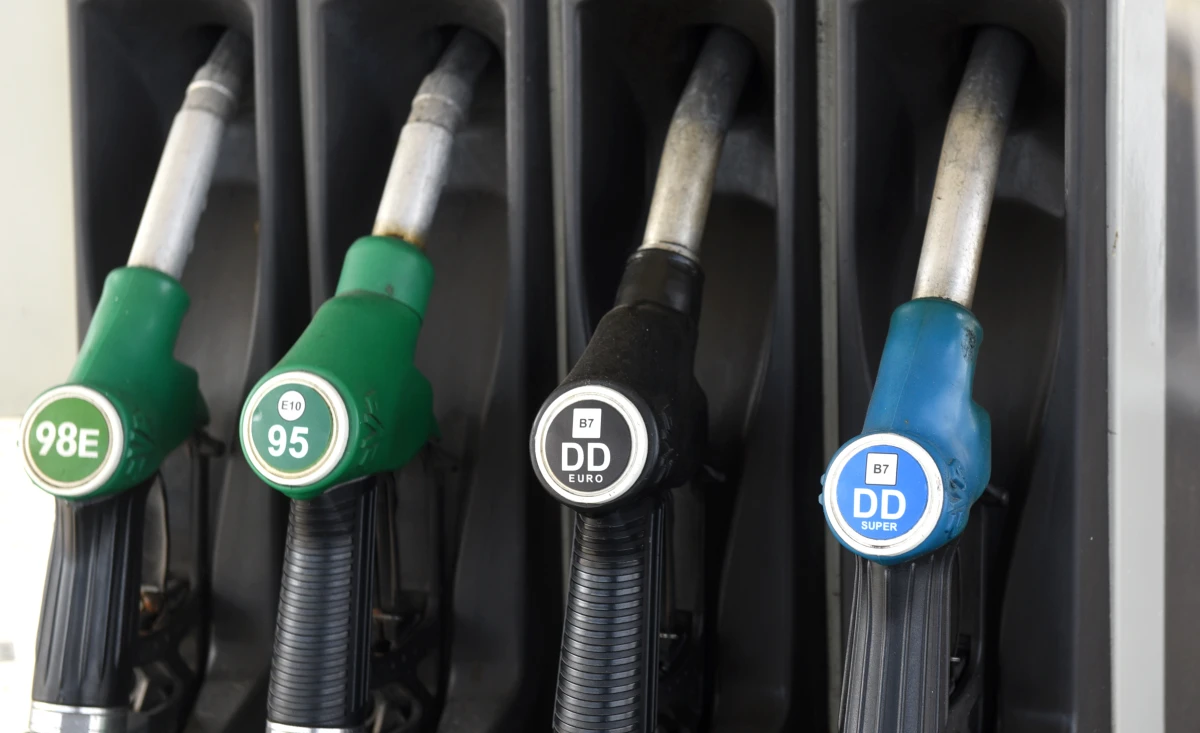
The penultimate week of April in the Latvian fuel market will be remembered for at least four events, writes fuel market expert Alexey Shvedov in his review.
Among these events are:
-
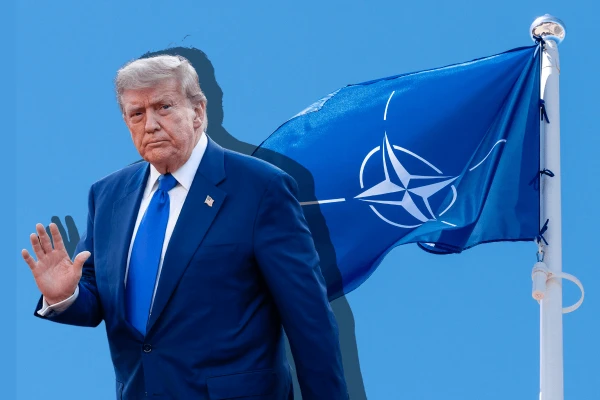
At the beginning of the week, Trump extended the ceasefire with Iran.
-
The Saeima began to consider a law on solidarity payments for fuel traders.
-
Platts quotes rose by 207 USD/ton for diesel fuel and by 126 USD/ton for gasoline, which prospectively means an increase in the price per liter of more than 20 and 10 cents, respectively.
-
At the end of the week, Trump canceled the trip of his representatives for negotiations with Iran.
What is the connection between this: Trump, the conflict in the Middle East, and the consideration of the law in the Saeima? In fact, the connection is direct: U.S. intervention in Iran → possible closure of the Strait of Hormuz → rise in global market prices → rise in prices at gas stations in the domestic market → law on solidarity payments...
The example of billionaire Trump inspires many politicians not only for openly populist initiatives but also for the principle of "if you really want it, then you can," even despite the obvious absurdity of the ideas. Moreover, even when common sense becomes a victim of such initiatives: if the state is a net importer of petroleum products, no confiscations and populist measures can stop the rise in prices at gas stations if global prices continue to rise.
Paper Can Endure Everything
The main absurdity of the situation is that the "solidarity payment mechanism will not be launched upon the law's entry into force but will be activated by resolutions of the Cabinet of Ministers, where a specific application period (depending on the market situation) and technical parameters, including the methodology for calculating the estimated retail price, will be determined."
This means that the authors of the initiative have some "magic formula" that they somehow do not want (or cannot) to show when adopting the law. And this is despite the fact that it is already actively used to assess the situation in the fuel market.
To make everything look convincing, the authors from the Ministry of Economy came up with a "modern" name for this formula — "objectively calculated estimated retail price." It sounds scientific and complex — and thus should inspire trust. If it is said to be "objective" — then it must be so.
A Crooked Structure Does Not Stand Long
In reality, there can be no objectivity here, as the very methodology of calculation is hidden not only from society but also from market participants. Simply put: thinking is not necessary — believing is.
No matter how you call the formula "objective," reality does not change because of it. And the longer decisions are made in isolation from it, the more painful the return to facts will be.
At the first stage of the initiative, market participants were presented with the "mechanism of estimated price and solidarity payment," which did not withstand criticism, as it was based on unreliable data. After comments from fuel companies, it disappeared from the discussion and is no longer mentioned in the draft law.
For example, a conditional markup of "+30 USD" was used in the calculations as a standard logistics premium. However, this simplification does not reflect reality.
The main mistake is at the core: retailers purchase fuel not at exchange prices but at physical market quotes (Platts). The difference between them is called a "premium," and it constantly changes.
Thus, on February 27, the Platts quote exceeded the exchange price of diesel by +10 USD, and on April 13 — by +165.25 USD/ton. And this is only the difference between the exchange and Platts. In reality, however, the purchase occurs with an additional premium to Platts.
Nevertheless, in the "fantasy world" of the Ministry of Economy, it is assumed that fuel is purchased according to the formula "exchange price +30 USD/ton," which does not correspond to reality.
Illusion Instead of Market
If the "objective" price can be calculated using an incorrect formula, then everything indeed looks logical. One could even call the formula objective and the market erroneous.
Populism is convenient in that it creates the illusion of explanation: everything adds up — except for the real prices at gas stations.
The paradox is that "superprofits" are defined in a world of fantasies, while it is proposed to extract them in the real economy.
Everything in this story is wonderful: both the "objectivity" without methodology and the calculations without a real market, and the belief that prices can be "negotiated" using formulas. Only one thing is missing — a connection to reality.
And the economy of the state is not a place for believing in miracles. Here, any mistake in calculations sooner or later turns into a bill that the entire society pays. As they say: those who live in illusions wake up with problems.












Leave a comment