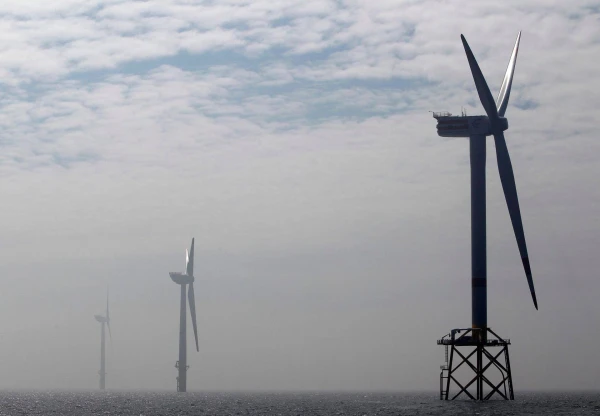
The offshore electric parks project ELWIND intended to permanently change the national landscape. It began, as is customary, with a joint memorandum from the governments of Latvia and Estonia on September 18, 2020. Five years ago, the national electric operator AS Augstsprieguma tīkls took up the task.
The plan gained particular momentum in 2022, when, riding a wave of optimism regarding Europe’s rejection of Russian energy sources – claiming that we can manage just fine on our own! – the Cabinet of Ministers led by A.K. Kariņš approved the joint project ELWIND.
In 2023, the implementation was taken up by the Latvian Investment and Development Agency in collaboration with the Estonian Environment Investment Centre. "To eliminate the risk of providing support for commercial activities, those conducting research work are selected through an open, transparent, non-discriminatory competitive procedure in compliance with the Public Procurement Law, thus excluding economic advantages at their level," the document sent to the government by the Ministry of Economics in April stated.
Three to Four Kegums Hydroelectric Power Plants
"It is mandatory for Latvia to adhere to the common commitment of the European Union to achieve green goals and increase the share of renewable energy," said AST board member Gatis Jungahns. Wind energy was intended to be "both cheaper and safer," and the state enterprise had already begun developing a network of underwater cables to connect to the national energy system.
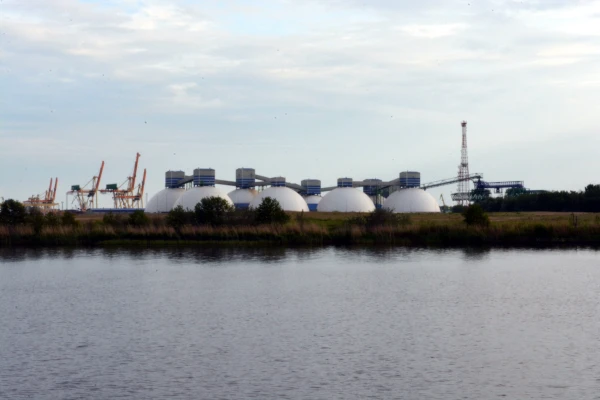
Latvia then announced that the marine site for the wind farm is located in the Kurzeme region, between Liepāja and Ventspils.
As part of the ELWIND project, it was planned to create a total of 700-1000 megawatts of wind energy capacity in the marine waters of the brotherly republics. For comparison, the capacity of the oldest Kegums Hydroelectric Power Plant is projected to be 248 MW by 2025. The total capacity of the Daugava cascade of hydropower plants is about 1500 MW.
Naturally, for such an impressive volume, funding was requested from the European Union – a rather modest amount compared to Rail Baltica, only 18.8 million – while the total budget for the project was estimated at 29.1 million euros. This year, the largest European tranche of 5,840,820 euros is expected to arrive.
The People Against
However, the residents of the region had their say – a collective petition from Kurzeme residents protesting was submitted to the Saeima Committee on Mandates, Ethics, and Submissions, citing "the irreversible impact of these structures on the landscape, natural values, coastal forest areas, the tourism industry, national security, and the environment as a whole."
However, the authorities stood their ground. "The existing regulations regarding the construction of wind farms are sufficient, and the residents' initiative to limit the construction of wind farms on the Kurzeme coast does not need to be implemented," the Ministry of Climate and Energy, led by Kaspars Meļņiks (New Unity), believes.
A representative from the Kurzeme planning region, Inguna Tomson, stated in the Saeima that residents today feel like "hostages."
"The issue is a matter of political attitude," said parliamentarian Edmunds Zivtiņš (Latvia First), while his colleague from the United List, Edgars Tavars, criticized the decisions of the Minister for Smart Administration and Regional Development, Raimonds Čudars (New Unity) – to cancel territorial planning in municipalities to place wind turbines there.
In any case, the deputies did not make a final decision – the question was referred to the Saeima Committee on Economic Affairs, Agricultural Policy, and Environment.
A Doctor's Opinion
The "Person of the Year" in the Dienvidkurzeme region, radiation therapy doctor at Liepāja Hospital Sandra Stepinā, told liepajniekiem.lv that the planned wind turbines just half a kilometer from residential areas on the coast will not only be noticeably noisy but will also generate constant infrasound.
This refers to waves with frequencies below the threshold of human hearing, that is, less than 16–20 Hertz (Hz). Although we do not hear this sound, it is felt by the body as a physical impact. Infrasound has a huge wavelength, allowing it to travel long distances and easily bend around obstacles (diffraction).
Low-frequency oscillations can cause fatigue, headaches, dizziness, decreased visual and auditory acuity. Long-term exposure can lead to dysfunction of internal organs (brain, heart) and bioenergetic processes. High-intensity infrasound can induce feelings of unexplained fear, panic, or anxiety.
Infrasound is particularly dangerous because, being inaudible, it penetrates through obstacles and directly affects tissues and organs, causing resonant phenomena.
It is clear that under such conditions, the construction of wind turbines should at least be suspended until a detailed medical examination is conducted. However, in our case, the ELWIND project was undermined by… incorrect cost calculations! That is, exactly the same thing happened as with the renowned European steel highway.
"Market Prices… Significantly Higher"
Moreover, fish, birds, and even Baltic seals intervened in the mega plan. The multifactorial impact on the environment turned out to exceed even what people could experience!
"Market prices for studies are significantly higher than initially planned, resulting in the need to revise technical specifications…" the Ministry of Economics stated.
Additionally, a truly heretical alternative emerged – why even build wind turbines? "The updated approach now proposes a technologically more efficient and cost-effective solution, namely an intermediate connection linking the Estonian island of Saaremaa with Ventspils in Latvia," the agency led by V. Valainis pointed out.
As a result, the implementation deadline for ELWIND has been pushed back to June 30, 2029 – and what will happen to the energy sector in our region, the most freedom-loving republics, and the European Union in general, only the gray waves of the eternal Baltic Sea know.
UNIVERSAL CONSULTANTS
Consulting work on ELWIND was carried out by the Estonian company Skepast&Puhkim OÜ, which also has a legal entity in Latvia.
Previously, this company provided advice regarding the construction of Rail Baltica, the burial of nuclear waste in the Estonian port of Paldiski, and the construction of a nuclear power plant in the neighboring republic.