For more than a century, the neutral, alpine republic has served as a reliable haven for financial resources, regardless of their origin. Everything changed in the 21st century – and now the Ministry of Justice of Latvia, represented by its head Inese Libina-Egnere ("New Unity"), revealed at a government meeting how it will claw back the hidden millions, and perhaps even billions, from the banking gnomes!
Half Honest
The Federal Bureau of Justice of Switzerland has made an interesting business proposal to Latvians – "to consider the offer to receive half of the criminally acquired funds confiscated in the framework of a criminal process initiated on the territory of Switzerland as a thank you to the competent authorities of Latvia…".
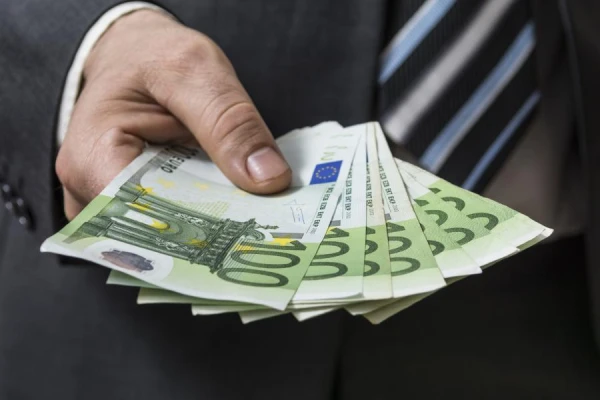
Namely – the State Police, which will provide assistance at the pre-trial investigation stage. There is already a first amount, for starters, so to speak, that can be divided this way – 3.5 million Swiss francs (almost 4 million euros).
"This is a case that currently has no precedent," officials from the Ministry of Justice said, raising their hands. Amendments to the Criminal Procedure Law would need to be made. However, why are they offering us some part and not everything at once?
Meanwhile, Switzerland has already concluded similar agreements with the Netherlands, the Czech Republic, and, most importantly, Germany. The latter has been conducting a real hunt for its citizens returning from Switzerland in recent years. The particular focus is on… retirees – unlike our low-income elderly, German seniors have accumulated substantial sums in Swiss banks, hidden from the tax authorities of the Federal Republic of Germany, and therefore the Bundespolizei mercilessly confiscates everything acquired through the hard work of the Bürger if the undeclared amount exceeds 10,000 euros.
Of course, this also applies to any resident of EU states traveling from Switzerland through Germany.
A Bad Joke
Despite the fact that Switzerland is not part of the European Union – the UN Convention against Transnational Organized Crime; the UN Anti-Corruption Convention; the UN Convention against the Illicit Traffic in Narcotic Drugs and Psychotropic Substances; and the Convention on the Prevention of the Financing of Terrorism are binding for it. Latvia joined all these international documents in the 2000s and, accordingly, has the full legal right to initiate the seizure of stolen money itself.
However, as of October 31, 2025, the Prosecutor General's Office of Latvia revealed that our republic had approached Switzerland only once, and in the view of our competent authorities, there should have been 24,300 euros in the foreign bank. But it turned out to be significantly less: "Considering that there were only funds in the amount of 1.40 euros in the account, the execution of the arrest was not possible…"
For its part, the State Police of the Ministry of the Interior of the Republic of Latvia reported to the Ministry of Justice as of November 11, 2025 – "there is no information about the relevant criminal processes indicated."
However, the Ministry of Justice itself counted as many as 8 documents on international legal assistance with Switzerland. The individuals living there were asked to be involved in video conferences within the framework of court proceedings. "The execution of requests for legal assistance in cases related to the legalization of funds obtained through criminal means is proceeding slowly," our Ministry of Justice states.
A Trace in the History of Latvia
At the time of the establishment of our currency, the lat was pegged to the gold Swiss franc – the content of the noble metal was fixed at 0.2903226 grams. The first cents of the Republic of Latvia were also minted at the Swiss mint.
During the Sovietization of Latvia in the summer of 1940, the then president Kārlis Ulmanis ("I stay in my place, you stay in yours") expressed to the Moscow emissaries a desire to move to Switzerland. Some historians believe that there he could have formed a government in exile, relying on funds accumulated in numbered accounts in the banks of a neutral state.
In the 1990s and 2000s, the rapidly developing banking system of Latvia was seen as a reliable place for storing funds. "We are closer than Switzerland," was the slogan of the largest currency magnates who settled in Old Riga. However, the image of the financiers of Geneva and Zurich was not so simple either…
In the Shadow of the Holocaust
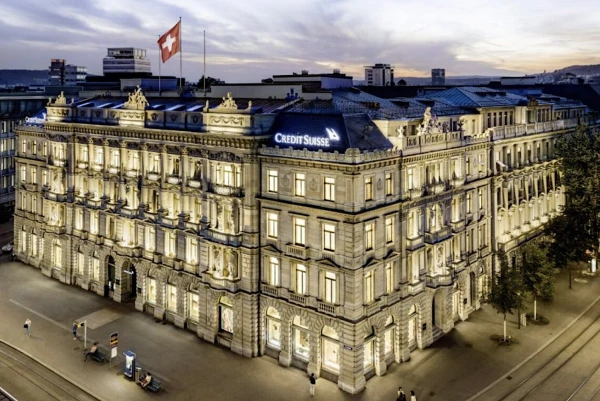
Swiss banks during and after the Holocaust held the assets of victims of Nazism, deliberately concealing them and making it difficult for heirs to access the accounts. Banks also collaborated with the Third Reich, accepting looted gold. In the 1990s, under pressure from lawsuits, the largest banks (including UBS and Credit Suisse) agreed to pay compensation, creating a fund of $1.25 billion.
Neighboring Germany, Swiss financial institutions accepted gold and currency confiscated from Jews, which helped finance the Nazi war machine.
After World War II, banks required heirs to provide death certificates, which were impossible to obtain, and concealed information about "dormant accounts."
From 1995 to 1998, large-scale lawsuits initiated by the World Jewish Congress began, leading to the creation of the fund.
Recent studies have shown that accounts in Swiss banks, particularly in Credit Suisse, were used by high-ranking Nazis, and these accounts existed for decades after the war. To date, Swiss banks have paid over $1 billion to Holocaust victims and their heirs, and a number of cases related to the search for Nazi assets continue…
Currently, banking secrecy in Switzerland is no longer absolute for tax authorities but remains as protection from third parties. Since 2018, Switzerland has been automatically exchanging tax information with over 100 countries, disclosing data of residents. However, the disclosure of information by bank employees remains a criminal offense, ensuring high confidentiality for legitimate funds.
According to the Automatic Exchange of Information (AEOI) protocol, Switzerland transmits data about the accounts of their residents – personal data, income, and account balances to the tax authorities of other countries.
RUSSIAN CONFISCATE
The total volume of frozen Russian assets in Switzerland (including funds of the Central Bank of the Russian Federation and private individuals) exceeds 13 billion euros. These funds remain the property of Russia or private individuals, but they cannot be disposed of.
Switzerland currently lacks a legislative framework for the complete confiscation of these funds, unlike discussions in the EU. According to estimates by the Swiss Bankers Association, in 2022, banks in the country could have held up to 150 billion francs (162-165 billion euros), but not all of them were subject to sanctions.