In a time of global trials, the banking sector of the republic is “reliable, safe, and open to innovations.” This was stated by the president of the Bank of Latvia while addressing the Saeima Budget and Finance (Tax) Committee. The head of the parliamentary working body, Anda Čakša, meanwhile, mentioned various risks… Meanwhile, over the year, the reserves of the Bank of Latvia have grown by 35%!
Accessible and Safe
Overall, the Bank of Latvia is trusted by 56% of the population according to surveys. This is a commendable result – only the National Armed Forces rank higher (73%), while the Cabinet of Ministers lags significantly behind (25%).
– We have a common plan, we are working within the mandate entrusted to us, – said M. Kazaks. He mentioned that today various financial services are provided by 200 enterprises licensed by the Bank of Latvia. The goal of the main financial institution is to foster the greatest competition. About fifty new enterprises are preparing to start operations in the country; 39 of them are in the non-bank lending sector.
The Bank of Latvia considers itself a leader in payments in the Baltics – providing them not only in the country but also in the region. One of the tasks is the implementation of the digital euro, with testing of interbank payments and “smart” contracts starting in the fall… Government bankers consider it necessary to quickly bring mortgage securities to the market, which will strengthen the capital market and competition, making it easier to purchase housing on credit at lower prices in larger volumes.
Mr. Kazaks also touched upon the accessibility of banking services in the regions – primarily, this is a matter of price. By 2026, banking services will be available in 11 cities, with 8 permanent service locations and 12 alternative service locations being opened. The most important tool seen by the Bank of Latvia is the refinancing of legal entities.
Is There Life Without the Internet?
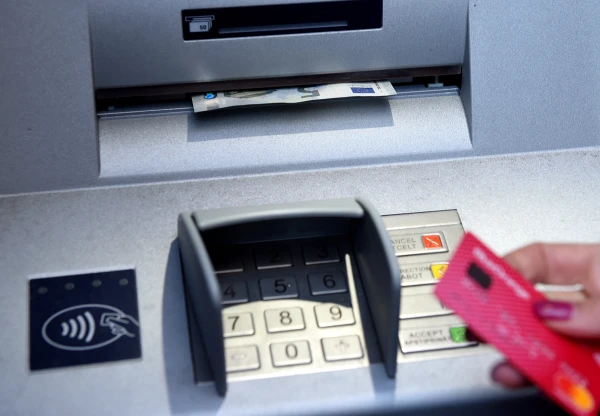
But what if the internet suddenly goes down in the country? Bankers are preparing a range of “offline” services so that cards with a certain limit can be used to pay for groceries and medications. The Bank of Latvia is currently cooperating with the Crisis Management Center and other institutions to ensure that critical financial services are integrated into the overall state “resilience solutions.”
– The crisis management mechanism has become stronger, – M. Kazaks assured those present. By the way, now in the financial sector of Latvia, there will be “maximally averaged EU requirements and a rejection of specific national requirements.” – Risks need to be assessed, but without exaggeration, – believes the president of the Bank of Latvia. In the context of global upheavals, bankers are conducting “shock modeling,” providing consultations for the fiscal system; recommendations for the labor market. In particular, Mr. Kazaks believes that Latvia has “too large a public sector.”
“This is the Time of Black Swans”
– There will be many shocks, and few or very few peaceful periods, – characterized the current situation Mārtiņš Kazaks. The Bank of Latvia predicts a “short-term rise in inflation and low GDP growth due to increased energy costs. Plus, global disruptions in goods supply.”
Inflation expectations, in themselves, have an indirect impact on prices, profits, and wages. Physical supply disruptions are not excluded.
– We do not know what will be blown up, – stated the president of the Bank of Latvia.
However, for our republic, the shock will not be as sudden as in 2022 – primarily due to the spike in natural gas prices.
Three Scenarios for the Crisis
Under the baseline scenario, oil and gas will reach price peaks by mid-year, after which a rapid decline will begin. This is the best-case scenario.
An unfavorable scenario suggests a delay of up to 40% of liquefied gas supplies through the Strait of Hormuz; in this case, the market will stabilize only in the second half of 2027.
The harshest scenario promises the failure of part of the energy infrastructure, a 60% disruption in supplies, and an increase in the price of oil per barrel to $150.
Accordingly, under these three possible conditions, the European Central Bank forecasts inflation in the eurozone to be 2.6%, 3.5%, and 4.4% in 2026.
Mārtiņš Kazaks noted that when calculating the potential damage to the European economy, the negative effects of the reduction in the mineral fertilizer market, which affects agricultural prices, as well as helium necessary for the artificial intelligence sector, have not yet been taken into account.
No Return to 4 Percent
The effect on interest rates, meanwhile, will be much softer than it was in 2024 – when they jumped from -0.5% to 4%, causing panic in the mortgage lending market. Depending on inflation prospects, the ECB may change rates in the range of 2-2.5%.
“While we at the European Central Bank have not raised rates,” – M. Kazaks stated meaningfully. After all, the Bank of Latvia – albeit as a minority shareholder – has its say in the overall European financial concert!
Economic sentiment plays an important role in the national economy - the collective mood, expectations, and psychological attitudes of investors, consumers, and businesses towards the current state and future of the economy. Of course, the energy sector will demand price increases – but the government, in M. Kazaks’ vision, is acting correctly by lowering excise duties and activating fuel reserves.
– The budget is also effective, in which 5% is allocated for defense, – the president of the Bank of Latvia recalled the main state priority.
A Small Part of Europe
In response to a question from the leader of the “Progressives” in the Saeima, Andris Šuvajevs, about inflation expectations in Latvia that affect all households, Mārtiņš Kazaks pointed out that if enterprises and businesses choose a self-defense strategy with price increases – then inflation is unavoidable. “However, at this moment, there are no grounds for this,” – M. Kazaks clarified.
– The ground in 2022 for inflation to shoot up was better, – recalled the past president of the Bank of Latvia. “After all, the Latvian economy is a small part of Europe,” – said M. Kazaks. And even the rise in inflation and interest rates did not lead, during the last wave of the crisis in 2022-24, to such an increase in unemployment as occurred during the “dijakibelis” in 2008.
The banker considers it most important to keep inflation contained in one – specifically, the fuel – sector, and through targeted interventions prevent it from spilling over into other sectors of the economy. “And we need to watch what is happening in the food market,” – warned Mārtiņš Kazaks.
PENSIONS
The Bank of Latvia proposed changing the model of the second pension level:
-
65% of investments to be directed to the capital market;
-
limit bank commissions;
-
automatically direct funds to a pension plan corresponding to age.
According to the calculations of the Bank of Latvia, since 2020, the country’s pensioners have received an additional €609 million.