Sowing work for spring crops in the regions of Latvia is currently progressing at different paces, with more intensive work taking place in Vidzeme and Latgale, and this season farmers have to contend with rising prices for fuel and mineral fertilizers, industry representatives surveyed by the LETA agency acknowledged.
Girts Ozols, head of the agricultural department and board member of Latraps, told the LETA agency that the conditions for sowing work vary across regions; however, they are progressing steadily according to the snow melting schedule — starting from Kurzeme and Zemgale, then moving to Selia, Latgale, and Vidzeme.
He explained that as soon as the soil is ready, farmers can sow peas and other crops, although there are still areas where machinery cannot yet access.
Ozols noted that this year the sowing of spring crops began before Easter and the work is progressing relatively quickly. As usual, the first to be sown are legumes — peas and beans. In places where winter wheat has been damaged, it is being reseeded with spring wheat. This week, sowing of flax also began, and it is expected that by the end of April, most spring crops, except for corn, will be sown.
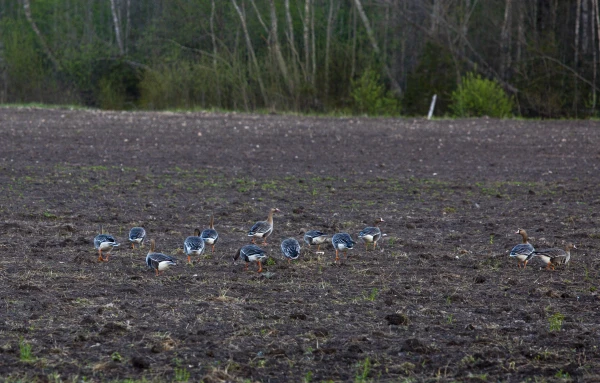
He emphasized that challenges remain, and during the season, farmers are likely to face new difficulties. As every year, the sowing of beans and peas is threatened by migrating geese, so farmers have to use various means to scare the birds away.
Additionally, there has not been significant precipitation this spring, and if it does not start raining soon, it may affect the development of the crops, Ozols added.
However, the most significant challenge remains the rising cost of resources caused by geopolitical reasons — both fuel and mineral fertilizers have become significantly more expensive. Many farms plan their resources in advance, so a significant portion of materials for the initial work was purchased before the price increase, Ozols emphasized.
Andris Skudra, a consultant at the plant growing department of the Latvijas Lauku konsultāciju un izglītības centrs, informed the LETA agency that in Kurzeme and Zemgale, sowing began in the last days of March and early April, where beans, peas, and oats are being sown.
The most intensive work is currently taking place in Vidzeme and Latgale, where the soil was wetter and fields could not be accessed as early. Currently, the soil is drying out, moisture levels are optimal, and the plants are already developing their root systems, Skudra noted.
The consultant added that fertilization of plants continues in Vidzeme and Latgale, while in Zemgale it has already been completed.
He also reported that soon activities for plant care and protection will begin. In Kurzeme and Zemgale, the stem weevil is appearing on rapeseed, so additional protective measures are necessary. In Latgale, the pest activity is lower due to cooler weather.
Speaking about damage caused by animals, Skudra emphasized that farmers need to monitor the sowing of beans and peas, as they are threatened by goose raids. It has also been noted that in some places wild boars are damaging bean crops.
The rise in diesel prices by about 40 cents per liter has had a significant financial impact on farmers, so they are trying to use it as economically as possible, for example, by reducing the number of trips, the consultant noted.
At the same time, the price of mineral fertilizers has also increased — for instance, nitrogen fertilizers cost about 360 euros in February, and now their price is approximately 500 euros.
In conclusion, Skudra noted that this season farmers are trying to sow more crops that require less nitrogen fertilizer, such as beans and peas.