
The reduction of the excise tax on diesel fuel is closer to "helicopter money" than to a targeted support tool for the needy, and it also does not increase the resilience of the economy of Latvia to rising energy resource prices in the future, writes Bank of Latvia economist Oleg Krasnopjorovs on the "Makroekonomika.lv" website, LETA reports.
He explains that at first glance, it may seem that the best action for the government in a situation where fuel prices are rapidly rising is to try to bring them back to pre-crisis levels so that the economy continues to function as usual, meaning that the growth rate of gross domestic product does not decline and drivers do not experience discomfort or change their daily habits.
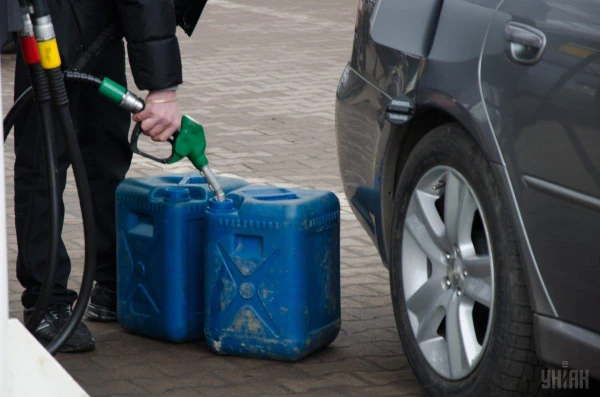
The economist notes that based on this logic, a lower excise tax on diesel fuel seems like "too small" a measure. It provides for a reduction in the price of diesel fuel by 8.6 cents per liter, including 7.1 cents due to the reduction of the excise tax and 1.5 cents due to value-added tax (VAT), which could compensate for about one-sixth of the price increase of diesel fuel due to events in Iran, and only for three months.
This lowers the inflation forecast for 2026 by 0.06 percentage points, points out Krasnopjorovs. This is only 2–3% of the overall impact of events in Iran on inflation in Latvia in 2026, as their total effect is estimated to be between 1.7% and 3.1%.
According to Krasnopjorovs, the notion that state policy should aim to maintain the illusion of the previous state as long as possible ("business as usual") is erroneous. The set of state policy measures aimed at reducing the economic impact of the military conflict in the Middle East on Latvia, in the economist's opinion, should meet four criteria.
As the first criterion, the economist names the goal of preventing the rise in energy resource prices from leading to a general increase in the price level and becoming entrenched in expectations of high inflation. If this happens, returning inflation to the optimal level for the functioning of the economy of 2% per year will be significantly more difficult, the economist acknowledges. To reduce inflation expectations, central banks may raise interest rates, which reduces not only inflation but also economic activity, which is already weakened due to events in Iran.
According to Krasnopjorovs, a lower excise tax on diesel fuel partially meets this criterion, as changes in fuel prices are reflected with a delay of several months in the prices of a very wide range of goods and services—from food and catering to transportation, driving courses, and tourist trips. The economist explains that it is easier and more effective to contain the rise in fuel prices than to subsequently try to prevent price increases on hundreds of other goods.
However, the impact of events in Iran on the economy of Latvia manifests not only through fuel prices, Krasnopjorovs notes. An equally important factor in inflation is the rise in natural gas prices. Global gas prices determine consumer prices for gas, electricity, and heat energy, which, like fuel, are at the beginning of the price formation chain for many goods and services. Moreover, events in Iran also raise global prices for food and a number of other goods.
As the second criterion, Krasnopjorovs names targeted support for the most needy residents who cannot cope on their own. According to the economist, a lower excise tax on diesel fuel does not meet this criterion. On the contrary, those who benefit most from cheaper fuel are residents who commute by car daily, which are not the poorest segments of the population.
The third criterion, in Krasnopjorovs' opinion, is to increase the resilience of the economy and the population to similar crises in the future. The economist explains that the global rise in energy resource prices is an unpleasant but, unfortunately, common phenomenon that occurs every few years. The current episode of rising prices is neither the first nor the last. Therefore, it is logical not only to reduce the impact of the current price increase but also to ensure that each subsequent rise in energy resource prices has less impact on the economy of Latvia.
Krasnopjorovs emphasizes that a lower excise tax on diesel fuel does not meet this criterion. Global energy resource prices are determined by supply and demand. The military conflict in the Middle East has disrupted energy resource supplies—reduced supply has increased their prices. More expensive fuel is an important signal for consumers. For example, residents use personal vehicles less frequently and instead use public transport, bicycles, or walk. The economist explains that this helps balance supply and demand, so a physical shortage of energy resources, which Paul Krugman warns about, is unlikely to occur due to reduced demand.
If government measures prevent fuel prices from rising, drivers do not change their habits, and fuel consumption remains high, this, albeit in small steps, brings the world closer to realizing Krugman's grim scenario, notes Krasnopjorovs. In this sense, he agrees with Estonian Finance Minister Jürgen Ligi that it would be extremely wrong to stimulate fuel consumption at a time when its supplies are decreasing.
The fourth criterion, according to Krasnopjorovs, allows achieving the aforementioned three criteria most effectively, that is, with the least cost. The economist notes that the state budget has many priorities and a limited amount of resources, so the effectiveness of the government is assessed not only by the results achieved but also by the volume of resources used. He acknowledges that a lower excise tax on diesel fuel partially meets this criterion.
The economist explains that with relatively high diesel fuel prices, lowering the excise tax does not create a budget deficit, as it is compensated by higher VAT revenues arising from applying the same 21% rate to more expensive fuel. However, the more funds the budget loses from the diesel excise tax, the fewer opportunities remain to compensate, for example, for rising utility prices, which, given the increase in global gas prices, may become relevant in the next heating season, explains Krasnopjorovs.
In his opinion, reducing the excise tax on diesel fuel for three months is a logical step to at least partially mitigate the impact of the rapid rise in diesel prices on the economy and the population in the short term. This measure partially slows down the transmission of high fuel prices to the rest of the economy and is intended to be fiscally neutral. However, according to Krasnopjorovs, such support is closer to "helicopter money" than to targeted assistance for the needy and does not increase the resilience of the economy of Latvia to rising energy resource prices in the future.
As reported, on March 26, the Saeima adopted a law limiting the rise in fuel prices, which provides for a reduction in the excise tax on diesel fuel for three months—from April to June 2026—from 46.7 to 39.6 cents per liter.









Leave a comment