
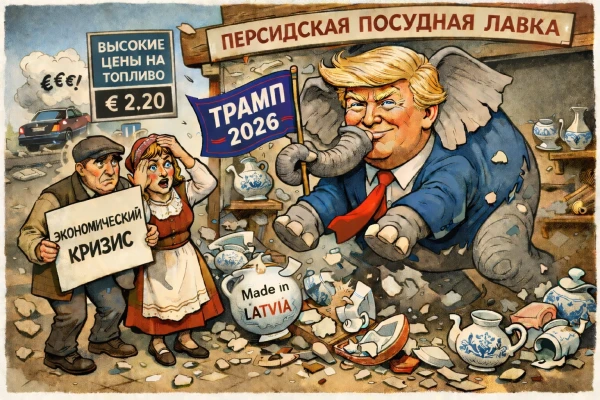
As we all know, the market economy, or, to use the "old" language — the capitalist economy, is cyclical. This means that stages of economic growth are followed by stages of economic decline.
It has long been proven that crises usually occur every 6–8 years in relatively prosperous times. It is worth noting that the causes of economic crises can vary, the manifestations of the crisis can differ, but the result is always the same — a decline in the standard of living for most residents.
So, it is now 2026, and many experts are unanimously speaking about a serious slowdown in Latvia's economy and an impending crisis. Does this mean that the average 7 years since the last crisis have already passed? Let’s analyze this together.
Money is Given
In 2019, the coronavirus pandemic began, peaking in Latvia in 2020. Due to the total quarantine, as we remember, the entire tourism, hospitality, and restaurant business came to a halt, and other service sectors were paralyzed.
However, a significant economic downturn was avoided at that time. The reason is that even Latvia, which usually does not show generosity towards its entrepreneurs, began to distribute so-called helicopter money. However, not from its own pocket, but at the expense of a sharp increase in public debt, meaning that compensation to businesses was effectively paid out of borrowed funds. The injection of a huge amount of credit money helped prevent a crisis, but subsequently led to record-high inflation, the consequences of which we have not yet managed to cope with. Moreover, public debt has noticeably increased. In any case, a global economic crisis was avoided during the pandemic.
Although the subsequent inflation pandemic, which erupted after the start of the war in Ukraine, was scarier for many Latvians than an economic crisis — considering the rise in utility payments and food prices, which did not always keep pace with salary and pension increases.
And the Forecasts Were Rosy…
If we return to the current year, it started quite promisingly — experts predicted our economy would grow by 2.2–2.8% and even up to 3% GDP!
This would still not allow us to even come close, for example, to Lithuania, but we could have developed quite well.
But happiness passed us by — a separate thank you to Trump, who played the role of a bull in a china shop. The prolonged imposition of American order in the Middle East quickly impacted all of Europe, and we, of course, were not left out: the rise in fuel prices spurred inflation, which has already reached 3.4%!
It is evident that by the end of April, growth could exceed 4%! For people with low incomes, who proportionally spend more on food, the real inflation in this case will be as high as 6–8%! This is a lot, especially considering that by May many Latvian families will still not be able to pay off their utility debts incurred during the heating season.
And Again, We Are Late…
Latvian authorities, as is often the case, are late — both in providing effective assistance to households in light of rising heating costs and in responding to rising fuel prices.
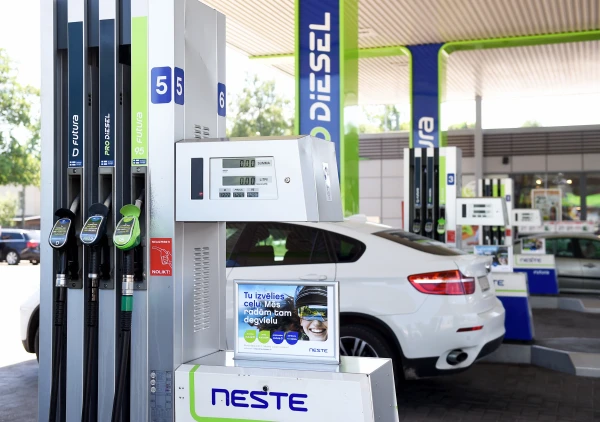
As is known, the reduction of excise tax aimed at slowing down price increases at gas stations was insignificant and delayed — as a result, de facto we do not observe any significant reduction in diesel fuel prices.
"In despair," the Ministry of Economics proposed to scare fuel traders with the introduction of a 100% tax on excess profits, but:
- first, this is unlikely to curb the objective price increase,
- second, this step is quite questionable from a legal standpoint and fraught with fuel shortages (it will simply become unprofitable for traders to import fuel),
- third, the coalition has not yet managed to agree on promoting this bill.
The Polish Example
It is clear that more effective tools are needed to influence retail fuel prices — first and foremost, the excise tax rate needs to be reduced even further and, possibly, as Poland did, sharply reduce the VAT rate.
Of course, our politicians will again argue that Brussels will not approve this, but for some reason, Polish politicians were not afraid of the "wrath of the EU." For Poland, their farmers, other product suppliers, and freight carriers turned out to be more important.
The significant reduction in fuel costs allowed Poland to avoid a wave of inflation and, most importantly, to genuinely support its producers. It is worth noting that Poland, even in 2022–2023, when Latvia was breaking records for inflation growth, was also able to contain inflation growth…
Maybe we should invite a smart Pole to give economic advice to the government of Silinie?
The Economy is on the Brakes
In any case, it seems we must be prepared for a significant slowdown in the global economy. The main reason is the rise in energy resources, which leads to a sharp increase in production costs.
Inflation is also observed in the USA, and in the main EU countries, retail trade is declining — people have started to save, which is a logical reaction to the rising cost of energy resources.
Stagnation continues in the main economic engine of the European Union — Germany. If the situation in the Persian Gulf does not normalize before summer, the slowdown in economic growth may turn into an economic decline.
To be fair, the possibilities for stimulating the economy for the Latvian government are minimal — considering that the budget for 2026 is already composed with the maximum allowable deficit, and the amount of borrowed loans is such that taking more becomes a very risky business…
Tough Decisions Will Come, But After the Elections
It is clear that only after the elections will the new government begin real cuts in public spending — this is unavoidable to make ends meet. Cuts will also have to be made in administrative expenses, including salaries in public administration.
For now… we will once again have to tighten our belts and hope for the best. Although we are already being scared by the next heating season — heating prices could skyrocket if gas and other energy resources continue to rise in price during the summer.
Two Scenarios – Bad and Very Bad
Oleg Krasnoperov, Economist at the Bank of Latvia:
– In March, inflation in Latvia rose significantly. This is the highest monthly inflation in Latvia since 2022, largely driven by a sharp rise in fuel prices: the price of gasoline increased by 11% in a month, while diesel fuel rose by 25%. This also reflects the rise in oil prices and the prices of its derivatives due to the military conflict in the Middle East.
Overall, the military conflict in the Middle East could increase inflation in Latvia by several percentage points.
If the market is currently correctly forecasting oil prices and on average this year it will cost around 90 USD per barrel, then the rise in energy prices could increase inflation in Latvia by 1.7 percentage points this year and by 0.9 percentage points next year.
On the other hand, if the average oil price this year is 120 USD per barrel, this could increase inflation in Latvia by an additional 3.1 percentage points this year and another 2.4 percentage points next year.
In the second case, global food prices are likely to rise as well: more expensive fuel increases the cost of agricultural production, and more expensive natural gas increases the cost of fertilizers. Expectations of higher inflation may also become entrenched. Therefore, the full impact of events in Iran could turn out to be even more significant.










Leave a comment