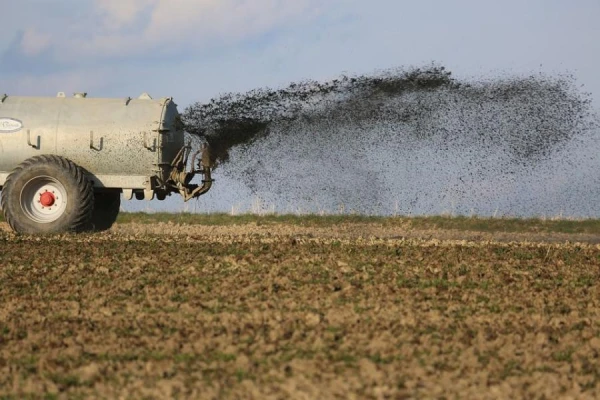
The geopolitical situation - the war in Ukraine, and now in the Middle East - along with the CO2 tax on the import of mineral fertilizers from third countries has significantly increased their prices, so farmers hope for timely and decisive actions from the leadership of Latvia and the European Union, writes Dienas Bizness.
This is especially relevant for crop production, where increasing production costs directly reduce competitiveness in international markets.
"Under the current conditions, the EU should postpone the implementation of the carbon tax on the import of mineral fertilizers from third countries for some time, because otherwise not only Latvian farmers will be on the brink of bankruptcy," said the chairman of the board of the Latvian Association of Agricultural Cooperatives, Rolands Feldmanis.
According to him, farmers have been facing force majeure circumstances for the third consecutive year, resulting in a significant narrowing of their financial capabilities, and for some farms, the question of survival has become a real concern.
"Unfortunately, the survival issue affects not only small farms, where investments in technology and production means have been minimal, but also those where owners have invested tens, hundreds of thousands, and even millions of euros. Due to the whims of nature and market fluctuations, instead of the planned income, significantly lower results are obtained, which prevents fulfilling obligations and repaying loans according to the original business plans," noted Feldmanis.
In his opinion, the next force majeure in 2026 - a sharp rise in fuel prices combined with a sharp increase in mineral fertilizer prices - creates an explosive situation that requires immediate action.
"The issue of investment in next year's harvest is particularly critical - to effectively use land and other resources, it must be processed in a timely manner. If farmers currently do not have the financial means to invest in production, not only the next harvest will be at risk, but also the sustainability of the industry as a whole."
The parliamentary secretary of the Ministry of Agriculture, Normunds Šmits, acknowledges that the situation is complex, not only in Latvia and the Baltic States but also in many other European countries.