
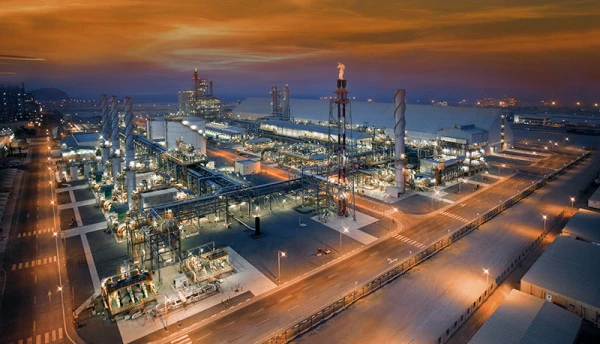
The main raw material for production is natural gas.
Operation "Epic Fury" has led not only to rising oil and gas prices. The Strait of Hormuz, blocked by Iran, hinders the export of significant volumes of fertilizers and raw materials for their production. This is quite untimely — the planting season is just beginning in the Northern Hemisphere. Prices, which have already been rising since the beginning of the year, are skyrocketing due to military actions in the Middle East. This situation poses no threat to Russia, as the country is the largest global supplier of fertilizers. However, it is unlikely to benefit from the global shortage.
The Persian Gulf region is a global hub for the production and export of fertilizers. Annually, Saudi Arabia, Qatar, and the UAE produce 50-55 million tons of products. A large portion of this, about 45 million tons, consists of nitrogen fertilizers, primarily urea (30 million tons), says Maxim Bratchikov, head of the fertilizers market direction at Metals&Mining Intelligence (MMI). Another 7-10 million tons are nitrogen-containing phosphates.
According to Boris Krasnozhenov, head of the securities market analytics department at Alfa-Bank, 21-22 million tons of nitrogen fertilizers pass through the Strait of Hormuz annually, or about 40% of their global maritime supply.
The consulting company "Implementa" calculated that 21% of the world's ammonia volume, almost a third of urea, and 46% of sulfur are transported through the strait each year.
Similar estimates come from Kirill Dmitriev, the special representative of the President of Russia for investment and economic cooperation with foreign countries. He claims that the region supplies about 44% of the world's sulfur volumes, 31% of urea, 18% of ammonia, and 15% of phosphates. "Serious upheavals in the commodity and agricultural sectors are ahead," he wrote.
The possibilities for exporting around the Strait of Hormuz are limited, explains Bratchikov from MMI. Saudi Arabia could theoretically use its ports on the Red Sea for some cargoes. However, the cost of insuring ships in the Bab-el-Mandeb Strait, which connects the Red and Arabian Seas, is currently extremely high due to the actions of Yemeni Houthis, the expert explains. Qatar and the UAE have no alternative land or sea routes for mass export of products — about 20% of the world's urea export is blocked there.
The suspension of such significant volumes of fertilizers from the region, just as the spring fertilization season begins in the Northern Hemisphere, could lead to a significant shortage and rise in agricultural product prices, says Krasnozhenov from Alfa-Bank. The escalation of the conflict in the Middle East has already led to a rise in natural gas prices in Europe — above $600 per 1,000 cubic meters, and a significant portion of European producers is starting to incur losses already at prices above $500. With the restriction of LNG supplies from Qatar, further increases in gas prices and a reduction in fertilizer supply in the European market can be expected. This primarily concerns nitrogen and complex fertilizers that contain nitrogen, as natural gas is the main raw material for their production, explains Krasnozhenov.
The closure of the Strait of Hormuz threatens supplies to India, Brazil, Australia, the USA, Thailand, and Turkey, which together account for about 80% of fertilizer exports from Gulf countries, notes Vasily Danilov, leading analyst at the investment company "Veles Capital."
Bratchikov adds to these countries the European Union, which is heavily dependent on imports due to stagnation in its own production. Tariffs on Russian products only complicate the situation, he adds. A full replacement of supplies from the Persian Gulf in the short term is impossible: the capacities of other major exporters — Egypt and Algeria — are already contracted, and China, the largest global producer, maintains strict restrictions on urea exports to ensure its own food security, says Bratchikov. "The lack of nitrogen during critical phases of grain growth will lead to reduced yields, which will provoke a rise in global agricultural prices by the end of the year," notes the expert.











Leave a comment