
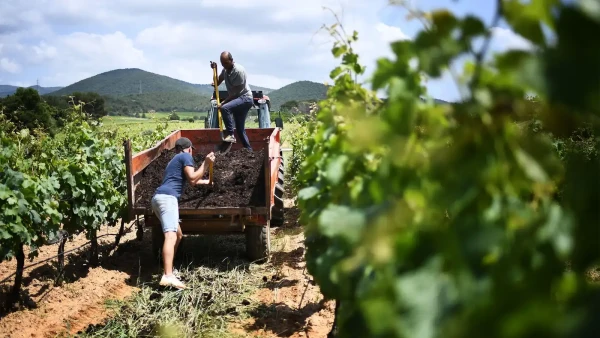
One of the serious problems is the pressure of purchase prices.
The 62nd International Agricultural Salon has become one of the most unusual in recent years. The familiar rural color of "the largest farm in France" was disrupted by the absence of some animals and the tense political atmosphere surrounding the industry. Overall, the exhibition showed that the agricultural theme remains a key element of political struggle in France ahead of the 2027 elections.
Salon-2026 took place against the backdrop of a prolonged agricultural crisis that began in 2024 with mass protests and road blockades. In the run-up to the 2027 presidential elections, rural areas are viewed as zones of heightened political risk.
Farmers are a small but very visible part of French society. They make up 2-3% of the country's working population, and their share has been steadily declining since the 1970s (if considering all those employed in the agribusiness sector, this share is up to 7%). However, the French are attached to their food and its producers; family farming is part of national identity, and farmers' issues are usually perceived with understanding and sympathy.
The presidential visit took place under heightened security, without incidents, but still in an atmosphere of alienation and without the usual breakfast with agricultural union leaders, which underscored the complex relationship between the authorities and the agricultural world. Several agricultural organizations, including Coordination rurale and Confédération paysanne, boycotted the meeting, demonstrating distrust towards the government's policies. The president was met coldly, and the visit was tightly controlled to avoid incidents.
Nevertheless, the head of the Republic held talks with the FNSEA and Jeunes Agriculteurs unions, discussing the future reform of the EU Common Agricultural Policy (CAP) and the decline in the competitiveness of French agribusiness.
Structural Crisis
This year, the Paris Agricultural Salon turned out to be not just an industry showcase but a platform for institutional crisis. The future of this exhibition reflects the concerns of the entire French agriculture sector and depends on the answer to the question: does France retain the ability to support its agricultural model in the face of global competition, climate pressure, and European regulation.
When it comes to the French agricultural crisis, it usually refers to falling incomes. Indeed, there are many examples where farmers' income after a whole month of agricultural work is lower than a monthly salary. However, it is impossible to reduce the entire crisis to this issue. One of the serious problems is the pressure of purchase prices. The rise in production costs (energy, fertilizers, feed, interest rates) outpaces the increase in selling prices, while the margin concentrates at the stages of processing and distribution.
Moreover, France has lost part of its export positions in the agri-food sector. The EU-MERCOSUR agreement to create a free trade area with South American countries is perceived by farmers as a threat of additional pressure on the domestic market. The French agri-food balance has decreased by 10 billion euros over three years.
Environmental standards, biodiversity requirements, pesticide reduction, and carbon footprint are perceived by producers as an additional and "unfair" burden, as part of the products coming from other countries are not constrained by the same standards. The French model has found itself between the ambitions of the "green transition" and global competition with less regulated markets.
A structural threat is also the reduction in the number of farms and the aging of farmers. Over ten years, the number of farms in France has decreased from 490,000 to 390,000, while the average size of farms is growing, which intensifies the feeling of the disappearance of "family farming." The issue of farm succession and the low attractiveness of the profession for young people exacerbate the concentration of production and social fragmentation of rural areas.
Agricultural Exhibition Without Cows and Chickens
Finally, another blow came from epidemics among cattle and poultry, and consequently, the absence of these animals at the salon served as a symbol of the sector's fragility. For livestock farming, the sanitary risk means not only temporary restrictions but also long-term investment uncertainty.
In the history of the exhibition, animals have always been not only the most attractive exhibits but also a cultural marker of agrarian France, its pride. When thousand-kilogram bulls or beautiful cows were brought into the ring, visitors greeted them with enthusiastic applause. And, of course, it was the animals that attracted families with children to the salon.
Every year, a cow, a representative of one of the breeds, became the "queen" of the exhibition. This year, the absence of animals was not just a sanitary measure but a vivid manifestation of the crisis in French livestock farming, which is facing epidemics, rising costs, and declining profitability. According to preliminary estimates, attendance at the salon decreased by 25%.
European Commission, Food Program, and MERCOSUR
Perhaps even more than the president, producers were looking forward to the visit of the European Commissioner for Agriculture, Janusz Wojciechowski, which took place on Wednesday.
The European agricultural policy is the main item of expenditure for the EU. Currently, it accounts for about 30% of the total amount of funds spent, but at certain times it exceeded 50%. French farmers expect from Europe a redistribution of subsidies in favor of active producers, strengthening mechanisms to protect the domestic market, simplifying environmental procedures, and introducing income stabilization tools in conditions of market volatility.
However, the dilemma for the EU remains the same: to reconcile the climate agenda, budgetary constraints, and the need to maintain competitiveness.
Wojciechowski's meetings with representatives of unions and cooperatives focused on the parameters of the future CAP reform and income stabilization tools. Wojciechowski confirmed the European Commission's readiness to maintain a significant budget for agricultural policy after 2027 and promised to enhance support for "active farmers" as well as simplify administrative procedures related to environmental requirements.







Leave a comment