Kirill Dmitriev has managed to "ignite the appetite of the American business community."
In addition to negotiations between the U.S. and Russia through official diplomatic channels, representatives of the business community are holding parallel discussions — these concern joint business projects. The discussions involve several areas of cooperation: expanding trade, purchasing assets previously owned by foreign companies in Russia, and participating in natural resource extraction projects in the Arctic. As noted by The Economist, in the most favorable scenario, the potential annual revenue for the U.S. from deals with Russia could amount to about $340 billion.
In early February, after the second round of negotiations in Abu Dhabi (UAE), Ukrainian President Volodymyr Zelensky stated that Moscow allegedly offered Washington deals worth $12 trillion in exchange for lifting sanctions. According to him, Ukrainian intelligence showed him documents outlining a framework for U.S.-Russian economic cooperation. Zelensky referred to it as the "Dmitriev Package" after Kirill Dmitriev, the special representative of the Russian president, who is actively involved in negotiations with the American side. RTVI.US provided detailed coverage of this.
According to informed sources cited by The Economist, Western oil companies met with their former Russian partners at the ADIPEC conference in Abu Dhabi in November. An indirect sign of possible economic rapprochement is that at least five American companies, including Apple and McDonald’s, recently registered trademarks in Russia. There was also a proposal to return $5 billion worth of assets to the U.S., which were confiscated by the Russian side from the American oil company Exxon Mobil in 2022.
What Benefits Will the U.S. Gain?
Currently, Russia exports energy resources, food, and metals primarily through intermediaries. If sanctions are lifted, American companies could directly participate in logistics and trading operations, profiting from these flows, writes The Economist.
A separate interest for the U.S. is the possibility of returning assets previously sold by foreign companies without the right of repurchase. Their total estimated value reaches $60 billion. Cooperation could pave the way for revising previous agreements on more favorable terms for American partners.
Large mining projects are of particular significance for the Trump administration. Estimates suggest that Western Siberia holds about 12 billion barrels of recoverable oil and gas — a volume comparable to approximately seven years of production in the Perm Basin, a key shale region in the U.S.
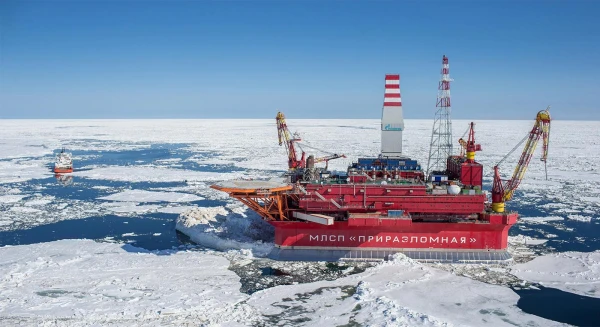
Even greater potential is associated with the Russian Arctic. According to the analytical company Rystad, with sufficient investment, the region could provide extraction of up to 50 billion barrels. The central project in this direction is the currently suspended Vostok Oil, managed by Rosneft. The company claims plans to extract up to 2 million barrels per day by 2030 — about 2% of current global production. The total volume of rare earth metals in the Far North is about 29 million tons.
What Are the Obstacles?
Lifting anti-Russian sanctions will require consultations with the U.S. Congress, where "hawks" opposing economic rapprochement with Moscow play a significant role. For many lawmakers, such a step would mean effectively aiding the recovery of the Russian economy.
Moreover, in recent years, companies from Asia, Turkey, and other countries have filled the niches that opened up in the Russian market. In 2024, China's share of Russian imports reached 57%, whereas before 2022 it was about 23%. It is not easy to return, politically speaking: Western companies fear regulatory risks and unfavorable, politically motivated decisions.
Analyst Charles Hecker from the London-based RUSI believes that Kirill Dmitriev has managed to "ignite the appetite of the American business community," and some participants may indeed expect lucrative deals, including seats on the boards of Russian companies.
However, The Economist notes that discussions of trillions of dollars in benefits largely serve as bait and are likely exaggerated. According to the publication's calculations, even with a partial restoration of relations, it is unlikely that a long-term and stable partnership can be established for decades to come. It is equally doubtful that American companies will be able to extract trillions of dollars in profits from Russia's Arctic resources in the foreseeable future.
<iframe width="560" height="315" src="https://www.youtube.com/embed/nenAELOLjEc?si=qOZ0LNrtiGqoPPZo" title="YouTube video player" frameborder="0" allow="accelerometer; autoplay; clipboard-write; encrypted-media; gyroscope; picture-in-picture; web-share" referrerpolicy="strict-origin-when-cross-origin" allowfullscreen></iframe>