The first means of public transport here was steam-powered.
The Ministry of Transport of Israel plans to transform Jerusalem into the first city in the country where, by 2030, it will be comfortable to live without a personal car.
The focus is on developing light rail transport and the "15-minute city" model — where work, study, and leisure are accessible by public transport close to home.
What already exists and what is planned:
-
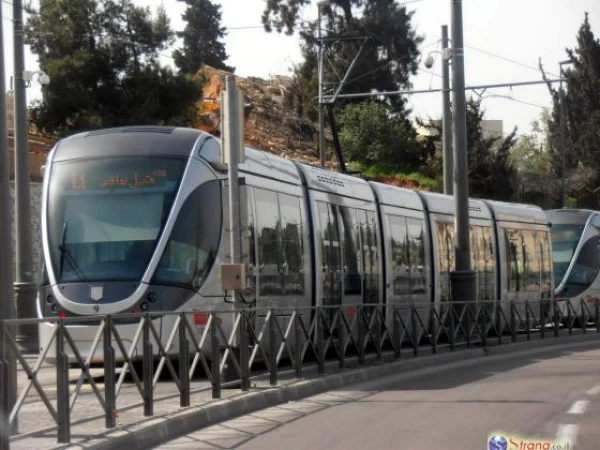
The Red Line tram (22 km) is already operational and carries about 260,000 passengers a day.
-
The Green Line will open in 2026: 21 km, 40 stations, connecting the south and north of the city.
-
The Blue Line (31 km, 53 stations) is scheduled to open in 2029.
-
The Yellow and Brown Lines are also in the project.
Additionally:
-
The extension of the high-speed railway from Tel Aviv to Jerusalem to the city center will double the number of trains.
-
A cable car to the Western Wall will improve access to the Old City.
Jerusalem is a very ancient city. This also applies to the plans for building a tram in the city, which existed during the time of the Ottoman Empire and the British Mandate. In fact, there was even the first short, but realized experience. However, it is hardly possible to call it a tram. It was a steam locomotive. In 1918, after the British captured Jerusalem during World War I, their front line with the Turks (the Ottoman Empire) was stuck north of Jerusalem for several months. To supply their troops, the British built a light railway line (rakevet kala). From the railway station in Jerusalem (the historic station, which still exists today but was closed for traffic in 1997) to their bases in the El-Bireh area, which is now a suburb of Ramallah (now the so-called capital of the Palestinian Authority).
Today, it is impossible to find any remnants of this line, but several streets in and around Jerusalem were built along the tracks of this line. This means that this branch played a certain historical role. By the autumn of 1918, the Turks had retreated, and this line ceased to have strategic significance for the British. However, for some time, a small steam locomotive continued to run, note that it had a tram car. It ran from the railway station to the Jaffa Gate (this was the place from where historically the diligences to Jaffa departed, and coachmen on carts delivered goods around Jerusalem) and then continued north through Wadi al-Joz.
Interestingly, almost 100 years later, its route completely coincides with the current Red Line of the Jerusalem tram. After some time, the service ceased, apparently the then small population did not need this route. Or the British decided that it was not profitable to operate this branch.