"The year will be very challenging, but promising," summarizes the expert.
Russian oil companies are forced to sharply increase discounts on oil supplies to China — the discount has reached a record $35 per barrel. According to Reuters, citing industry sources, this is due to the temporary refusal of Indian refineries to accept some Russian shipments and growing difficulties in finding alternative buyers amid sanctions pressure.
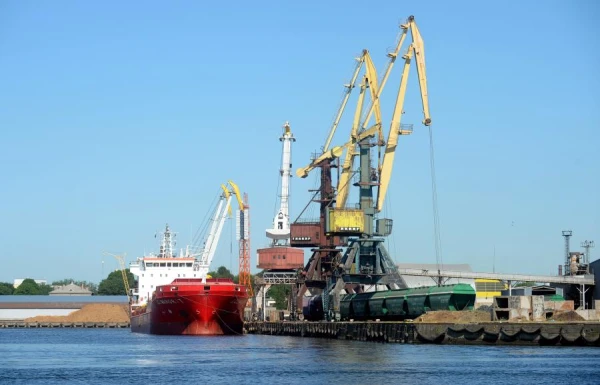
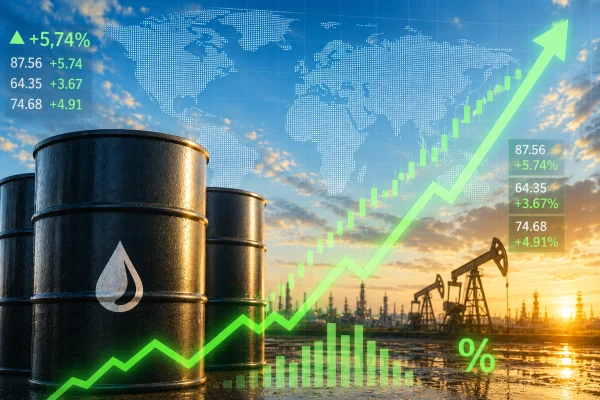
At the same time as the discount rises, prices for Russian oil have fallen to their lowest levels since the beginning of the large-scale war in Ukraine. According to Bloomberg and Argus Media, exporters are receiving just over $40 per barrel for shipments from the ports of the Baltic and Black Seas, as well as from the eastern port of Kozmino.
Over the past three months, the price of Russian oil grades has decreased by 28%. The situation has been exacerbated by the sanctions imposed in October by the U.S. against the largest players in the industry — Rosneft and Lukoil.
The decline has affected not only Russian oil. The benchmark Brent crude fell below $60 per barrel in December for the first time since May amid signs of oversupply in the global market.
Russia is trying to compensate for falling prices by increasing export volumes. Since August, oil shipments to marine tankers have increased by approximately the same 28% as the price decline, Bloomberg notes. What this means, MSK1.RU asked experts.
The Budget Was Drafted with Price Considerations
According to Nikita Maslennikov, a leading economist at the Institute for Contemporary Development, the current difficulties are related not only to the decline in oil and gas revenues but also to changes in the structure of export earnings. He reminds us that, contrary to the pessimistic forecasts of other analysts, there has been no critical decline in oil production in Russia since 2022, despite all the sanctions.
"Yes, there has been a reduction in exports, but not a decline in production," emphasizes Maslennikov.
He reminds us that the oil market is seasonal, and the situation depends on many factors. The economist notes that the negative impact of oil prices on the macroeconomy has already been felt by Russia for four consecutive years, and 2026 will not be an exception. However, during this time, adaptation has already occurred, and the federal budget for 2026 was drafted with the consideration of lower oil prices ($59 per barrel for Urals crude, stated Finance Minister Anton Siluanov), so the effect will not be critical.
One of the key risks, Maslennikov points out, is the growing discount of Russian oil grades to Western benchmarks: "Even with stable supply volumes, export earnings depend on the size of this discount."
Despite the challenges, the expert generally assesses the budget process positively. According to him, the state has three absolute priorities: defense and security, social policy, and ensuring technological sovereignty. These priorities were first outlined by President Vladimir Putin at a meeting of the Council for Strategic Development on December 8 (where he called for structural restructuring and 'whitening' the economy). He then reiterated them during the "Year-End Results" on December 19.
In turn, ensuring social benefits is a guarantee of high labor productivity. "A person will work effectively when they know that everything is fine at home," says Maslennikov.
Overall, in the economist's opinion, 2026 will be a period of turbulence that must be navigated in order to achieve more stable growth rates of over 3% per year starting in 2027.
"The year will be very challenging, but promising," concludes Nikita Maslennikov, noting that the key tasks for ensuring social stability have already been outlined by the president and the government.
Inflation Cannot Be Contained
As for how the global oil price will affect the price of Russian gasoline, MSK1.RU spoke with Igor Yushkov, a leading expert at the National Energy Security Fund. According to him, a key role in forming gasoline prices is played by the damping mechanism — a system whereby the government pays oil companies subsidies from the budget to compensate for the difference between domestic and external fuel prices.
"When prices are low in external markets for oil and petroleum products, it turns out that the difference between the domestic price and the external price is small. And the government pays oil companies from the budget for this difference under the so-called damping mechanism," says Igor Yushkov.
This interconnection has already led to a reduction in damping payments. "These payments have dropped by about 50% in 2025. Because the ruble is strong, the price of oil in the global market has decreased. And it turns out that the difference between the domestic price and the external price is not that significant," noted the expert.
The reduction in budget payments for damping forces oil companies to seek compensation in the domestic market, leading to an increase in exchange prices: "Less is paid from the budget to oil companies, and they want to make up the shortfall by taking from the market. And that’s why the price on the raw materials exchange is also rising."
The expert predicts that this trend will continue into 2026. This is due to the fact that global oil prices will remain low, and consequently, damping payments will also remain small.
"And this will keep pressure on prices, so that on the exchange, as soon as the car season starts, that is, from April, from May, prices on the exchange will go up again," believes Igor Yushkov.
He also expressed doubt about the ability to keep fuel price increases within the limits of inflation, which is expected to decrease.
"In 2026, it will also be difficult to keep price increases at the level of inflation because inflation is expected to decrease. We see that it is already closer to 6%. Next year, 4% inflation is forecasted. And in total, over the 11 months of this year, the price of gasoline has increased by about 12% at retail, while diesel has increased by about 8%. Therefore, keeping it around 4% next year will be challenging," stated the expert.
In the coming months, Russians may observe a temporary decrease or stabilization of prices at gas stations.
"Right now, there is a kind of calm, probably for the last few months we have been observing. The price of gasoline is even slightly decreasing. But, essentially, we will probably see some calm in January or maybe even February. And as soon as the new car season starts, prices may go up again.