
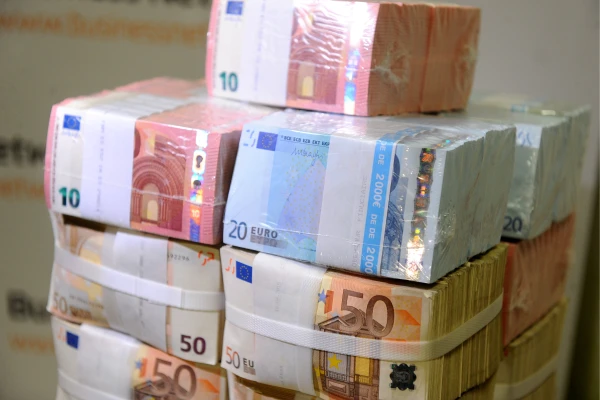
Bank of Latvia economist Dace Berzina on the reasons for the strengthening of the euro.
This year, the euro has strengthened against the dollar, and the economist of the Bank of Latvia, Dace Berzina, shared her analysis of the "interaction" or more precisely - "confrontation" between the dollar and the euro on the portal makroekonomika.lv.
"Since the European Union (EU) most often pays for imported goods from countries outside the EU in US dollars and uses US dollars as the second most important currency for exports, changes in exchange rates can have an immediate effect on the prices of goods involved in foreign trade, which will subsequently affect domestic prices and, ultimately, may reflect on inflation indicators.
The strengthening of the euro is not beneficial for all those who receive income in foreign currency (including exporters, investors, and recipients of other income, such as salaries), as the amount received from abroad is less when converted to euros. Conversely, a weaker euro is favorable for them.
The main reason for the rapid growth of the euro in the first half of 2025 is the weakness of the dollar, which has lost value against the currencies of the largest economies since the beginning of the year. The last time the dollar lost value so rapidly was in 1986. This occurred at a time when the political priorities of the newly elected US president became clearer, creating uncertainty about the future direction of economic development. However, since July, the dollar has largely stabilized.
Important driving forces behind the decline in the exchange rate were reports about customs tariffs and subsequent trade agreements. New customs tariffs and changes in trade policy led investors to reduce confidence in the growth prospects of the US and thus also contributed to lowering expectations regarding interest rates. Many companies rushed to increase orders before the new tariffs were introduced, leading to a temporary increase in trade with the eurozone. Since more euros are needed for payments for European goods, this increased demand for euros in the currency markets and contributed to its appreciation.
Overall, the strengthening of the euro this year has largely occurred due to the weakness of the dollar. Investor confidence in the dollar has been shaken amid growing concerns about the independence of the Federal Reserve and the government's ability to control the level of national debt. However, the decline in the dollar's value also reflects deeper changes in the global financial architecture. Financial markets and analysts predict that the euro's position will remain relatively strong in the near future. However, challenges in the eurozone economy and geopolitical uncertainty mean that the strengthening of the currency will likely be a moderate rather than a rapid process. Currency fluctuations not only reflect the dynamics of global economies but also open up very practical opportunities for the population. As the euro strengthens against the US dollar, it becomes more advantageous to make purchases in foreign online stores that transact in dollars. Additionally, travel to countries where the currency has weakened against the euro - such as the USA or Japan - becomes cheaper. Thus, even under the influence of global financial processes, everyone can find ways to take advantage of currency exchange rate changes in their daily lives. The ECB, while not intervening in the currency market, closely monitors the processes occurring within it, as the strength or weakness of the euro directly affects the prices of imported goods and, consequently, inflation as a whole.
If the value of the euro falls, imports may become more expensive, and inflation may rise; conversely, if the euro strengthens, it may reduce inflation by making imports cheaper. A better understanding of these processes helps in forecasting the overall inflation dynamics in the eurozone.
















Leave a comment