
Russia is viewed as a state with a functioning apparatus of power and public order.
The asylum reform in the EU has no retroactive effect and is aimed at those refugees who are yet to arrive in Europe. A European compromise on asylum — GEAS — has come into force regarding them. The intentions of the reformers are noble, but will this help refugees? Or does the reform primarily cater to the demands of bureaucracy? And how will this affect the fate of refugees from Russia? The German website aussiedlerbote.de investigates.
Asylum Reform in the EU: Relieving Italy and Greece
The key idea of the reform is to relieve the countries at the external borders of the EU. These are primarily vulnerable Italy and Greece, which are overwhelmed by a wave of migrants.
Now these countries can expect assistance from other member states — through financial contributions, provision of places for asylum seekers, or other forms of support.
Germany, by the way, is not obliged this year to participate in the already agreed solidarity mechanism. For many cases, the responsibility still lies with other states, and the deadlines for returns have already expired.
But the essence of the reform is not about the problems of Italians and Greeks. And their unexpected guests.
Asylum Reform in the EU: Barrier at the Border
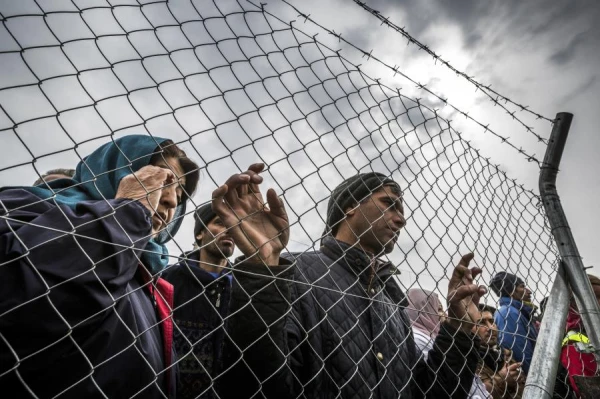
The reform introduces strict border procedures. They must be conducted at the external border of the EU. Refugees are placed in closed centers with restricted freedom of movement, where their fate is decided. At the same time, people placed in such centers are legally considered not yet to have entered the country, and therefore do not fall into the usual deportation statistics. And most likely, they are much more restricted in their rights than previous refugees.
Families with children may also find themselves in these centers at the EU borders. The situation of children raises particular concern: human rights defenders believe that keeping families in closed centers can cause serious psychological and physical harm.
However, it is assumed that the time limit for one refugee will now be 12 weeks. This means decisions will be made much faster and have the force of a final verdict. According to Brussels' design, this should accelerate refusals and subsequent deportations, as the previous system clearly stumbled on this. The system may allow for quicker protection for those fleeing political persecution. If one assumes that it is insured against errors — but is that the case?
In this context, procedures are standardized, and uniform requirements for accommodation conditions are established. The right to free legal consultation is introduced. All this is supposed to make the asylum system more predictable and transparent and reduce secondary migration within the EU. The reform also proposes expanding the European database Eurodac, where, in addition to fingerprints, facial images will be stored. This should facilitate the identification of asylum seekers and control over movements between EU countries.
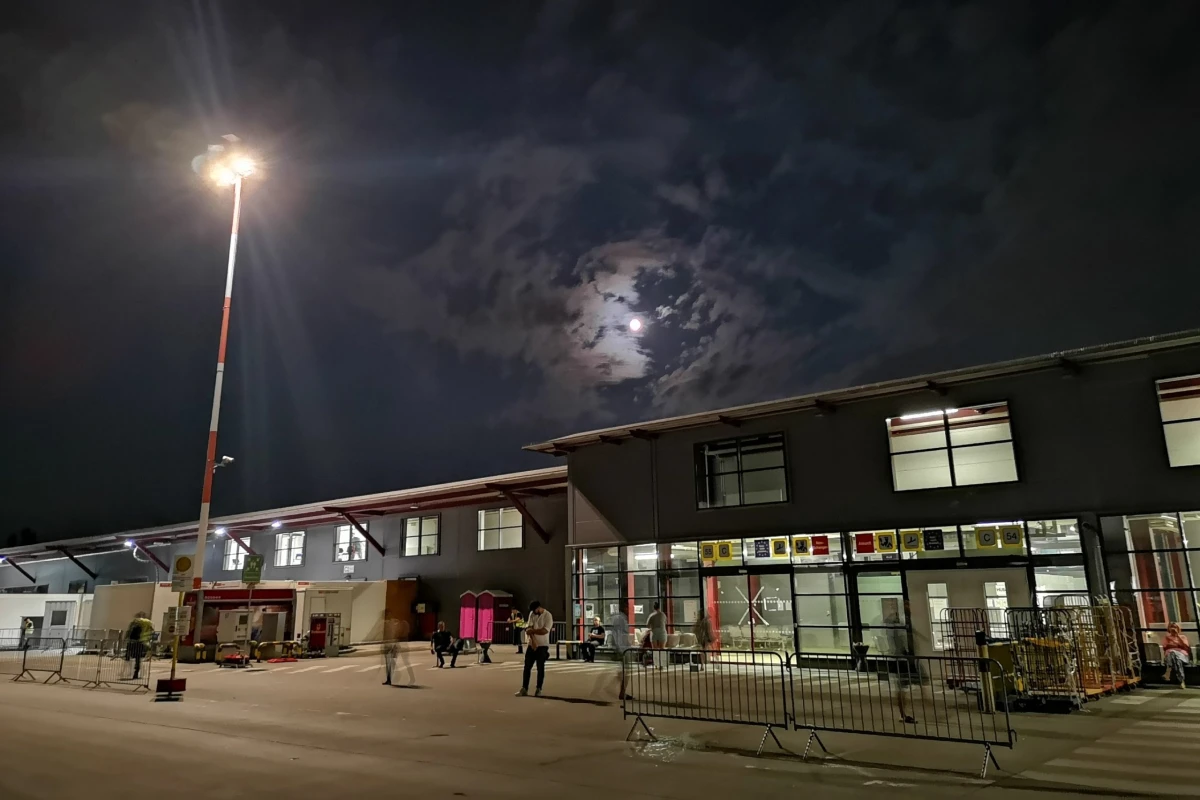
For Germany, this is quite a sensitive issue. The country has no external land border with the EU, but it has international airports. There, in Munich, Frankfurt, and Berlin-Brandenburg, new procedures will be applied.
At the start, only 374 places are provided for refugee centers in Germany. But this number may increase: new sites are already planned, including in Düsseldorf.
At Germany's land borders, nothing is changing for now: checks on those passing through continue, although Berlin hopes that the success of the reform in the future may make such measures less necessary.
Asylum Reform in the EU: Russians at Risk
There will be a biased attitude towards two categories of refugees. And while it is difficult to argue with the reformers regarding one, the other...
The reform will hit those whose identity raises doubts or who are considered a potential security threat. Okay. But refugees from countries with low approval rates for asylum applications — less than 20 percent — will particularly suffer. They are most likely to face rejection.
Unsurprisingly, Russia is among such countries. There are not that many refugees from there. There is no comparison with the massive flows from Asia and Africa. But the rejection rate is high.
The authorities of EU countries often believe that not every Russian citizen who opposes the war or disagrees with the political situation automatically needs international protection.
The European asylum system was historically created primarily to protect people fleeing from war; from state collapse; mass violence; systematic persecution, from which the state cannot or does not want to protect.
As for Russia, many European agencies assume that there is no civil war in the country. There is no total collapse of state institutions. Police, courts, and authorities formally function. Most citizens can lead an ordinary daily life. The state, in general, controls the territory and maintains public order.
That is why a Russian citizen is not automatically considered in need of protection simply because he is a citizen of Russia. Unlike the situation in countries where a full-scale war is ongoing or where state power has effectively collapsed.
However, this does not mean that European authorities consider Russia a "safe democracy." Rather, they operate on another thesis: the danger in Russia is selective, not total. That is, according to their logic, the risk exists for certain categories of people: opposition activists; journalists; human rights defenders; participants in anti-war actions; individuals subjected to criminal or administrative persecution; representatives of certain religious and social groups; individuals who are genuinely threatened with punishment for refusing military service.
Unfreedom and Fear
This is where the main dispute arises. Many Russian applicants and human rights defenders argue that an authoritarian state creates an atmosphere of fear and unpredictability, and the absence of civil war does not mean the absence of persecution. They say that a person does not have to wait for arrest or conviction to have a well-founded fear.
On the other hand, the migration authorities of Germany and other EU countries respond that international protection is not intended for all people living in unfree states. It requires establishing either individual risk or the presence of a situation of widespread violence, as occurs during war.
Russia is viewed as a state with a functioning apparatus of power and public order, not as a zone of total chaos and armed conflict. But this does not imply that there is no persecution. The conclusion is narrower: persecution must be shown in relation to a specific person or specific risk group.
Why Are Russians Denied?
-
They require evidence of individual persecution. Under European law, asylum is not granted for general dissatisfaction with the political regime, but in the presence of a well-founded fear of persecution on specific grounds. If a person says, "I am against the war and fear returning," but cannot show why exactly he is in danger, the authorities may decide that the risk is insufficient. Human rights organizations, including Amnesty International and Human Rights Watch, point out that Russian legislation on "discrediting the army" and "fake news" creates real risks. Not all forms of persecution are easily documented; opposition activity in authoritarian conditions often leaves no written evidence. Repressions in Russia are not always clearly documented.
-
A chimera of the possibility of "internal protection." Some migration agencies, without much thought, assume that the applicant could avoid persecution by moving to another region of Russia or changing their behavior.
-
Political caution: authorities fear creating the impression that all Russian citizens are automatically potential refugees. Since they are victims of an inhumane regime, and literally anyone can suffer.
In German courts in recent years, various approaches can be encountered. Some decisions emphasize the existence of a functioning state in Russia and the absence of widespread violence. Others acknowledge that after 2022, the space for dissent has sharply narrowed and for some categories of Russian citizens, the risk of persecution has significantly increased. Therefore, much depends not so much on the overall assessment of Russia, but on how convincingly the applicant can demonstrate their personal vulnerability and inability to obtain protection within the country.
And one must still survive until the court. The reform sets very strict time norms for this and likely limits the possibilities for appeal.
Asylum Reform in the EU: Return Hubs
Another controversial element of the reform remains the return hubs in third countries. For those whose asylum application has been rejected but who cannot and do not want to return to their homeland.
Their establishment still requires political and legal approval, and real host countries have not yet been named.
In February, the German government adopted a law to integrate GEAS into national legislation, which uses the most stringent possibilities provided by European law (specifically regarding centers for those falling under "secondary migration" procedures). Germany, along with the Netherlands, Austria, Greece, and Denmark, is seeking partners for such agreements, and Interior Minister Alexander Dobrindt hopes to conclude the first agreements by the end of the year.
How widely the mechanism will be used in practice remains unclear. However, there is a risk of increased pressure on people with unresolved migration status.
Refugees Will Not Disappear
GEAS does not affect the causes of migration. People flee primarily from wars, dictatorships, political repression, and humanitarian crises. The European Union cannot influence these causes.
Human rights defenders warn of risks. Experts doubt that the new system will truly resolve the conflict between EU countries, and organizations assisting refugees point to restrictions on freedom of movement, stricter procedures, and weakening of legal protection. The reform is criticized for significantly limiting the right to asylum and increasing the risk of judicial errors.
The main gain of the new system is a more equitable distribution of responsibility among member states, including the redistribution of some applicants and financial compensation from countries refusing to participate in their reception. At the same time, it undermines the business of smugglers who profit from transporting people to wealthy countries like Germany, Sweden, or the Netherlands. Under the new rules, this loses some of its meaning.
But on the other hand, the reform gives the impression of being harsh and not entirely fair. At least in what will surely affect political refugees from Russia.









Leave a comment