
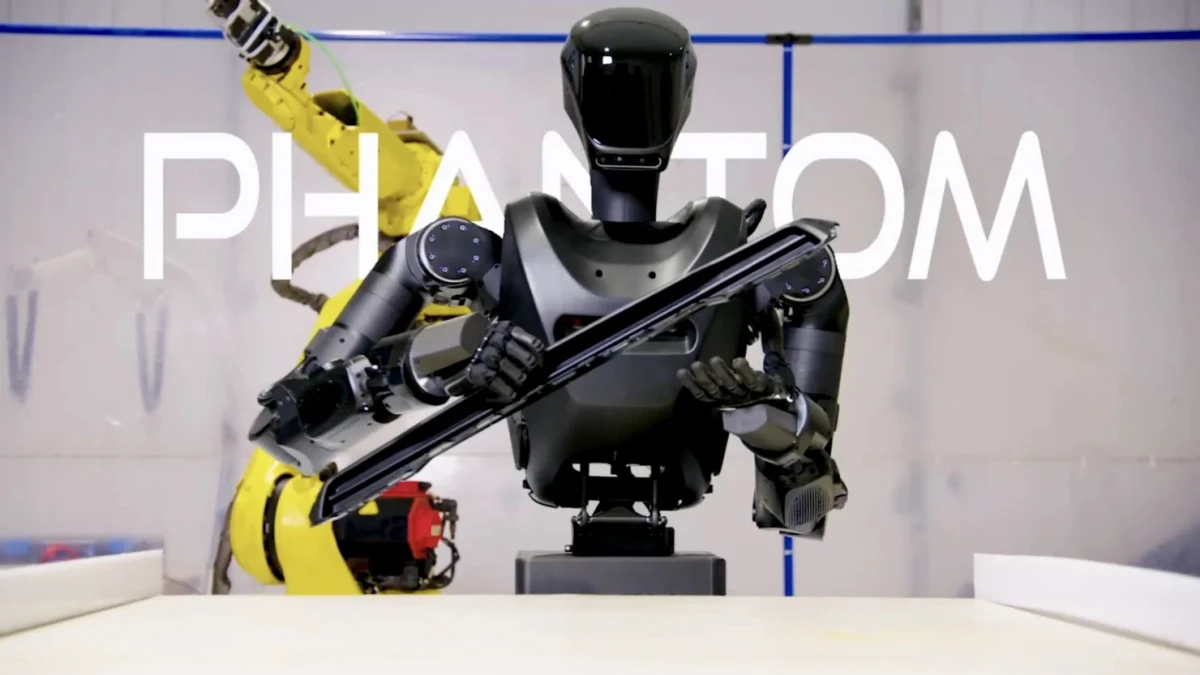
While some companies teach robots to brew coffee and fold laundry, the American startup Foundation Future Industries is developing humanoid machines for the military. The first prototypes are already undergoing testing in Ukraine, and the developers hope to deploy them in the U.S. armed forces in the coming years.
American company Foundation Future Industries, linked to the family of U.S. President Donald Trump, is betting on an unusual direction in robotics development. Instead of household assistants, they are creating humanoid robots for work in hazardous industrial conditions and potential use in the military sector, reports CNBC.
The San Francisco startup is developing autonomous humanoid robots for dual purposes. According to the company’s CEO Sanket Patak, the technologies are already approaching a level where they can replace humans in the most hazardous professions.
In his opinion, if robots can perform dangerous work instead of humans, it will become one of the most useful directions in modern robotics development.
Testing in Ukraine
The company attracted global attention by sending two Phantom MK-1 robots to Ukraine. There, they participated in a pilot program to perform logistical tasks in areas where cargo delivery poses risks to military personnel.
The tests were conducted with the support of American entities and in cooperation with the Ukrainian side. According to the developers, the robots have already proven their ability to transport cargo and perform auxiliary tasks.
However, the current generation of machines is still far from the fantastic images of combat robots. Their payload capacity is about 20 kilograms, and their autonomy and protection still require significant improvement.
In the near future, the company plans to introduce a new model, Phantom 2, with increased payload capacity and expanded capabilities.
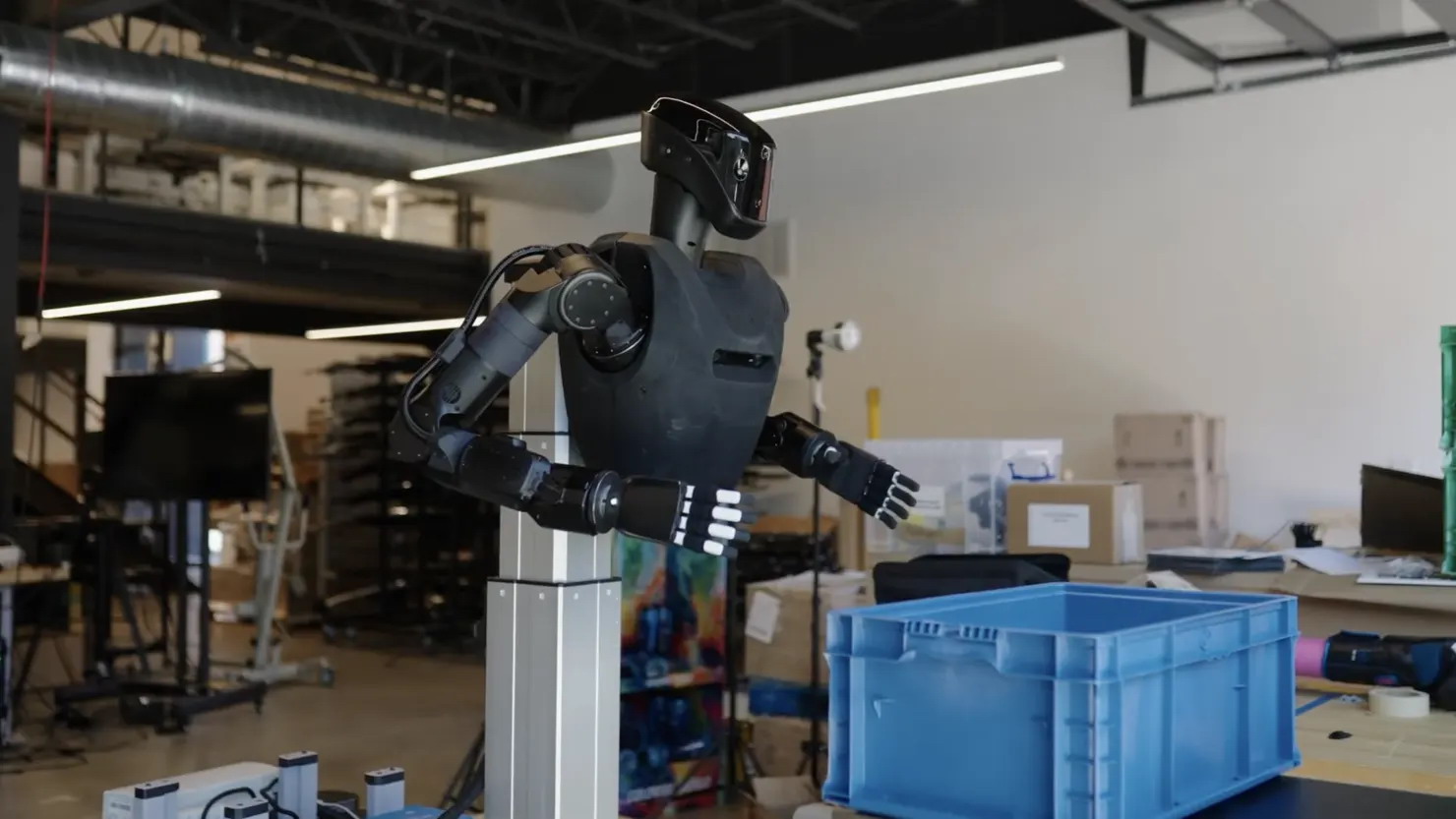
Photo: Foundation Future Industries.
Interest from the U.S. Army
Foundation is actively collaborating with the U.S. military. The company has already received government contracts for research and testing of robotic systems for the Army, Navy, and Air Force of the United States.
Developers hope that within the next year and a half, their technologies will undergo full-scale testing in U.S. Army units.
Additional attention to the project has been drawn by the involvement of Eric Trump, who has taken on the role of the company’s strategic advisor.
Why the Military is Interested in Humanoid Robots
Proponents of such developments believe that humanoid machines have advantages over other types of robots. Modern infrastructure—buildings, stairs, tunnels, and manufacturing facilities—was created for humans, so robots with human anatomy can navigate such environments more easily.
It is assumed that in the future they will be able to perform reconnaissance tasks, deliver cargo, work in dangerous zones, and reduce risks for military personnel.
Skepticism from Experts
Despite ambitious plans, many experts view the project with caution. They remind us that modern conflicts have shown the effectiveness of relatively simple and inexpensive drones, which are easier to produce on a large scale.
Moreover, questions remain regarding the cost, reliability, and ethical implications of using autonomous systems in combat conditions.
Experiments with humanoid robots demonstrate that military technologies are rapidly changing under the influence of artificial intelligence. However, the mass appearance of humanoid machines on the battlefield is still far off. For now, developers are trying to prove that such robots can not only impress with their capabilities but also realistically compete with cheaper and more practical drone systems.










Leave a comment