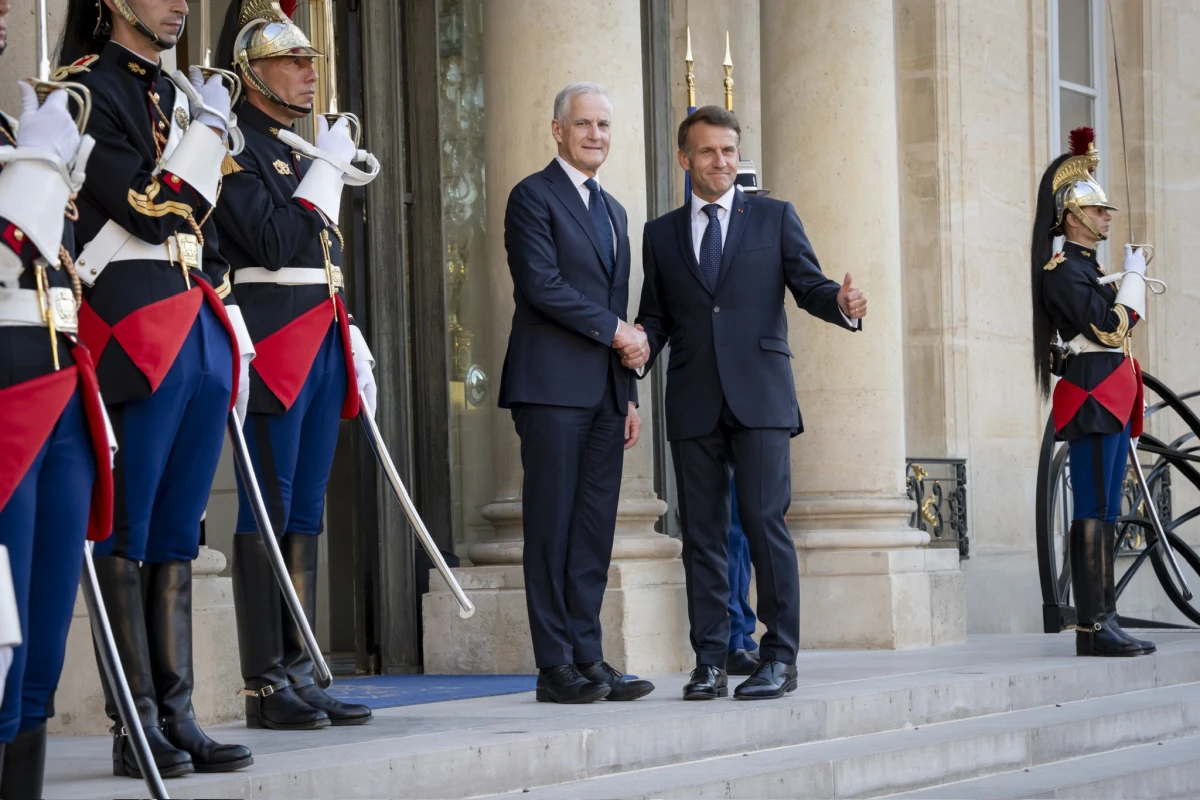
Norway will become a participant in the French nuclear deterrence program aimed at enhancing Europe's security. Paris and Oslo have already signed a new defense agreement.
Norway will join the European nuclear deterrence program led by France. This was announced on Wednesday by French President Emmanuel Macron and Norwegian Prime Minister Jonas Gahr Støre after a meeting in Paris.
At the same time, the countries signed a new defense agreement.
According to the Norwegian Prime Minister, Europe is currently facing the most serious security situation since World War II.
"We are moving towards closer cooperation in defense and security," Støre emphasized.
The French nuclear deterrence program was announced by Macron in the spring of this year. Its goal is to strengthen the protection of European allies in light of Russia's war against Ukraine and the growing instability in the security sphere.
France remains the only country in the European Union with its own nuclear weapons. According to Paris's initiative, participating countries will be able to temporarily host French "strategic air forces."
Macron previously explained that such a system should complicate calculations for potential adversaries and enhance the level of European deterrence.
For Norway, participation in the program is particularly sensitive given its geographical location and shared border with Russia in the Arctic.
In fact, Europe is currently rapidly building new collective security mechanisms — both within NATO and in parallel at the level of individual European agreements. Before Norway, Belgium, Denmark, Germany, Greece, the Netherlands, Poland, Sweden, and the United Kingdom had already joined the program.
It is particularly noticeable that countries in Northern Europe and the Baltic region are actively engaging in the initiative.
The new defense pact between Paris and Oslo encompasses not only cooperation in nuclear deterrence. It also includes joint exercises, pre-positioning of equipment, maritime security, cyber defense, space technologies, and support for Ukraine. Støre stated that the agreement will allow for a quicker and more coordinated response to potential threats.
Against the backdrop of the ongoing war in Ukraine, European countries are increasingly raising defense spending and expanding military cooperation.
Just a few years ago, the idea of strengthening the French nuclear presence in Europe seemed politically too sensitive; however, the discussion about a European "nuclear shield" is gradually becoming part of the new security architecture of the continent.