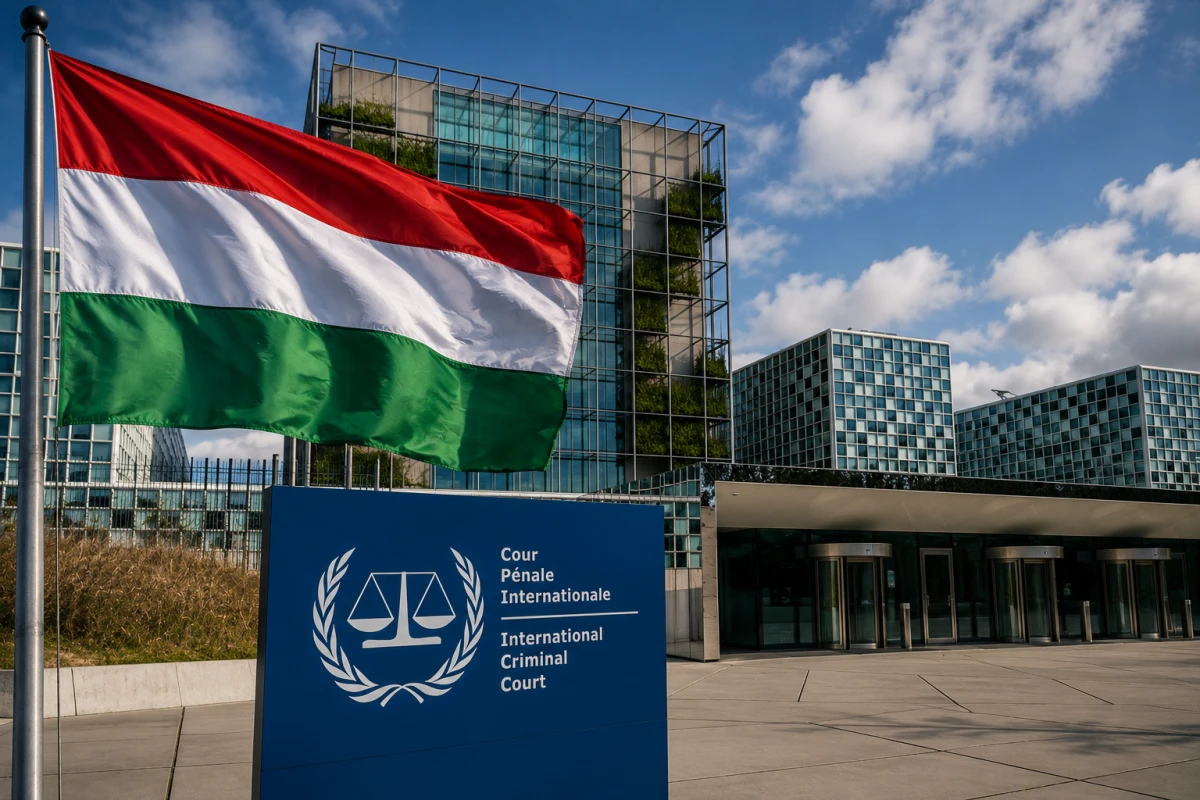
The new Hungarian government has decided to abandon plans to withdraw from the International Criminal Court. The decision reverses the course announced by Viktor Orban's cabinet after the issuance of an arrest warrant for Israeli Prime Minister Benjamin Netanyahu.
Hungarian Prime Minister Peter Madjar announced that the new government is withdrawing the country's intention to leave the International Criminal Court (ICC).
The head of government reported this on the social network X, without disclosing additional details of the decision.
Thus, Hungary is abandoning the course announced in 2025 by the government of Viktor Orban. At that time, Budapest began the process of withdrawing from the Rome Statute — the international treaty under which the ICC operates.
If the decision had come into effect, Hungary would have become the first and only country in the European Union to leave the International Criminal Court.
The withdrawal was supposed to take effect on June 2, 2026. However, the new government decided to halt the process.
The ICC, based in The Hague, investigates the most serious international crimes — including genocide, war crimes, and crimes against humanity.
The conflict surrounding the court sharply escalated after the ICC issued an arrest warrant for Israeli Prime Minister Benjamin Netanyahu and former Defense Minister Yoav Galant in connection with allegations of war crimes in the Gaza Strip.
This decision was used by Orban as the main argument for Hungary's withdrawal from the court. During Netanyahu's visit to Budapest, the Hungarian leader stated that the ICC had allegedly turned into a "political tool."
For the European Union, Hungary's potential withdrawal from the ICC was an extremely sensitive topic, as it would have been the first such precedent within the EU. The new government's decision is now perceived as one of the first noticeable signals of a change in the country's foreign policy course after the change of power.
At the same time, Budapest has previously held a special position regarding the court. Although Hungary signed and ratified the Rome Statute, the authorities claimed that due to constitutional peculiarities, the country was formally not obliged to comply with the ICC's decisions.
It is still unknown whether the Hungarian authorities will take additional steps to completely revise the previous policy towards the court.