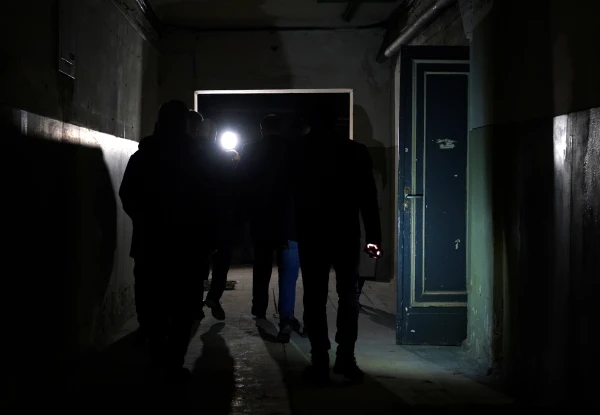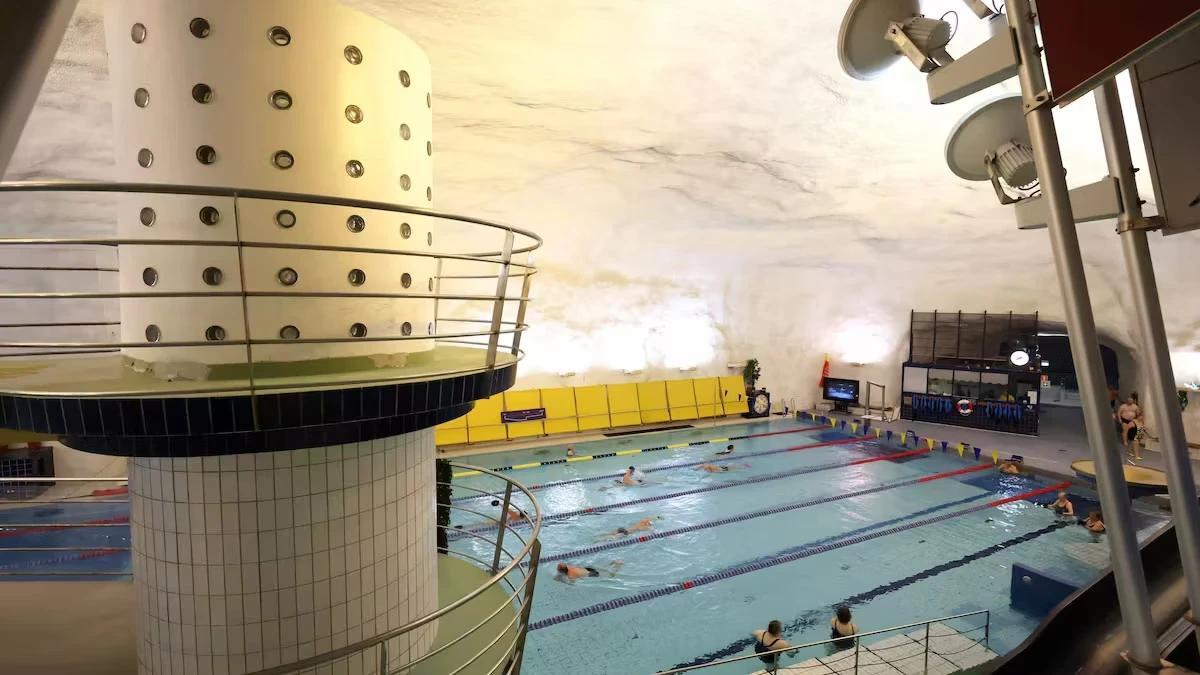
The civil underground shelters of Helsinki, including the Merihaka complex, have become the focus of increased interest from foreign delegations studying the Finnish civil defense system.
In Helsinki, the vast underground shelters built beneath the Finnish capital are attracting an increasing number of foreign delegations coming to study the civil defense model, which has become strategically important in the international context marked by wars in Ukraine and the Middle East.
Among the visitors were Ukrainian municipal officials, impressed by the size of the Merihaka civil shelter, which can accommodate up to 6,000 people. According to Finnish authorities, this underground complex, which has become a showcase of the country's security experience, has already been visited by around 800 foreign delegations.
The Merihaka shelter, excavated 25 meters deep, occupies approximately 71,000 cubic meters, equivalent to a seven-story office building. Built in 2003, it is used daily as a recreational area, including sports facilities, a gym, and a children's playground.
In the event of an emergency, this place can be transformed into a civil defense shelter in just 72 hours. Emergency equipment, bunk beds, water supplies, and portable toilets can be set up to protect thousands of people in the event of a bombing or major attack.
The construction of shelters remains mandatory under some large residential and commercial buildings, which distinguishes Finland from most other European countries.
International interest in these infrastructure facilities has significantly increased since the beginning of the war in Ukraine and the escalation of tensions with Iran. Finnish companies specializing in civil defense technologies and dual-use equipment report a substantial increase in demand and exports.
The Finnish civil defense model is considered one of the most advanced in Europe due to the combination of extensive infrastructure and regular civilian use of shelters. Against the backdrop of wars and rising geopolitical risks, interest in such protection systems continues to grow, enhancing attention to the Finnish experience as a potential model for other countries.