The authors of the new longevity report are convinced that health in old age is largely determined by a person's personal habits, yet some scientists believe such conclusions are overly simplistic.
According to a new longevity report presented at the Smart Ageing summit in Oxford, individuals largely determine how healthy they will be in old age. The authors of the study claim that at least 80% of age-related health decline is linked not to genetics or government actions, but to lifestyle and personal habits.
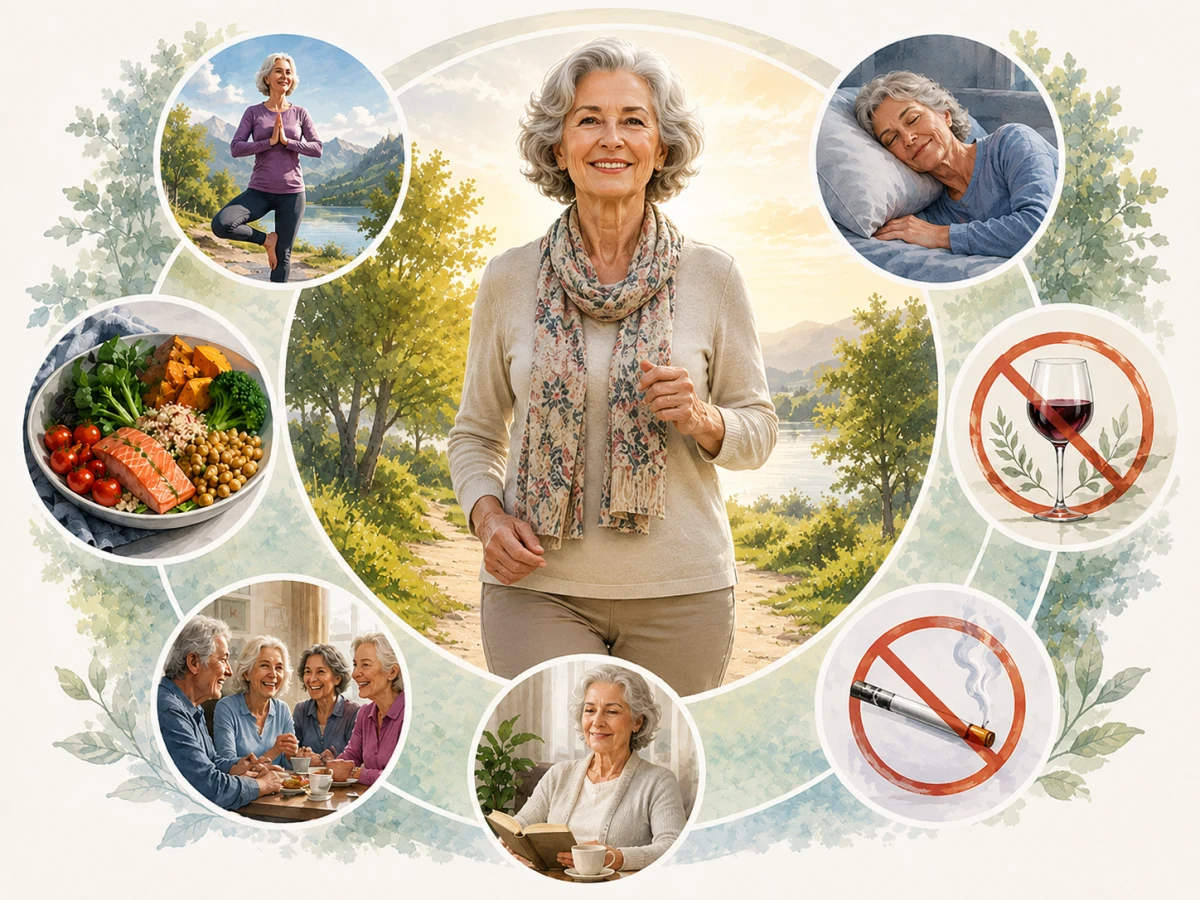
The report "Living Longer and Better," prepared as part of the Oxford Longevity Project by a group of British specialists in medicine, physiology, aging, and educational policy, calls on authorities to tighten alcohol regulation similarly to anti-tobacco measures. The authors believe that people have significantly more influence over their own lifespan than is commonly thought. Among the recommendations are avoiding ultra-processed foods, complete abstinence from alcohol, prioritizing quality sleep, avoiding late meals, and reducing meat consumption.
However, the report's conclusions have faced criticism from several scientists. Opponents argue that the authors oversimplify the issue and underestimate the impact of poverty, environmental pollution, education levels, and access to healthcare. Public health professor Stephen Wolf stated that health depends not only on personal choice. According to him, such an approach shifts part of the responsibility away from politicians and public institutions.
A similar position was expressed by Devi Sridhar. She noted that there is a direct link between income levels and health status, meaning that government policy also plays an important role.
Nevertheless, one of the report's authors, Ball, rejected such criticism. In his opinion, the idea of personal responsibility gives people hope and the ability to change their own lives regardless of wealth or living conditions. He also criticized the common tendency to shift responsibility to genes, parents, or circumstances. According to him, personal choice most often determines the quality and duration of life.
Some experts also expressed doubts about the figure of 80%. Honorary professor of epidemiology Jay Olshansky noted that such estimates are difficult to interpret without more specific calculations. In response, the authors referred to a number of studies, including the Landmark Twins Study, which indicates that at least 75% of lifespan is determined by environmental factors and lifestyle rather than heredity.
They also provided data from a large-scale analysis by Oxford Population Health, based on information from nearly 500,000 participants in the UK Biobank. The study showed that habits and the environment have a stronger influence on premature death and biological aging than genetics. The authors took a particularly strong stance on alcohol. According to Ball, alcohol is toxic, and authorities, in his opinion, avoid speaking about this directly to the public.
In the editorial's view, the discussion surrounding the report highlights how complex the topic of aging and longevity remains. While personal habits do play a huge role in health, the impact of living standards, ecology, and access to healthcare is also difficult to ignore.