
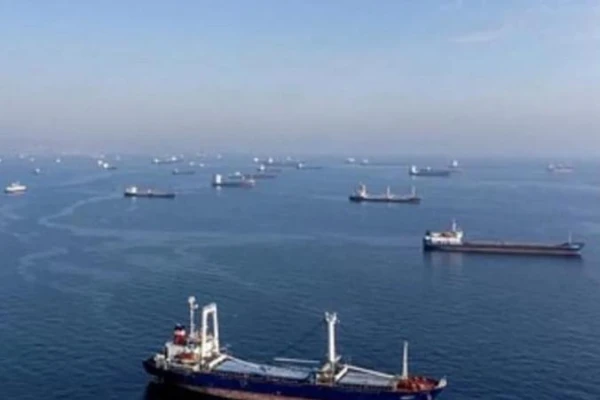
U.S. military officials warned Congress that clearing the Hormuz Strait of Iranian mines will take at least six months after the war ends. This threatens the global economy with a prolonged energy crisis.
Complete clearance of the Hormuz Strait may take up to six months and will evidently only be possible after the end of the war between the U.S. and Israel against Iran. This assessment was presented by a senior U.S. Department of Defense official during a closed briefing for members of the House Armed Services Committee, The Washington Post (WP) reported on Wednesday, April 22, citing three informed officials. The forecast has caused dissatisfaction among both Democrats and Republicans, according to DW.
According to the same sources, some of the mines in the Hormuz Strait and around it were deployed by Iran remotely using GPS technology, which significantly complicates their detection by U.S. military forces. Others, according to available information, were installed by Iranian forces from small boats. Iran began mining the strait in March as U.S. and Israeli forces continued to strike the country.
Pentagon Refuses to Comment on Clearance Timelines
The Pentagon declined to comment on the assessment of clearance timelines. Its official representative, Sean Parnell, called the published information "inaccurate" and accused WP of being "more concerned with promoting an agenda than with the truth." According to The New York Times, Iran itself cannot detect all the mines it has deployed.
U.S. Secretary of Defense Pete Hegseth previously stated on social media that U.S. forces are destroying Iranian vessels capable of laying mines "with ruthless accuracy," and that the U.S. "will not allow terrorists to take the Hormuz Strait hostage."
In March, CNN reported, citing an assessment from the U.S. Defense Intelligence Agency, that Iran could keep the strait closed for one to six months. At that time, Parnell called a "six-month closure impossible and absolutely unacceptable."
Trump and the Ceasefire
U.S. President Donald Trump wrote on his social media platform Truth Social on April 17 that Iran "with the assistance of the U.S." has already removed or is removing all naval mines from the strait - this statement coincided with his efforts to calm the markets and demonstrate the proximity of a peaceful settlement. On April 21, Trump announced an indefinite extension of a two-week ceasefire, stating that the Iranian leadership is "seriously divided" and must "come up with a unified proposal." This came amid signs of the Iranian side's unwillingness to continue negotiations.
Trump demanded that Iran roll back its nuclear program, hand over all highly enriched uranium, and fully open the strait, threatening new devastating strikes otherwise. Iran, for its part, stated that it would not continue negotiations with the U.S. side until Trump lifts the naval blockade imposed this month, aimed at choking off Iranian oil exports.
Economic and Political Consequences
Before the war began, about 20% of the world's oil passed through the Hormuz Strait - Japan, South Korea, China, and other Asian countries are particularly dependent on this route. Iran declared the strait closed and attacked several vessels. Over the past weekend, Iranian military forces again opened fire on tankers and declared the strait closed once more - after some commercial vessels had passed through during the ceasefire.
The average price of a gallon of gasoline in the U.S. was $4.02 on April 22 - compared to $2.98 before the war began in February. Treasury Secretary Scott Bessent stated that a price of three dollars may not return until the end of September. The war, initiated by Trump's decision, is unpopular among most Americans and has created a rift in his political base - particularly painful ahead of the midterm elections in November.
Plans for Clearance Still Unclear
It remains unclear what specific plan the U.S. intends to implement to clear the strait. Among the options being considered are the use of helicopters, drones, and diver-deminers. Richard Nephew, an expert on Iranian diplomacy and a senior research fellow at Columbia University, warned that a six-month clearance timeline could shake the oil markets. "There will be few willing to take such a risk," he said, adding that even partial inaccessibility of the strait for navigation could have serious consequences.
Meanwhile, Politico reported that British military divers are preparing for the demining of the Hormuz Strait in case such a decision is made. London also confirmed that it would provide autonomous mine detection systems as part of a proposed multinational mission to secure the strait.









Leave a comment