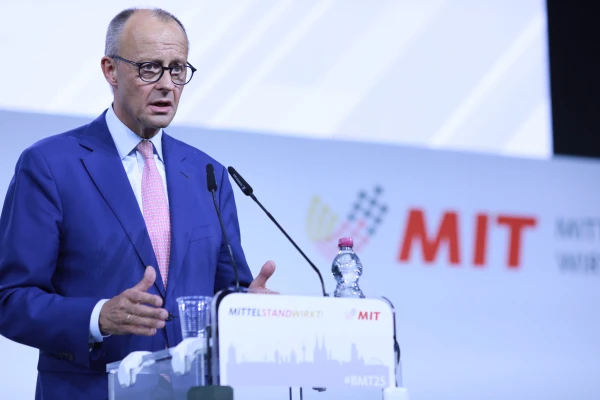
New statements by German Chancellor Friedrich Merz (CDU) regarding the future of the country's pension system have provoked a serious political crisis within the ruling coalition. Speaking at an event organized by the German Banking Association, the Chancellor emphasized that the state pension in its current form can no longer provide the accustomed standard of living and should be regarded only as "a basic system of social protection."
Such a paradigm shift has provoked an immediate response from the SPD. As reported by the German publication t-online, the Social Democrats intend to block any initiatives that lead to a weakening of state guarantees. Jochen Ott, the leader of the SPD parliamentary faction in North Rhine-Westphalia, called the Chancellor's proposals "a threat of the largest pension cuts in the country's history."
"Anyone who weakens the state pension risks facing widespread poverty among the elderly, especially among those who have worked their entire lives," emphasized Ott. In his opinion, the term "reform" in Merz's mouth becomes synonymous with cutting benefits at the expense of broad segments of the population to protect the interests of the super-rich. The SPD insists that working families should be at the center of tax benefits and reforms.
Amid growing discontent, the CDU/CSU bloc attempted to soften the situation. Faction leader Steffen Bilger stated that conservatives still want the state pension to guarantee a decent standard of living, but supported the Chancellor's call for citizens to consider additional, private ways to save for retirement.