U.S. President Donald Trump proposed the idea of creating a "joint venture" to charge for the passage of ships through the Strait of Hormuz. The European Commission states that this would be illegal.
The European Commission firmly rejected any attempts by Iran or the U.S. to charge ships for crossing the Strait of Hormuz, acknowledging that the final decision on whether to pay the fee rests entirely with the companies involved.
"International law provides for freedom of navigation, and what does that mean? It means no payments or fees," a European Commission representative said Thursday afternoon in response to a question from Euronews.
"The Strait of Hormuz, like any other maritime route, is a common good for all humanity, which means navigation must be free. Freedom of navigation must be restored."
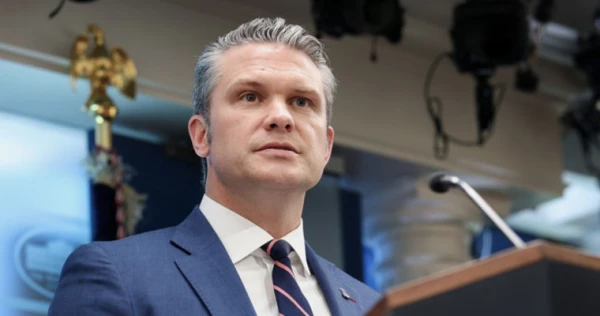
The European Commission's response came a day after U.S. President Donald Trump proposed creating a "joint venture" with Tehran to introduce a toll system for the waterway that is vital for the transit of oil, gas, and fertilizers.
"This is a way to secure it, as well as to secure it from many other people," Trump said in an interview with ABC News. "It's a wonderful thing."
Caroline Levitt, White House press secretary, later said that the idea "will be discussed further," but emphasized that the "immediate priority" is to resume navigation "without any restrictions, whether in the form of tolls or otherwise."
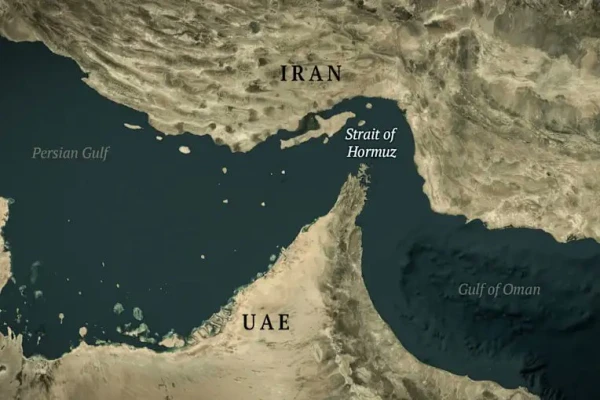
The Strait of Hormuz has been under tight Iranian control since the onset of U.S.-Israeli strikes on February 28, disrupting supply chains and causing a sharp rise in energy prices worldwide.
According to Trump, the ceasefire agreement announced earlier this week will lead to a "safe" resumption of operations in the Strait of Hormuz. However, on Wednesday, the strait was closed again after Israel launched massive strikes on Lebanon. Iran viewed this as a violation of its version of the 10-point agreement with the U.S. (The White House vehemently disputes this plan and states that Lebanon was excluded from the agreed terms).
On Thursday, chaos continued in the Strait of Hormuz: vessel traffic data showed that only a few managed to pass through it.
It is estimated that around 2,000 ships and 20,000 sailors remain blocked in the Persian Gulf.
Reports indicate that Iran has introduced a new system for passage through the strait: Tehran charges each ship $1 per barrel of oil carried on board. Payment can be made either in Chinese yuan or in cryptocurrency - two options that bypass Western financial controls.
For Brussels, neither Trump's "joint venture" nor Iran's $1 per barrel payment system is acceptable, as they contradict the UN Convention on the Law of the Sea (UNCLOS), which strictly prohibits charging for simple transit. Fees are only permitted in the case of providing a specific service, such as access to a port or maintenance.
Although the U.S. and Iran are among the few countries that have not ratified the UN Convention on the Law of the Sea (UNCLOS), its rules have become customary law worldwide.
When asked whether European companies should agree to pay or stay in the Persian Gulf, the European Commission responded that the decision should be made by the private operators themselves, considering their "various interests."
"Interested companies and shipowners must decide for themselves whether they want to pay this fee despite this," spokesperson Paula Pinho told reporters.
Europeans are discussing plans to ensure the security of the Strait of Hormuz, but nothing concrete has been proposed yet. Tehran considers this shipping route its main leverage and is unwilling to make any concessions unless Washington reciprocates.