
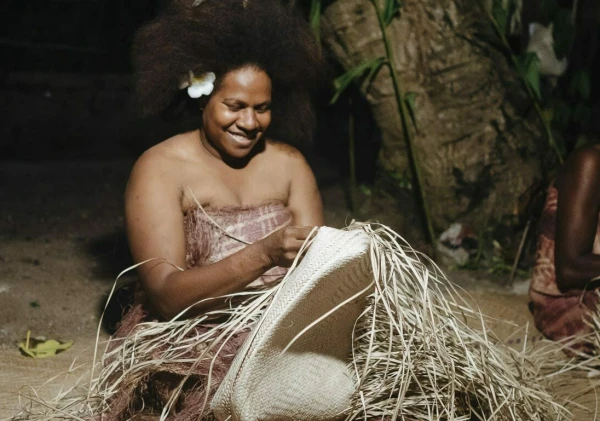
The opening of the massive complex is scheduled for 2027.
Leaders of indigenous communities in Vanuatu have opposed plans by the American cruise company Royal Caribbean to build a private beach resort on the island of Lelepa, The Guardian reports. According to them, the environmental assessment of the project was conducted improperly.
The American cruise company Royal Caribbean, one of the largest operators of sea travel in the world, has long been operating in Vanuatu. The capital of Vanuatu, Port Vila, has been part of the company's cruise routes for a long time. Since 2018, the company has been negotiating the creation of a permanent tourist facility on Lelepa – a small island of about one and a half kilometers in size and a population of 500 people.
For its new project, Royal Caribbean has leased part of the island's territory, where it plans to build a private beach resort designed to accommodate up to 5,000 tourists a day. The opening of the complex is scheduled for 2027. It is expected that passengers will be transported there by cruise ships from Australia as part of Pacific routes.
Construction has not yet begun, but the company's promotional materials already state that the area will feature ten bars, two dining establishments, and two private beach areas, one of which will be designated for adults only.
Representatives of local communities have opposed the project, believing it will have a detrimental effect on the island's ecology. They outlined their grievances in a letter sent to the company. The island's chiefs' council, representing several traditional landowners, criticized the environmental assessment commissioned by Royal Caribbean. According to the council, the document does not meet the requirements of Vanuatu's legislation, and local residents were not adequately involved in the project's discussions. The authors of the letter warn that construction could affect the island's fragile ecosystems and pose risks to a nearby UNESCO World Heritage site.
The chiefs demand that construction not begin until additional studies and consultations are completed, and their results are approved by the chiefs' council and landowners of the island.
Moreover, the council insists on a separate assessment of the island's cultural heritage to ensure that the project does not affect areas sacred to local residents. Particular concern is raised about the Fels Cave in the southern part of the island – a culturally significant site where ancient rock paintings have been preserved.
The representative of the chiefs' council of Lelepa in Australia, Chief Tungulman Albert Solomon Peter Manaure, stated that most landowners generally support the development of tourism, but are concerned about damage to local natural resources, primarily nesting sites for sea turtles and fishing areas.
Manaure, who himself is involved in the tourism business on Lelepa, said: "For us, the ocean and land are sources of life. They provide us with sustenance and income."
"If Royal Caribbean wants to implement this project on Lelepa, we want to be sure that everything will be done correctly and that the environment will truly be protected," he added.
After the appeal from local chiefs, the company decided to respond to their grievances and emphasized that it does not intend to promote the project without further dialogue with the island's residents.
In response to a request from The Guardian, Royal Caribbean initially stated that the environmental assessment had already been prepared in accordance with the requirements of Vanuatu's legislation and submitted to the authorities. The company also emphasized that the future resort would be located in another part of the island, away from the World Heritage site.
Later, the company clarified that the document is still being refined based on feedback received during public consultations. In the final version, as explained by Royal Caribbean, additional measures for environmental protection and waste management will be included.
The company added that it continues to obtain the necessary permits for the Royal Beach Club Lelepa project and is working together with authorities, chiefs, environmental organizations, and local residents to preserve the island's natural environment and protect the ecosystems of Lelepa.
The environmental consequences of cruise tourism have raised increasing concerns in recent years. Several European port cities have already imposed restrictions on cruise ships due to air pollution and excessive tourist flow. Meanwhile, the market itself continues to grow: in 2025, the number of Americans going on cruises reached a record high.
Professor of Sustainable Tourism and Heritage at Western Sydney University, Joseph Cheer, noted that such projects particularly highlight the contradiction faced by small island states: they need to develop tourism while simultaneously preserving nature and considering the interests of local communities. "Cruise tourism is often criticized for its environmental impacts, questionable economic benefits, and how large companies leverage their influence in small island countries. But with proper regulation, these contradictions can be smoothed out," the scholar said.












Leave a comment