
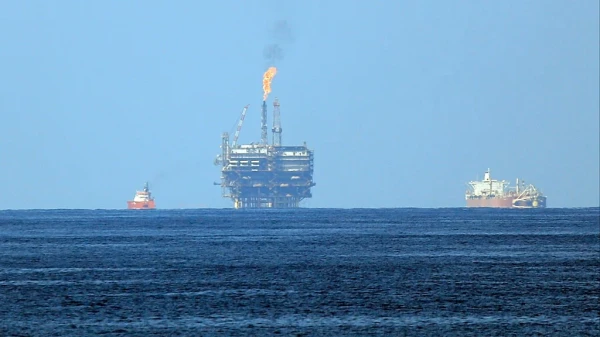
ENI and Egypt announced the discovery of a large gas field in the eastern Mediterranean, which could support Cairo amid rising energy import costs due to the war with Iran.
Italian energy giant ENI and Egypt announced the discovery of a large natural gas field in the eastern Mediterranean, providing Cairo and broader Europe with a potential lifeline amid soaring energy import costs due to the war involving Iran.
Preliminary estimates suggest that the Temsah field off the Mediterranean coast of Egypt contains about 2 trillion cubic feet of gas, ENI stated in a Tuesday announcement.
The discovery also includes 130 million barrels of gas condensate, the Egyptian Ministry of Petroleum reported. They emphasized that this is part of a broader strategy to increase domestic production and reduce the country's import expenses.
The Denise W well is currently being prepared for testing. After the completion of the tests, additional wells are planned to be drilled, and an offshore production platform will be constructed before the field is brought into commercial operation.
Denise W 1 is an exploratory well within the Temsah concession, located 70 kilometers off the coast, at a depth of 95 meters and less than 10 kilometers from existing infrastructure.
The project operator is ENI, which holds a 50% stake, with the remaining half owned by BP. Development is being carried out through their joint venture Petrobel.
Consequences of the War Involving Iran for Egypt's Energy Costs
The timing of the discovery could not be more opportune. Natural gas supplies to Egypt from Qatar and Israel have been severely disrupted since the escalation of the war involving Iran, forcing Cairo to implement a range of energy-saving measures, including a curfew for businesses, fuel price hikes, and a slowdown in government spending.
Prime Minister Mostafa Madbouly stated last month that the conflict has nearly tripled Egypt's natural gas import bill - from $560 million (€515 million) to $1.65 billion (€1.52 billion) per month.
The discovery harkens back to Egypt's last major offshore breakthrough.
In 2015, the Zohr field - the largest in the Mediterranean, with estimated reserves of 30 trillion cubic feet - raised hopes that Egypt could become fully energy self-sufficient and a major exporter.
Since then, those ambitions have been adjusted. Egypt has bet on its role as a regional hub for processing and transit, using its liquefied gas terminals to send raw materials from neighboring countries, including Cyprus.
Last month, another discovery was announced, this time on land: Egypt and Apache Corporation reported a field in the Western Desert, expecting to produce 26 million cubic feet of gas per day.
Whether the find at Temsah will be large enough to significantly alleviate Egypt's energy deficit will depend on how quickly it can be developed and how long the war drags on.








Leave a comment