
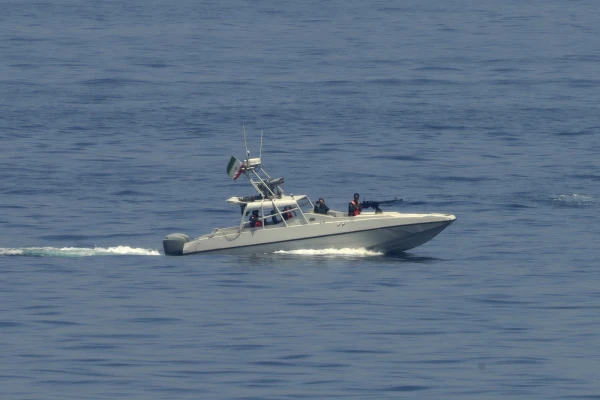
And a boat equipped with missiles and torpedoes can pose a threat to any large ship.
Donald Trump called for the creation of an international coalition to resume operations in the Strait of Hormuz — a crucial maritime route that Iran has nearly completely blocked. However, outside the United States, this idea has not found significant support. What possible scenarios exist and what weapons might Tehran use in the Strait of Hormuz?
The Hormuz Headache for Trump
The blockage of the Strait of Hormuz by Iranian authorities has become a key issue for the White House during the war in the Middle East. The threat of mining this waterway — the only maritime route from the Persian Gulf — has already become one of the reasons for rising global energy prices.
A full-scale and prolonged blockade of the Strait of Hormuz could have significant global economic consequences. This route accounts for the transit of 20% of the world's oil, about 15% of petroleum products, and another 20%–25% of global LNG.
Washington sees a way out of the situation, among other things, in the creation of an international coalition that would take on the escort of cargo ships — mostly oil and gas tankers — and guarantee the safety of transportation in the region.
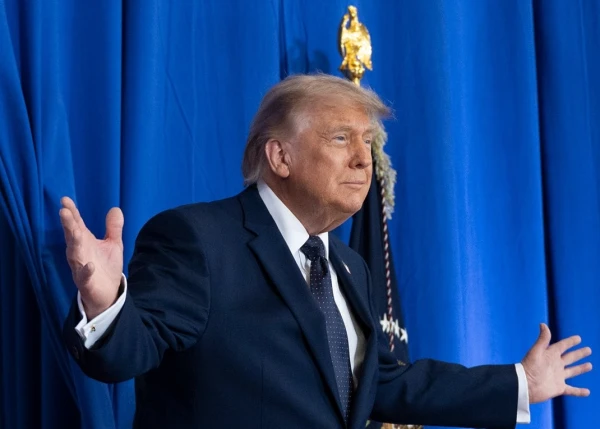
To this end, Donald Trump called on foreign nations via his social media platform Truth Social to send military ships to the Strait of Hormuz. As potential coalition participants, he mentioned China, France, the United Kingdom, Japan, and South Korea.
"One way or another, we will soon make the Strait of Hormuz open, safe, and free," promised the U.S. president.
An Axios source reported that the Trump administration wants to see not only the aforementioned five countries in the coalition but also Germany, Italy, Australia, Canada, Gulf states, and Jordan.
However, as The Guardian writes, the international reaction to Trump's words about the coalition in the Strait of Hormuz "remains tepid amid concerns about Washington's vague military objectives and fears of escalation."
Almost all countries have distanced themselves from Washington's call in one way or another. Germany, Spain, Italy, and Japan have already stated that they will not send their military ships to the region in the near future.
Against this backdrop, the United Kingdom stands out, as sources from Axios report that it has developed its own plan to unblock the Strait of Hormuz and shared it with the U.S. and other potential coalition participants. Additionally, London has indicated to Washington that it may send unmanned mine sweepers to assist.
Nevertheless, according to Axios sources, overall, U.S. allies are cool towards the American initiative — ranging from cautious skepticism to outright refusal. The head of European diplomacy, Josep Borrell, even stated: "This is not Europe's war."
Under these circumstances, Trump threatened that NATO faces a "very bleak future" if member states refuse to assist the U.S. in the Strait of Hormuz. The American president also assured that many countries have expressed their readiness to assist him, although he remained disappointed with the attitude of some of Washington's long-time allies.
"As long as the Iranian blockade remains and oil from the Persian Gulf is blocked, Trump will not be able to end the war and declare victory, even if he wanted to," Axios speculates.
Possible Iranian Response
In 2019, the U.S. under Donald Trump had already announced the formation of a coalition to patrol the Strait of Hormuz when Iran was creating problems for British tankers. At that time, Denmark, Italy, the Netherlands, France, and the United Kingdom supported this idea, but the strait was not closed by the Iranian side.
Now the situation is fundamentally different. Any country that dares to send escort ships or mine sweepers, which Trump is currently seeking, will lose them with 100% certainty.
So, what weapons might Iran use in the Strait of Hormuz:
Mines. The strait is narrow and shallow enough to allow for quick and easy mining. Even a limited deployment of mines can paralyze shipping or slow down military operations.
Coastal missile systems. In the narrow part of the strait are the islands of Qeshm, Hormuz, Larak, Hengam, Greater Tomb, and Abu Musa, which form Iran's defensive line, where missile batteries are located: HY-2 Silkworm (range up to 120 km) and YJ-2 (range up to 280 km). The placement of anti-ship missiles on the coast allows for control over almost the entire strait.
However, U.S. military experts and Donald Trump insist that the coastline poses no threat, as all launchers were destroyed by U.S. and Israeli strikes. How true this is will be seen when Washington or anyone from the coalition sends their mine sweepers into the strait.
Fast attack boats. The U.S. claims that Iran has no ships or boats left, and videos of boats are products of AI. But let's assume that not everything is generated by AI: even one boat equipped with missiles and torpedoes can pose a threat to any large ship, let alone a mine sweeper.
Electronic warfare and drones. Currently, there is no precise data on how much of Iran's EW capabilities in the strait have been destroyed by coalition strikes from Israel and the U.S. It can be stated with certainty that even with the demining of the strait by mine sweepers, they, in turn, could become easy targets for Iranian drones.
Overall, the defense of the strait is not so much about "closing" it completely, but rather about creating a constant threat, making passage costly and dangerous. And this, given Iran's capabilities in creating UAVs and unmanned boats, is quite realistic.











Leave a comment