
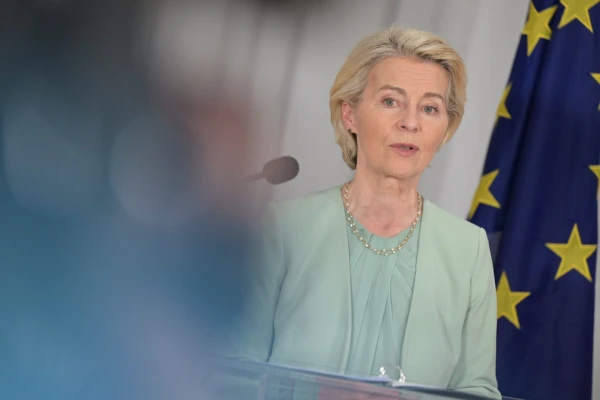
The European Union will find ways to pay Ukraine the promised loan of 90 billion euros, despite Hungary's resistance, European Commission President Ursula von der Leyen said on Friday, LETA reports citing TVP.
"One way or another, we will do it," said Leyen to reporters after the summit in Brussels, where EU leaders failed to persuade Hungarian Prime Minister Viktor Orban to lift his blockade of a crucial loan for Ukraine.
EU leaders condemned Hungary's unacceptable resistance at the meeting, reported European Council President Antonio Costa.
"An agreement is an agreement; we must keep our word. And no one can blackmail the European Council," Costa stated.
German Chancellor Friedrich Merz noted that the leaders of member states asked the European Commission to find ways to disburse the loan and called Orban's veto an unprecedented "serious manifestation of disloyalty."
"This will have its consequences," Merz said, explaining that "this is a serious violation of the principle of mutual loyalty among member states and it damages the reputation of the European Union."
At the EU summit in December, Orban supported providing Ukraine with a loan of 90 billion euros, but then the Hungarian government sharply changed its position just days before the fourth anniversary of Russia's renewed invasion of Ukraine.
On Thursday, he stated that he would continue to block the EU loan to Ukraine and the introduction of new sanctions against Russia until the supply of Russian oil through Ukraine is restored.
At the end of January, oil supplies from Russia through the Druzhba pipeline, which runs through Ukraine, were suspended, causing an oil shortage in Hungary and Slovakia. Kyiv claims that the pipeline was damaged as a result of attacks by Russian drones, but Hungary and Slovakia, which received a temporary exemption from EU sanctions prohibiting the import of Russian oil, accuse Ukraine of delaying repairs.
According to EU representatives, Ukraine recently agreed to technical and financial assistance from the EU for the repair of the pipeline.
Orban's government is expecting a tough battle in the parliamentary elections in April, which has fueled speculation that the veto on new aid measures for Ukraine is part of his election campaign.







Leave a comment