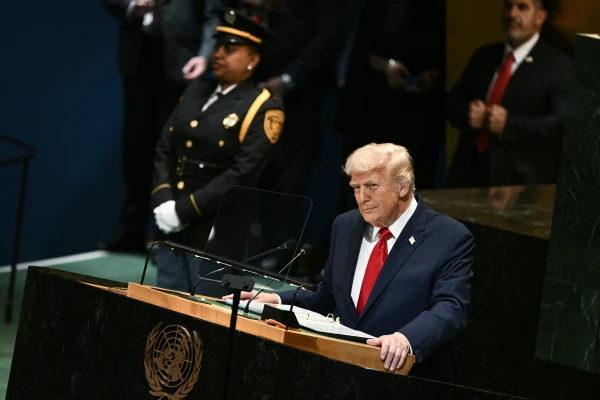
The U.S. President promised to "bomb" the Iranian coastline "to smithereens" and urged countries in Europe and Asia to send their military ships to protect vessels in the Strait of Hormuz.
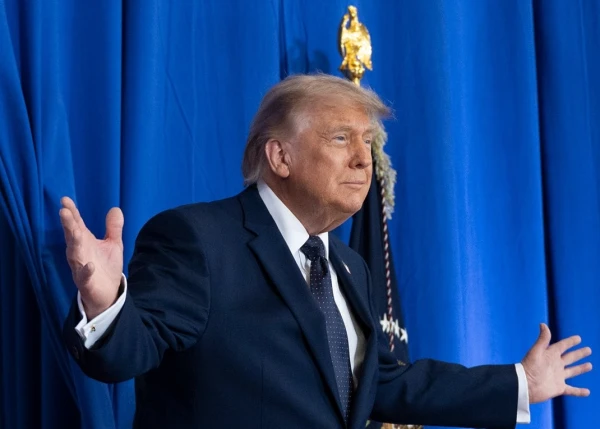
U.S. President Donald Trump urged several countries in Europe and Asia to send military ships to protect shipping in the Strait of Hormuz, which is effectively blocked due to the threat of attacks from Iran, writes DW. "I hope China, France, Japan, South Korea, the United Kingdom, and other countries affected by this artificial restriction will send ships to the area so that the Strait of Hormuz no longer poses a threat from a country that has been completely decapitated," he wrote on Saturday, March 14, on Truth Social.
The White House chief stated that the U.S. has "already destroyed 100% of Iran's military potential," however, the regime in Tehran can still "launch one or two drones, drop a mine, or fire a short-range missile" at this crucial maritime route.
"The United States will bomb the coastline to smithereens and constantly destroy Iranian boats and ships. One way or another, we will soon make the Strait of Hormuz open, safe, and free," Trump wrote.
FT: No European fleet is ready to escort vessels in the Strait of Hormuz
It was previously reported that Italy, France, and Greece have deployed their military ships in the Red Sea as part of the European Union's naval mission Aspides. However, as reported by the British newspaper Financial Times, no European fleet is currently ready to escort vessels through the strait due to concerns about escalating conflict.
At the same time, according to the publication, several European countries have begun preliminary negotiations with Tehran on an agreement that would guarantee the safe passage of their vessels through the Strait of Hormuz. Financial Times specifically mentioned France and Italy, but Rome denied the information about negotiations with Iran, while Paris refrained from commenting. Meanwhile, according to sources from the newspaper, there are no guarantees that the negotiations will progress, and Iran is willing to discuss this topic in general.