
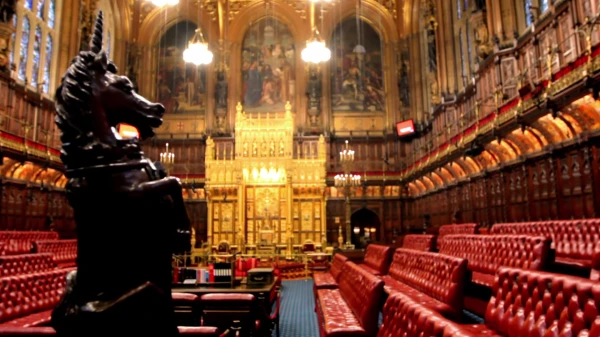
The government calls this measure "one of the largest reforms of Parliament in a generation."
The UK Parliament has approved a bill to exclude hereditary peers from the House of Lords. The initiative concludes a reform that began 25 years ago.
The House of Lords has passed the bill regarding hereditary peers, putting an end to a centuries-old practice that allowed aristocrats to sit in the upper house of Parliament by right of birth, Reuters reports. The right to a seat in the body will cease after the parliamentary session ends in spring.
The upper house has approved the final version of the bill, paving the way for its enactment. House of Lords Leader Angela Smith stated that the decision is based on the principle that no one should sit in Parliament by right of inheritance.
The document completes a reform initiated more than 25 years ago and fulfills a key electoral promise of Labour leader Keir Starmer's government to modernize Parliament. Following the 1999 reform carried out by Tony Blair's government, 92 seats were retained as a temporary compromise from more than 600 hereditary peers. The new law reduces this quota to zero.
The government reached a compromise with the Conservatives, agreeing to grant a number of hereditary peers who will lose their seats life peerages.
The government calls this measure "one of the largest reforms of Parliament in a generation." Cabinet Minister Nick Thomas-Symonds emphasized that "Parliament should always be a place where talent is valued and merit is taken into account. It should never be a gallery of old acquaintances, nor a place where titles, many of which were granted centuries ago, hold power over the will of the people."
The shadow leader of the Conservatives in the House of Lords, Lord True, described the bill as a "bitter pill" for many of his colleagues, noting that "for dozens of our colleagues on this side, April will be a cruel month of cold farewell, but so it will be."
Currently, 84 hereditary peers occupy seats in the House, of which 42 represent the Conservative Party and 31 are independents. The UK and the Senate of Lesotho remained the only legislative bodies in the world that retained a hereditary element.










Leave a comment