
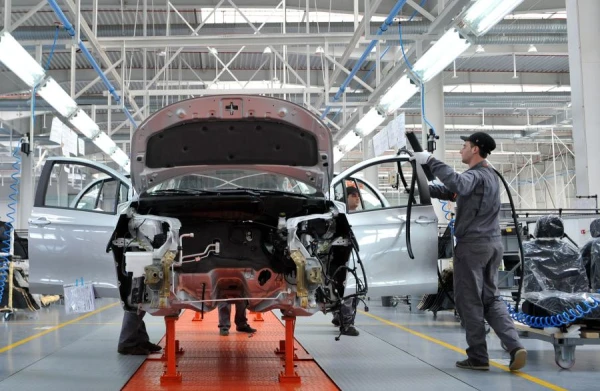
The rise in energy prices, supply chain disruptions, and global instability hinder the recovery of the German economy, experts say. The German authorities are alarmed by the situation but are currently responding with restraint.
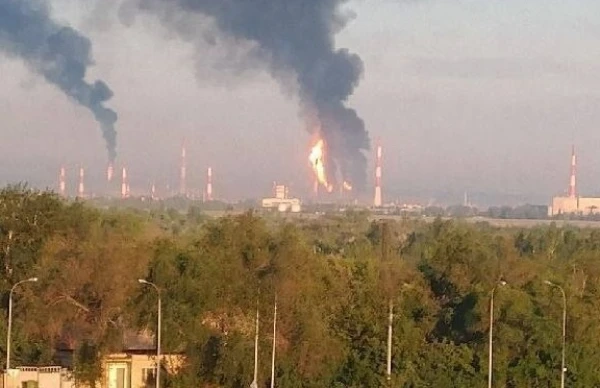
After the United States and Israel attacked Iran on February 28, the response was swift. Iranians are striking American military bases in the Persian Gulf countries, and civilian infrastructure is suffering from missile and drone hits. Additionally, Tehran has effectively blocked the Strait of Hormuz, through which about 20% of the world's oil and LNG is consumed.
As a result, oil prices on the global market have surged sharply, reaching nearly $119 per barrel at their peak, but then fell below $100. Gasoline and diesel prices skyrocketed, including at German gas stations. Depending on the region, the local equivalent of AI-95 was sometimes sold for €2.50 per liter. The average price for diesel fuel is now just over €2, which is 30% higher than before the start of the war in the Middle East.
The rise in energy prices threatens the German economy. Gas prices have risen even more, especially after Iranian drones struck an LNG production facility in Qatar, causing it to cease operations. Germany does not directly import Qatari LNG; supplies of this type of fuel come to the country from various sources, and a significant portion of gas enters the local market through pipelines from Norway.
However, the decisive factor influencing price levels is the spot quotes (the key one being the Dutch hub TTF), which are determined by the ratio of international supply to current and expected demand for gas.
The rise in energy prices affects not only private households in Germany but also large industries, which face increased production costs. This is particularly pronounced in energy-intensive sectors such as chemicals, steel, glass, or pulp and paper industries, as well as in the automotive and machinery sectors.
The War Against Iran Complicates Merz's Government
The war between the US and Israel against Iran demonstrates to Germany how vulnerable industrially developed economies are in the era of global crises, economists note. Professor Veronika Grimm, one of five leading experts advising the federal government, warns of rising inflation risks and additional uncertainty in the investment sphere. "We must be prepared for a prolonged period of heightened uncertainty," Grimm stated in an interview with the media group RedaktionsNetzwerk Deutschland (RND).
In German politics, alarming signals have sounded. For ten months, the country has been governed by a coalition represented by the conservative CDU/CSU bloc and the Social Democrats. Chancellor Friedrich Merz emphasized during the election campaign and upon taking office that reviving the national economy is an absolute priority for him. However, the promised upturn is not yet visible, and the slight GDP growth recorded at the beginning of the year may be nullified by the consequences of the war in the Middle East.
What is Slowing Down the German Economy
Since Russia's invasion of Ukraine in February 2022, energy prices in Germany have already risen significantly. Further increases, supply chain disruptions, and growing global uncertainty will have an even more negative impact on the German economy.
Professor Grimm calls for making the EU's energy supply more resilient through diversifying supply chains, ensuring reliable gas storage, coordinated European purchases, and accelerating the development of domestic energy sources. These demands have been voiced since the cessation of Russian gas supplies four years ago, but their implementation has been delayed. After this unusually cold winter for Germany, local gas storage facilities are nearly empty.
Iran and Transportation Issues
In addition to the energy crisis, the war between the US and Israel against Iran is leading to additional burdens, especially for the transportation sector. German shipping companies are forced to bypass the Persian Gulf, which lengthens global supply chains and thus worsens supply timeliness.
Insurance costs for shipping are rising as quickly as fuel prices. Airspace over the Persian Gulf countries is currently partially closed. Airlines are forced to significantly alter their routes, which not only increases travel time but also raises kerosene costs.
With each day of rising energy prices, the risk of a renewed surge in inflation increases. Companies and enterprises are forced to pass on costs to end consumers by raising prices on their products. Since the energy crisis of 2022, prices have already risen noticeably, which Germans have felt when visiting stores.
When the cost of living rises, purchasing power declines, affecting the state of the domestic market. On the international market, Germany becomes less competitive due to the rising prices of its goods - this is another serious problem for an exporting country.
How the German Authorities are Responding to the Consequences of the War in Iran
Despite the fact that German authorities are aware of the exacerbated problems, their response has been rather restrained so far. Minister of Economics and Energy Katherina Reiche has created a "working group" that will analyze the situation daily and prepare possible measures. The goal is to monitor the explosive price increase, control supply security, and assess the impact on companies and enterprises. This step by Reiche is being commented on with undisguised sarcasm on social media.
"We are constantly assessing the situation and monitoring it," assured government spokesperson Steffen Meyer on March 6. The Ministry of Economics indicated that the authorities support measures to enhance competition and transparency in the oil industry. They added that it is still too early to assess the economic consequences of the war in the Middle East, but the emerging "risks are obvious."
The German Authorities are Not Yet Capping Fuel Prices
The German government is currently refusing to intervene directly in the regulation of prices at gas stations. This is likely due to the fact that in 2022, a short-term fuel discount had only a limited effect.
The Federal Cartel Office (Bundeskartellamt, BKartA) is now to check whether oil companies are using the current crisis to inflate prices, passing on the rising oil costs to their customers, even though their oil storage facilities were filled with cheaper raw materials.
In any case, it is undeniable that the authorities are profiting from high fuel prices. Almost half of what customers pay at German gas stations goes to the budget in the form of various taxes. Several organizations, such as the automobile club Mobil, have already accused the federal government of "profiting at the expense of drivers."
The German Authorities' Energy Policy Under Fire
In the face of the emerging crisis, German authorities are striving to ensure maximum stability. They refer to already implemented measures to reduce energy prices: a reduction in the electricity tax for businesses and the cancellation of various fees. However, critics accuse Friedrich Merz's cabinet of continuing to encourage dependence on fossil fuels - instead of reducing it in accordance with the country's climate neutrality goals.
Environmental NGOs and consumer protection societies criticize the government for the stagnation of renewable energy (RE) development in Germany. Existing laws, critics believe, hinder the development of wind energy and solar energy projects. In their opinion, in a period of global uncertainty, Germany appears less resilient to crises than it should be.









Leave a comment