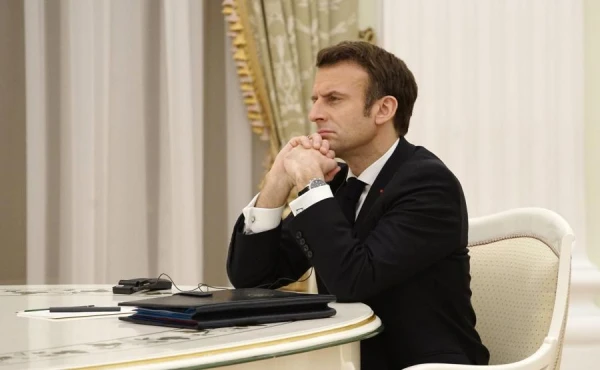
On Monday, France will unveil plans to use the only nuclear arsenal in the European Union to protect the continent in an unstable world, where Russia is becoming increasingly aggressive and the United States is distancing itself.
French President Emmanuel Macron's speech at the Île-Long submarine base will take place against the backdrop of U.S. and Israeli attacks on Iran, which threaten to destabilize the Middle East.
"What we are experiencing shows that in the future world, power and independence will become two necessary forces to counter the spread of threats," said a member of Macron's team.
Macron intends to update France's nuclear doctrine as Russia's war against Ukraine enters its fifth year, and NATO allies are concerned about the unpredictability of Washington's commitments to Europe.
"Undoubtedly, we are expecting some significant shifts and changes," a source said about the speech scheduled for Monday at 14:15.
European countries, which relied on American nuclear deterrence during the Cold War and in the following decades, are increasingly discussing strengthening their own nuclear arsenals.
Paris is negotiating with several countries, including Germany and Poland, on how France could use its nuclear arsenal to protect the continent.
Last year, Macron stated that he was open to discussing the possibility of deploying French aircraft capable of carrying nuclear weapons in other European countries.
In February, Macron mentioned that he was considering a doctrine that could include "special cooperation, joint exercises, and common security interests with some key countries."
France possesses the fourth-largest nuclear arsenal in the world, estimated at about 290 warheads. The United Kingdom, no longer an EU member, is the only other European nuclear power.
At the same time, the two main nuclear powers in the world, the United States and Russia, each have thousands of nuclear warheads.
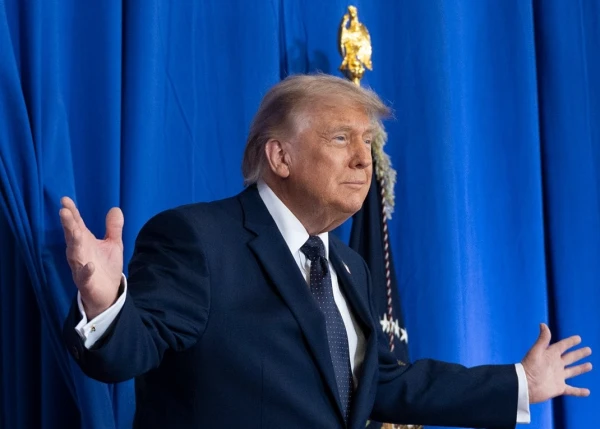
Assurances from American officials that Washington's deterrent forces will continue to shield Europe under NATO have failed to allay European concerns about the unpredictability of U.S. President Donald Trump.
"It is clear that we need to think together about how French and British deterrent forces would fit into a stronger European defense," said Bernard Rogel, former chief military advisor to Macron, to AFP.
However, how exactly nuclear cooperation will work among the 27 EU member states is a completely different question.
Rogel emphasized that the decision-making authority for launching will remain with the French.
"I cannot imagine having 27 buttons. From a reliability standpoint, it simply wouldn’t work," he said.
Raphaël Loss, a political analyst at the European Council on Foreign Relations, stated that leaders should draw confidence from European support for strengthening nuclear deterrence.
According to him, residents of Denmark, Estonia, Germany, Portugal, Spain, and Switzerland are now more likely to support rather than oppose the idea of creating alternative European nuclear deterrent forces.
"If Europe starts investing more in French or British nuclear deterrent forces, it will only be for the better," Finnish Defense Minister Antti Häkkänen told AFP in February.
Historian Florian Galleri, who specializes in nuclear doctrines, warned that Macron should be cautious, pointing to his low approval rating a year before the end of his presidential term.
Macron's address could also provoke a negative reaction ahead of the 2027 presidential elections, in which the far-right Eurosceptic party of Marine Le Pen is believed to have the best chance of winning.
"In France, there is a consensus on possessing nuclear weapons, but not on nuclear policy," Galleri said.
The far-right has already issued a warning. "If Mr. Macron thinks he can hand over French nuclear weapons to the EU, he faces impeachment for treason," wrote Le Pen's advisor Philippe Olivier on X.