
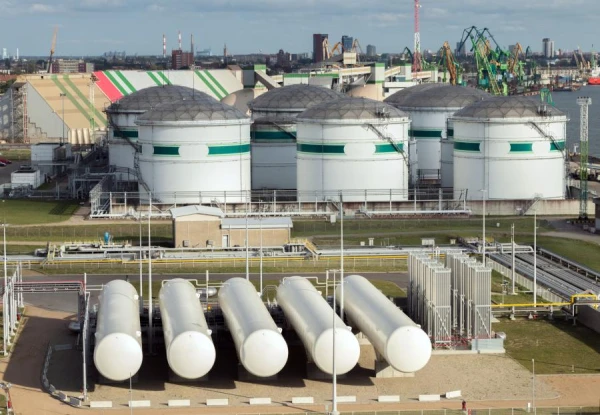
The operation against Iran and the retaliatory steps will inevitably lead to an increase in oil and petroleum product prices.
Oil prices are rising. OPEC+ is increasing production, but this is unlikely to help. Following the strikes by the U.S. and Israel on Iran, the price of Brent crude oil in over-the-counter trading rose by 10% - to about $80 per barrel, according to Deutsche Welle. Analysts predict that it could rise to $100 per barrel.
"Although the military strikes themselves support oil prices, the decisive factor here is the closure of the Strait of Hormuz," said Ajay Parmar from the analytics company ICIS. "We expect that after the weekend, prices will open significantly closer to the $100 per barrel mark and may exceed it if the blockade of the waterway continues," Parmar added. Analysts from RBC and Barclays agree with him.
Key members of the OPEC+ oil cartel announced that starting in April, they will increase oil production not by the previously planned 137,000 barrels per day, but by 206,000 barrels per day. However, Rystad Energy analyst Jorge Leon warned that the agreed increase in production may not be sufficient to prevent a spike in oil prices due to the situation in Iran when trading opens on March 2.
Another analyst, managing partner of SPI Asset Management Stephen Innes, pointed out to AFP that commercial carriers are frightened amid fears of missile strikes in the Strait of Hormuz, the cancellation of insurance contracts for vessels heading through it, and disruptions in electronic signals in the Persian Gulf region.
In his estimation, the blockade of the strait could lead to a price spike from about $72 before the escalation to $120–150 per barrel when trading opens on Monday. He and other analysts pointed to the land pipelines of Saudi Arabia and the UAE that could be used to bypass the strait; however, even in this case, the market would face a shortage of about 8-10 million barrels per day.











Leave a comment