The country is confidently recovering from the crisis.
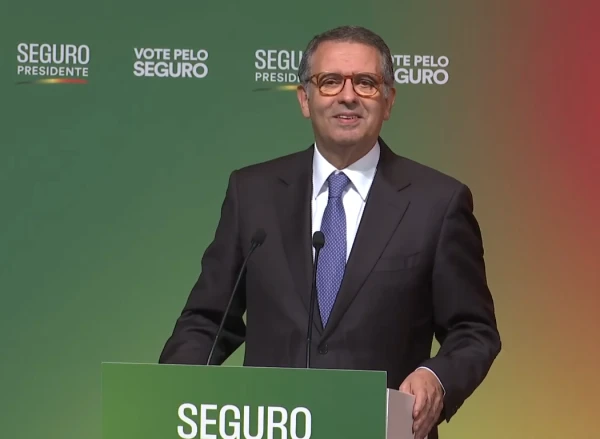
63-year-old socialist António José Seguro won the presidential election in Portugal. In the second round, Seguro received 66.8% of the votes, while his far-right opponent André Ventura received 33.2%.
The candidate from the center-left Socialist Party, António José Seguro, won the presidential election in Portugal. In the second round, he defeated his opponent from the far-right party Chega! ("Enough!") André Ventura, receiving 66.8% of the votes.
André Ventura, who garnered 33.2% of the votes, has already conceded defeat and wished Seguro an "excellent term." He expressed confidence that in the future, Portugal would be "governed" by representatives of his party.
António José Seguro will be the first socialist president in Portugal in the last 20 years.
In his victory speech, he promised to be a demanding and vigilant head of state and never to oppose the government. "I promised loyalty and institutional cooperation with the government, and I will keep my word. I will never oppose the authorities, but I will be a president who demands decisions and results," he said. The first round of the presidential election in Portugal took place on January 18. No candidate received more than 50% of the votes for the first time since 1986. António José Seguro then received 31.1%, while André Ventura received 23.5%.
More than one and a half million people voted for him, marking the best result for his far-right party Chega! — the largest opposition force in the Portuguese parliament — since its founding in 2019.
Portugal's economy is showing a confident recovery and growth after the pandemic, characterized by accelerating GDP (expected growth of 1.9-2.2% in 2025-2026), a decrease in the level of public debt (below 90% by 2026), and a low unemployment rate. The main drivers are tourism, services, and high-tech industries.
Key Aspects of the Economic Situation:
GDP Growth: The economy is growing faster than the eurozone average. In 2023, growth was 1.2%, and in the fourth quarter of 2025, GDP increased by 1.9% year-on-year.
Public Debt: There is a steady decline in the public debt-to-GDP ratio, projected to decrease from 93.6% in 2024 to 80% by 2028.
Labor Market: The unemployment rate is one of the lowest in Europe, close to 6%.
Drivers: Tourism (10% of employment) and new technology sectors (automotive, pharmaceuticals, IT) are actively developing.
Risks: Overregulation of the labor market, high tax burden, aging population, and dependence on energy prices.
Despite structural problems, Portugal is considered one of the most attractive countries in Europe for living and investing in technology.
<iframe width="560" height="315" src="https://www.youtube.com/embed/VN7hxPiNV6Y?si=mlX767TO3We_N-iy" title="YouTube video player" frameborder="0" allow="accelerometer; autoplay; clipboard-write; encrypted-media; gyroscope; picture-in-picture; web-share" referrerpolicy="strict-origin-when-cross-origin" allowfullscreen></iframe>