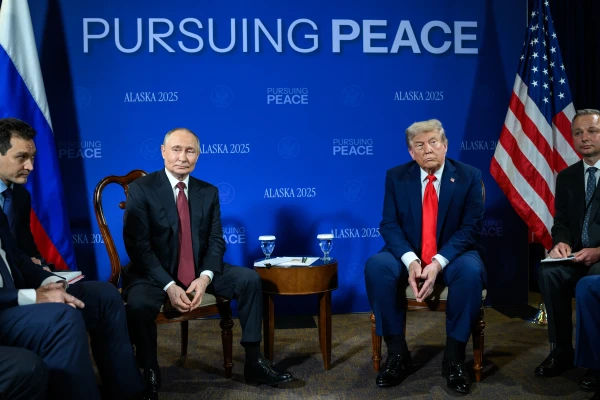
According to the U.S. president, his Russian counterpart gave him his word not to strike Ukraine "from Sunday to Sunday." However, Trump announced Putin's agreement to a week-long pause in his war during the frost four days ago, on January 29.
U.S. President Donald Trump stated that Russian President Vladimir Putin allegedly kept his word, promising not to shell Ukrainian cities for a week during the severe frost, reports DW.
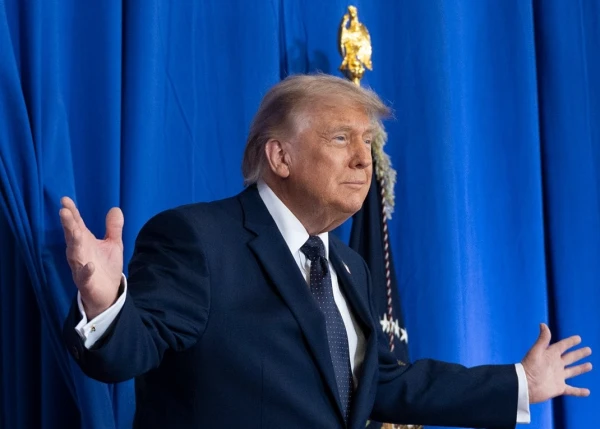
"It was from Sunday to Sunday, and everything resumed, and he hit hard last night," Trump said, responding to reporters' questions at the White House on the evening of Tuesday, February 3. "He kept his word. That's a lot, you know, one week..." the American leader said, adding: "It's very, very cold there, but that was on Sunday, and he held it from Sunday to Sunday."
The head of the White House once again urged Putin to end the war unleashed by the Kremlin nearly four years ago in Ukraine. "I want him to stop the war," Trump said in response to a question from an AFP journalist. When asked if he was disappointed that Putin did not extend the truce, the American president replied: "I wish he would."
Earlier that same day, White House Press Secretary Caroline Levitt stated that Trump "was not surprised" by the massive attack of missiles and drones by Russia on the Ukrainian capital Kyiv on the night of February 3. "I spoke with the president about this this morning, and his reaction, unfortunately, was not one of surprise. These are two countries that have been waging a very brutal war for several years, a war that would never have started if the president were still in power," she explained to reporters.
Trump on January 29: Putin agreed to refrain from hitting Ukrainian cities for a week
As Donald Trump stated on Thursday, January 29, at a meeting of his administration at the White House, after his personal appeal, Putin agreed to cease shelling Kyiv and other Ukrainian cities for the next seven days due to the severe frost. He did not specify that this conversation took place a few days earlier. On the same day, Ukrainian President Volodymyr Zelensky confirmed the achievement of agreements on an energy truce during the winter cold and welcomed Trump's statement.
According to daily reports from the Air Forces of the Armed Forces of Ukraine, on the night of Sunday, January 26, Russia launched 138 strike drones at Ukraine; over the next 24 hours - 135 UAVs; on January 28, Russian forces attacked with 146 drones and an Iskander-M missile; on January 29 - 105 drones; on January 30 - 111 UAVs and again an Iskander-M missile. A relative decrease in the intensity of Russian shelling was observed only on the night of February 1 (an attack with 85 strike drones) and February 2 - using 90 UAVs.
Russia and its 'energy truce'
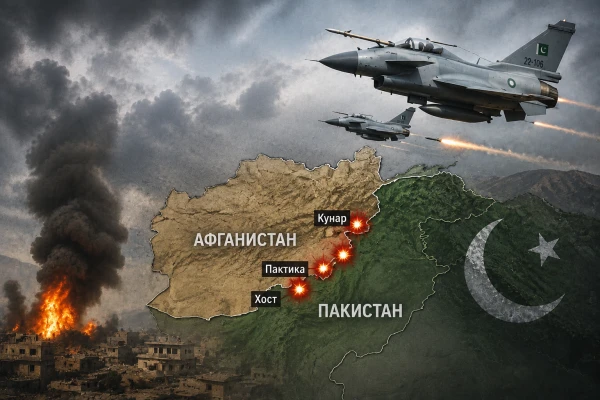
Russia resumed strikes on Ukraine's energy infrastructure on the night of February 2, thus breaking the "energy truce" declared by Trump four days earlier. Russian troops attacked energy facilities in Kharkiv, Sumy, Dnipropetrovsk, and Cherkasy regions, said Artem Nekrasov, the First Deputy Minister of Energy of Ukraine. Reports of massive combined strikes on several regions of Ukraine on the night of February 3 were made in Telegram by the Air Forces of the Armed Forces of Ukraine, as well as by the authorities of Kyiv and Kharkiv.
During these attacks, Russia used a total of 450 drones and more than 60 missiles, wrote the country's Foreign Minister Andrei Sibiga on social media X. According to him, Putin waited for the temperature to drop to strike at the Ukrainian energy system.
Kyiv awaits U.S. response to Russian strikes, senator calls for supplying Ukraine with 'Tomahawks'
As Ukrainian President Volodymyr Zelensky wrote on the evening of February 3 in Telegram, the authorities of Ukraine are awaiting a response from Washington to the new acts of Russian aggression. "It was a proposal from America: to cease strikes on energy during the time of diplomacy and such cold winter weather," he reminded, noting that in response to the personal request of the U.S. president, Russia responded with a 'record of ballistics.' Zelensky emphasized that "not even four days have passed from the week that was requested of Russia." "Russia's bet on war must receive a response from the world," he called once again.
For his part, Republican Senator from South Carolina Lindsey Graham acknowledged that "the pressure we are putting on Putin to come to the negotiating table and stop the massive attacks on Ukraine is not working." A Trump ally noted his efforts to "pursue buyers of Putin's oil who support his war machine," but after the latest massive attack on the night of February 3, he called on the president to "begin the process of supplying Ukraine with Tomahawk missiles that will change the military situation."
"In the coming days and weeks, we must increase pressure on Putin. Any negotiations that are perceived as excessive encouragement of aggression will lead to disasters worldwide. The opposite is also true: if negotiations lead to the creation of a free, strong, and independent Ukraine that was forced to make concessions, then the world will be much more stable. Time is of the essence," Lindsey Graham wrote on social media X.
Ukraine, U.S., and Russia negotiations in Abu Dhabi postponed
The next round of negotiations between Ukraine, Russia, and the U.S. on ending Russia's war against Ukraine has been postponed to February 4 and 5 and will take place in Abu Dhabi, President Zelensky announced on February 1. "Peace negotiations in Ukraine have been postponed after the meeting between Russia and the U.S.," The New York Times wrote at the same time, noting that the reasons for postponing the last round of negotiations are unclear.
A day before the discussions scheduled in the UAE on February 1, the special representative of the Russian president for investment and economic cooperation with foreign countries, Kirill Dmitriev, held talks with the American delegation in Florida. The parties discussed both "Ukrainian settlement" and the topic of economic cooperation with the U.S., Dmitriev explained.