The international community reacted to Israel's actions with extreme outrage.
Before the New Year, another partially recognized state appeared in the world. Somaliland, a country located on the Horn of Africa, established diplomatic relations for the first time with a sitting UN member. The New Year’s gift came from an unexpected source — Israel.
Technically, the state of Somaliland has existed for 34 years. The territory declared independence from Somalia in May 1991. This event was preceded by nearly 10 years of bloody civil war against the central government and the complete disintegration of Somali statehood. While the rest of the country descended into chaos, Somaliland managed to build stable institutions, including a functioning three-party parliament and regularly changing presidential power.
On the international stage, Somaliland refused to be labeled a separatist entity. Instead, it positioned itself as a state that restored its independence.
The government in Hargeisa referred to the fact that during colonial times, Somaliland was a separate British protectorate. In 1960, it gained independence as a de jure sovereign state and only then (after 5 days) voluntarily united with Somalia. Somaliland cited the precedent of Syria, which in 1958 formed the United Arab Republic with Egypt and three years later withdrew from it, returning to its previous borders.
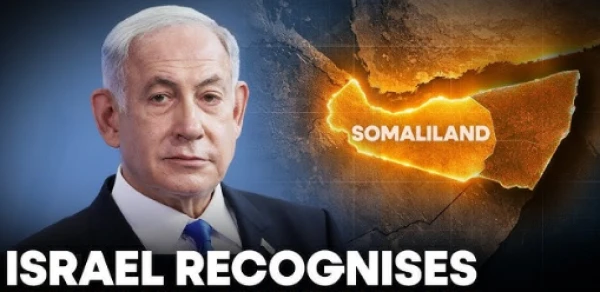
Despite political stability and strong legal arguments, there have been few willing to recognize Somaliland's independence. Israeli Prime Minister Benjamin Netanyahu broke this long-standing tradition when he signed a declaration of formal recognition with Somaliland President Abdirahman Mohamed Abdullahi.
Along with recognition, Tel Aviv and Hargeisa agreed to open diplomatic representations in each other’s countries. The Israeli government also expressed a desire to expand economic cooperation with the partially recognized state. According to Netanyahu, the agreements are part of a process initiated by the Abraham Accords. These accords call for the normalization of relations between Israel and Arab states in the Middle East. Abdullahi confirmed this, stating that Somaliland would join the accords soon.
The international community reacted to Israel's actions with extreme outrage. As of now, at least 50 states have expressed their protest. Besides Somalia, which still considers this territory its own, the list of dissatisfied includes Turkey, Egypt, Iran, Saudi Arabia, China, and the African Union. The issue was even brought to the level of the UN Security Council — an emergency meeting regarding Somaliland took place on December 29.
However, among the dissenters, few are genuinely concerned about the territorial integrity of Somalia. Perhaps this issue holds principled significance only for the African Union. Its predecessor, the Organization of African Unity, pursued a policy of respecting colonial borders and not recognizing new entities. Tolerance for separatism, they believed, could provoke uncontrolled disintegration of unstable African states. The only exceptions were cases where the "parent" countries themselves were not opposed to divorce from rebellious territories.
The motivations of other states are more complex. For China, recognizing Somaliland is unacceptable as it undermines its course of diplomatic isolation of Taiwan. For years, the Middle Kingdom has been increasing its economic influence in Somalia and eventually succeeded in having Mogadishu ban holders of Taiwanese passports from entering the country. Somaliland, on the other hand, has actively built relations with Taiwan. In 2020, Taipei even officially recognized it as an independent country — hence, Tel Aviv's decision was met with approval there.
Turkey, a rival of Israel, has also attempted to project its influence in the Horn of Africa through Somalia. In 2024, Ankara and Mogadishu signed a 10-year defense pact. Under this agreement, Turkey committed to protecting Somalia's territorial waters and sent a large military contingent (up to 5,000 soldiers) to assist in the fight against terrorists. Three days before the recognition, Ankara announced the establishment of a separate air force command for operations in this country.
Egypt acted similarly. Last year, Cairo also signed a defensive pact and sent troops to Somalia. All this occurred against the backdrop of a conflict with Ethiopia over the Grand Ethiopian Renaissance Dam, which threatened to significantly reduce the flow of water down the Nile to Egypt and Ethiopia. Besides the dispute with Cairo, Addis Ababa also planned to recognize Somaliland in exchange for access to its seaports. However, due to pressure, it ultimately did not proceed with this.
Saudi Arabia's position is inextricably linked to the civil war in Yemen. In December, the Southern Transitional Council (STC) began an offensive against the positions of the official Yemeni government, which is backed by Riyadh. The STC is supported by the United Arab Emirates, which is also an informal ally of Somaliland, even having a full military base in the area of the port city of Berbera (in this regard, it is symptomatic that the UAE remains silent about Tel Aviv's actions). Israel's involvement could significantly strengthen the positions of the opponents of the Saudis — and lead to Riyadh losing the remnants of control over the territory adjacent to its southern borders.
There is a widespread belief that Tel Aviv's actions in the Horn of Africa are linked to attempts to finally deal with the Gaza Strip. As early as spring, Netanyahu's government, together with Donald Trump's administration, was developing a plan for the mass relocation of the Palestinian population of Gaza to other territories. Possible places of exile included Somalia, Somaliland, or Sudan.
Khartoum immediately refused. Mogadishu and Hargeisa publicly rejected the very fact of such negotiations. However, official recognition from Israel led many to think that some understanding on this issue had indeed been reached. It is no coincidence that Turkey, in its official reaction to the recognition of Somaliland, made a reference to the Palestinian issue.
It is also possible that Tel Aviv was guided solely by geopolitical considerations. Somaliland is located in the Gulf of Aden. This is a strategic region that provides access to the Red Sea, and from there — to the Suez Canal and the Mediterranean Sea. After the outbreak of war in the Gaza Strip in 2023, the Iran-aligned Yemeni Houthi movement effectively blocked the movement of merchant vessels heading to Israel along this route. Western countries have been unable to deal with the Houthis. Tel Aviv also found itself unable to provide an adequate response to this threat — it simply did not have a presence in the Horn of Africa.
There were also few opportunities to enter there. Most of Somalia was actively being developed by Turkey and other rivals of Israel. Neighboring Djibouti, which hosts military bases of the US, France, and other Western countries, took an openly anti-Israel position, accusing the country of war crimes against the Palestinians.
Somaliland, however, has always treated Israel with marked friendliness. As early as the 1990s, it sought recognition from it, hoping to reach out to the US. Tel Aviv did not ignore this — the Israeli publication YNet reported that Mossad had been establishing contacts among Somaliland's elite for years. Therefore, Hargeisa became a natural ally of Israel. Its recognition was merely a matter of time and geopolitical expediency.
How Israel will utilize this new resource remains unclear. Soon after the official recognition, OSINT specialists noted satellite images capturing large-scale military construction near Berbera Airport. Presumably, this concerns a joint military facility of Israel and the UAE, similar to what they constructed on the Yemeni archipelago of Socotra, which is controlled by UAE-friendly rebels.
The Houthis have already stated that any Israeli military facility in Somaliland will become a legitimate target for strikes. So, perhaps, an escalation of tensions in the Horn of Africa is not far off.