
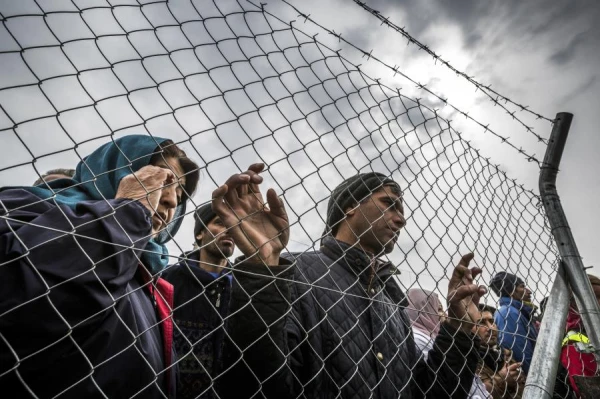
While Lithuania seeks to accept fewer migrants next year under the EU Solidarity Mechanism than was decided by the government, a representative of the UN Refugee Agency calls for fairness and adherence to commitments.
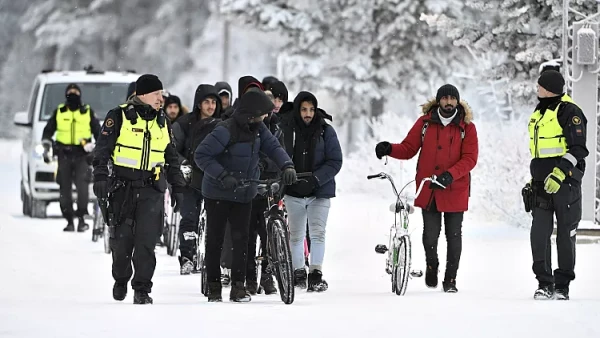
By the way, this call is quite applicable to Latvia, which insists that it is already under excessive pressure due to the influx of refugees from the Belarusian border. Furthermore, it has accepted many refugees from Ukraine.
"We believe it would be fair to simply accept what has already been decided. You know, the EU Pact on Migration and Asylum has been developed over many years, so all countries had many opportunities for negotiations. (...) This is truly a unique opportunity for EU member states to finally agree on migration. If they do not do this and each starts to act on their own, the entire system will collapse," said Annika Sandlund, representative of the UN High Commissioner for Refugees in the Nordic and Baltic countries, in an interview with BNS.
As reported by BNS, on Wednesday the government decided that Lithuania would accept half of the migrants under the EU Solidarity Mechanism next year and pay for the other half.
Lithuania will have to start fulfilling this obligation from June 2026.
However, Prime Minister Ingrida Šimonytė says that Vilnius will seek to ensure that the number of migrants does not exceed 40, as that is the maximum that state institutions can process.
"We urge compliance with the agreement. Indeed, under the Solidarity Mechanism, as with regular relocation, countries have the right to ultimately decide who will come to them. This differs from the situation where asylum seekers arrive directly and must be directed to legal procedures, so this mechanism allows for the vetting of refugees," Sandlund told BNS.
BNS reported that under the Pact on Migration and Asylum, approved by the EU Council in May last year, Lithuania is obliged to accept about 160 migrants annually or pay €3.28 million.
According to the Ministry of the Interior, the final amount of financial contributions from member states will be determined later, after a decision by the European Council.
Lithuania is to make the financial contribution in 2027, so these funds must be included in next year's budget.
The Solidarity Mechanism obliges EU member states to share the burden of migration with countries that become the first stop for those arriving in the EU.
Previously, Lithuania was skeptical about accepting migrants, as the country has already provided asylum to those fleeing the war in Ukraine, and illegal migrants regularly attempt to cross the border with Belarus.
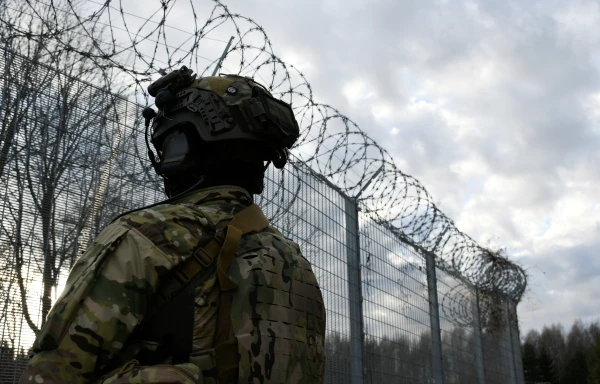
According to the Ministry of the Interior, since 2021, Lithuanian border guards have prevented more than 24,000 attempts at illegal border crossings.
The Migration Department reported in October that there are over 211,000 foreigners with valid residence permits registered in the country.
The European Commission, in its first European Annual Report on Asylum and Migration, stated that Greece, Cyprus, Spain, and Italy are experiencing migration pressure, while 12 other countries, including Poland and Lithuania, are facing serious migration pressure.








Leave a comment