
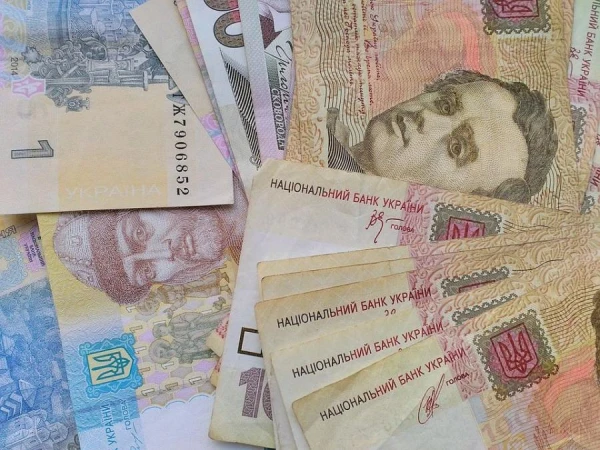
The lack of support from the European Central Bank and uncertain financing from the EU puts Ukraine on the brink of a budget crisis.
UNIAN spoke with economist Oleg Pendzin, who stated that without support from the ECB and the EU, Ukraine will lack about $80 billion for defense and social expenditures. What will the 2026 economic year look like for Ukraine, and what consequences will it have in the near future?
How will the lack of support from the European Central Bank affect the Ukrainian economy next year?
The ECB, particularly its head Christine Lagarde, has been against this since 2023, when the first questions about the confiscation of frozen Russian assets were raised. Therefore, nothing fundamentally has changed, and it is unlikely that anyone expected a change in position.
However, an extremely important point is that Ukraine needs $60 billion in military-technical assistance next year, which will be implemented in the form of funds for purchasing American weapons. Additionally, about $19 billion is needed to cover the macroeconomic financing deficit for social payments. In total, we need about $80 billion for social payments, of which we have around $28-27 billion in transitional balances, and $19 billion is sufficient. So, in general, we need a total of about $80 billion.
Hetmansev stated that the situation is critical and nearing its limit. Did he say the same?
Yes, of course. We do not have any "miraculous" sources of income: no new gold or oil deposits, nor hidden reserves. There is a harsh reality – huge social obligations and rising war expenses. Cutting expenses? You can't "cut" social and defense spending. Therefore, when ideas like "cashback" or new support programs are voiced, a simple question arises: from what funds?
What sources of assistance can Ukraine rely on?
The Americans will not give us a penny next year; we know this. At best, they will allow Ukraine to purchase weapons. Essentially, the entire burden falls on the shoulders of the European Union. But when we talk about the need for money in Ukraine, we need to realistically think about where Europeans can get it? Essentially, there have always been two sources – taxpayer money from European countries and "dancing with tambourines" around frozen Russian assets. There are no other sources in Europe; we must understand this. Formally, it is possible to issue eurobonds, sell them, take out loans, but this debt will need to be repaid later.
Regarding the first source of funds – taxpayers. In 2023, there were movements to use that money, and they were partially used; inflation in Ukraine was "suppressed" with funds from the European Union.
But the experience of elections in EU countries shows that when governments direct their taxpayers' money to support Ukraine, it often results in their defeat and the rise to power of forces opposing such assistance. The European voter expects their taxes to benefit them. Bright examples include Slovakia after Fico's rise, current sentiments in the Czech Republic, and the rise of the far-right in France. Therefore, it is difficult to count on large-scale financing from the EU: even the €11 billion allocated by Germany cannot fundamentally change the situation.
Essentially, only frozen Russian assets remain, which are currently physically concentrated in Brussels and Euroclear.
And the Belgians do not want to give them up for various reasons; they are constantly looking for different options, but I think the main reason is that large taxes from the frozen Russian assets, amounting to €190 billion, are paid into the Belgian budget. Essentially, Belgium exists thanks to this money. So the question of the source is extremely open at the moment.
The IMF, in its preliminary agreement with Ukraine, explicitly noted: the new program will only be finally approved when the EU finds financing to support Ukraine in 2026. That is, without European money, there will be no IMF program.
At the moment, I have quite a bit of pessimism regarding whether Europe can quickly find something.
And against this backdrop, Ukraine's adoption of the budget in the second reading, which was planned for today or tomorrow, in my opinion, is complete nonsense. What is there to vote for when there is no source, not even an understanding of where to get $19 billion just within the budget?
All our social expenditures depend on external macro-financing. If it is not available, we will return to the scenario of 2022. Back then, the Ministry of Finance issued bonds for 400 billion UAH, which were bought by the National Bank. As a result, the exchange rate jumped from 24 to 36 UAH, and inflation was 28%. Without partner assistance, we are facing the same model.
How might the lack of European financing affect Ukrainian taxes and duties? Will the state have to compensate for the shortfall through citizens?
There was once a joke: what should be done so that a cow eats less and gives more milk? Feed it less and milk it more often. But the problem is that if you go down this path, the cow will die. Essentially, this is the situation with the Ukrainian economy. Yes, we currently have a fairly large reserve of what is called the shadow economy. According to approximate estimates, we lose about 700-800 billion UAH annually from the shadow sector. But fighting the shadow sector means fighting against oneself.
The shadow economy is primarily concentrated in "envelopes" – when salaries are paid without paying the unified social tax and personal income tax. Another large part is the rental of housing without declaration: most apartment owners do not pay taxes on this income.
Yes, it is possible to increase the value-added tax, as was done in Russia this year. For 2026, they have a VAT of 22%. But this automatically leads to all prices rising by the amount of the VAT increase.
Under such conditions, is there a risk of technical default for Ukraine?
In terms of external debts, we have been in a state of technical default since 2022; we have restructured these debts. The only creditor we continue to pay is the IMF. The main risks are in domestic debt, which is 92-93% denominated in UAH. Any fall in the exchange rate will instantly devalue the military bonds that Ukrainians bought to support the state.
Can we expect a collapse of the hryvnia next year?
There is a certain amount of currency in the country and a certain amount of hryvnia. Their ratio determines the exchange rate. If the state, without receiving external financing, starts printing additional hryvnia, it becomes more, while the currency remains the same or decreases because we constantly buy imports, then the exchange rate will inevitably fall.
What should Ukraine's strategy be now to "stay afloat"?
"Measure your legs by your coat." The first strategy, in my opinion, should be one of extremely strict austerity and a review of all possible expenditures planned for next year in the budget.
And no social standards should be laid down. And no increase in teachers' salaries should be planned. And we need to tell people that we may have to cut social payments altogether. Because there is no money to make them.
What support programs, what cashbacks, what distributions of a thousand hryvnias can we talk about? Moreover, we need to address other issues; we need to make budget cuts. Already in 2026, we need to start reviewing all control figures.
Another risk is that financial pressure could be used as a means to coerce Ukraine into signing the capitulation that the Americans are currently proposing to Ukraine.






Leave a comment