You find a country rich in the resources you need, immersed in civil war, and help one of the sides.
The Office of the United Nations High Commissioner for Human Rights reported hundreds of civilians killed as a result of the assault by the rebel group Rapid Support Forces (RSF) on the Sudanese city of El Fasher — the last stronghold of government troops in Darfur. This includes extrajudicial executions, mass killings, rapes, attacks on humanitarian workers, looting, and abductions. This massacre is likely far from the last episode of one of the bloodiest conflicts in modern history, during which entire ethnic groups of non-Arab Sudanese are being exterminated. At the center of this military chaos are military juntas, Russian mercenaries, Ukrainian special forces, and a sheikh who owns Manchester City football club.
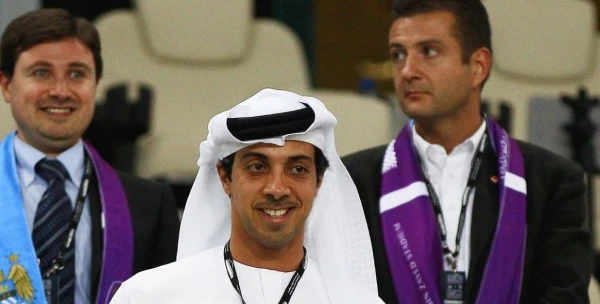
Under a post by the English football club Manchester City calling on fans to come and support the team in the game against West Ham, there are nearly two hundred thousand comments. However, among those directly related to the match, there are only a handful. Almost all the rest are calls to stop the war in Sudan and curses directed at the owner of Manchester City — Sheikh Mansour bin Zayed Al Nahyan, a member of the ruling royal family of the United Arab Emirates (UAE).
The fifth son of the ruling monarch, a multimillionaire, vice president, and deputy prime minister of the UAE, Sheikh Mansour is known not only for his love of football, Arab horses, and expensive yachts. He is also a sponsor of one of the most brutal people on the planet — Lieutenant General Mohammed Hamdan, the de facto ruler of vast territories in western Sudan, according to an investigation by The Insider.
Mohammed Hamdan is the commander of a group that operates under the neutral name Rapid Support Forces (RSF). In reality, this group is a gang of thugs that has unleashed a true genocide in the lands under its control. Thus, both one of the major English football clubs and a bloodthirsty African warlord are living off a wealthy Arab prince. This is why such unfootball-related passions are boiling on the pages of Manchester City.
It is no secret that Sheikh Mansour is helping Hamdan in his war against the central authorities of Sudan. Last autumn, American journalists discovered that the Emirati authorities were arming the RSF. They are using a building marked with red crosses, as if it were a medical facility, as a supply base for their clients. According to official statements from UAE officials, it was built at their expense on Sudanese territory to assist local residents affected by the war and the resulting famine.
The UN has stated that they have evidence that the UAE is violating a long-standing arms embargo against Sudan and is effectively siding with Hamdan. However, there have been no noticeable negative consequences for the UAE government or Sheikh Mansour, who holds one of the highest positions in it.
Of course, money helped avoid serious problems. Oil dollars from the UAE are important for British football (not only Manchester City but also Arsenal depend on them), Americans sell billions worth of weapons to the UAE, and the monarchy plays one of the key financial roles in the process of resolving the situation in Gaza. The UAE is too influential and wealthy to be quarreled with.
At the same time, Sheikh Mansour was likely pushed to cooperate with Hamdan by the desire to earn even more money for his country. This may seem paradoxical — one of the richest states on the planet supports outright bandits for potential profits. But in reality, the UAE's economy is much more fragile than it may seem from the outside, and its current prosperity can easily evaporate in the coming years, not even decades.
The UAE has virtually no resources other than oil. The country is critically dependent on other states and supplies from there. Up to 90% of the food sold in the Emirates is imported. The jewelry known throughout the Middle East is made from gold brought in from abroad. The country has no deposits of precious metals. Oil is the foundation of economic prosperity, but it is not eternal, nor are the revenues from it. Especially considering the active implementation of alternative energy sources and the expected significant reduction in humanity's dependence on fossil fuels. The disappearance or even a sharp decline in oil revenues threatens the country, accustomed to a luxurious life, with serious upheavals.
Diversifying the economy of a small state, almost entirely located in the desert, is practically impossible due to the scarcity of resources. Including, by the way, human resources: about 80% of the workforce in the UAE are migrants. About 150 years ago, the problem would have been solved by conquering a neighboring state that was not very warlike and had extensive reserves of necessary resources. But now annexations and occupations are the domain of fanatic autocrats, and they harm rather than help the economy due to guaranteed sanctions.
Therefore, cautious politicians prefer to create informal empires, where troubled states serve as a cheap resource base for the metropolis, rather than formally conquering and annexing new lands. Sudan, with its vast — the largest in Africa — arable lands, rich deposits of gold and other metals, access to the Red Sea (and, through the Suez Canal, to European markets), and located relatively nearby, is an ideal client-state option for the UAE, a potential jewel of an informal empire.
But it is not easy for even wealthy Arab monarchies to simply drag an entire state into their sphere of influence. It is a lengthy and costly process, which can almost certainly be accelerated by one tool — war. The recipe here is simple: find a country rich in the resources you need, immersed in civil war, and help one of the sides win that war. If the bet pays off, there is a chance to keep the winner on the hook.
Sudan, with its vast fields, rich deposits of gold, and access to the Red Sea, is an ideal client-state option for the UAE.
The UAE plays by these rules in Yemen, where it is part of the anti-Houthi coalition of interveners, in Libya, and in Sudan. In the latter, the chances of success appear to be the highest. After all, it is important not only that your side wins, but also that it does not resist being included in the informal empire afterward. For this, it is worth betting on real thugs, on those with whom few would want to cooperate, fearing for their reputation. And these bandits will simply have no choice but to become clients of the main sponsor. And Sudanese General Hamdan with his RSF is just such a thug.
Therefore, the war between two armies led by sanctioned generals — a war that has already led to the deaths of about 150,000 people — is unlikely to end soon. And the tens of thousands of refugees, as well as the thousands killed during the capture of El Fasher, including during ethnic cleansing, are unlikely to be its last victims.